Imagine an astronaut floating high above Earth at night, camera pointed at the Middle East.
The Persian Gulf glows like a sparkling necklace – Dubai’s skyscrapers blazing, Qatar’s lights shining, Saudi ports buzzing with ships, Bahrain and Kuwait sparkling with life.
Then suddenly… one long stretch turns completely black.
No lights. No cities. Just darkness along 2,815 kilometres of coastline.
That empty black line is Iran.
The Longest Coast in the Middle East – Yet Empty
Iran has the longest coastline in the entire Middle East – longer than Saudi Arabia, longer than anyone.
Yet it looks abandoned from space.
Why?
The answer starts 3,000 years ago and has never really changed.
3,000 Years Without a Single Coastal Capital
For three full millennia, not a single great Iranian empire built its capital on the sea.
- The ancient Elamites chose Susa, deep inland.
- The mighty Achaemenids ruled from Persepolis and Ecbatana, high on the plateau.
- The Parthians and Sassanids stayed in Ctesiphon or Istakhr.
- Even modern Iran picked Tehran, hundreds of kilometres from any shore.
Power always stayed far from the water.
This was no accident. It was a deliberate survival strategy.
714 BC: The Invasion That Revealed Iran’s Secret Weapon
Let’s go back to 714 BC to see exactly why.
The most feared king in West Asia at that time was Sargon II of Assyria.
His army was unstoppable. He burned cities, blocked rivers, destroyed canals, and starved entire nations until they begged for mercy. Babylon, the Levant, Anatolia – all had already fallen.
Now he marched toward the powerful kingdom near Lake Urmia in what is today northwest Iran.
Sargon expected an easy win. His scouts reported green fields, full rivers, and endless food.
But when his soldiers attacked, something strange happened. The cities refused to die of thirst. No matter how many canals Sargon cut or rivers he poisoned, the water kept flowing. His troops grew confused and exhausted in the unfamiliar mountains.
Finally, the secret came out: the Iranians had invented something brilliant – an underground water system no enemy could touch.
What Exactly Is a Qanat? (Simple Explanation)
Here’s what a qanat actually is, explained simply:
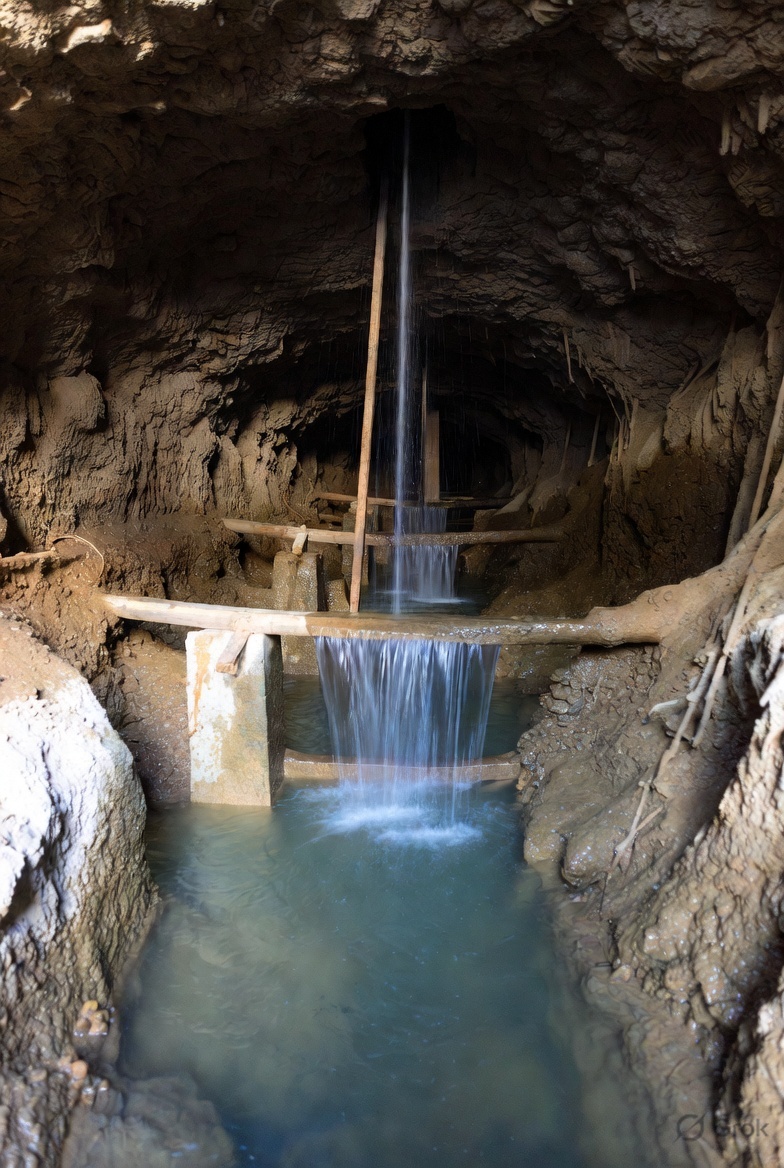
Picture a gentle underground tunnel, sometimes 50 kilometres long, dug from the foot of a mountain all the way to a village or field.
Vertical shafts (like wells) every few hundred metres let fresh air in and workers out during construction.
Mountain groundwater enters one end, flows downhill by pure gravity – no pumps needed – and comes out the other end as clean, cool water for drinking and farming.
Because everything is underground, the water never evaporates in the scorching sun and no invading army can poison or block it.
Iran perfected this 3,000 years ago. The qanat became the country’s hidden lifeline.
The Curse of the Coast: Every Invasion Came from the Sea
This underground miracle worked because Iran had learned a painful lesson again and again:
Whoever lives on the coast falls first.
History proved it four times in the most dramatic way:
- In 336 BC, Alexander the Great landed on the southern coast, marched straight inland, and toppled the entire Persian Empire.
- In 651 AD, Arab armies attacked from the Gulf shore and ended the Sassanid dynasty.
- In 1507, Portuguese warships seized coastal islands and ports, controlling trade for decades.
- In 1856, British forces again came by sea, captured southern ports, and forced Iran to sign humiliating treaties.
Every major invasion started from the water. The coast was a door that enemies could kick open.
Iran’s Natural Fortress: Mountains, Deserts and Distance
But Iran had a perfect natural answer – geography itself became a fortress.
Look at the map:
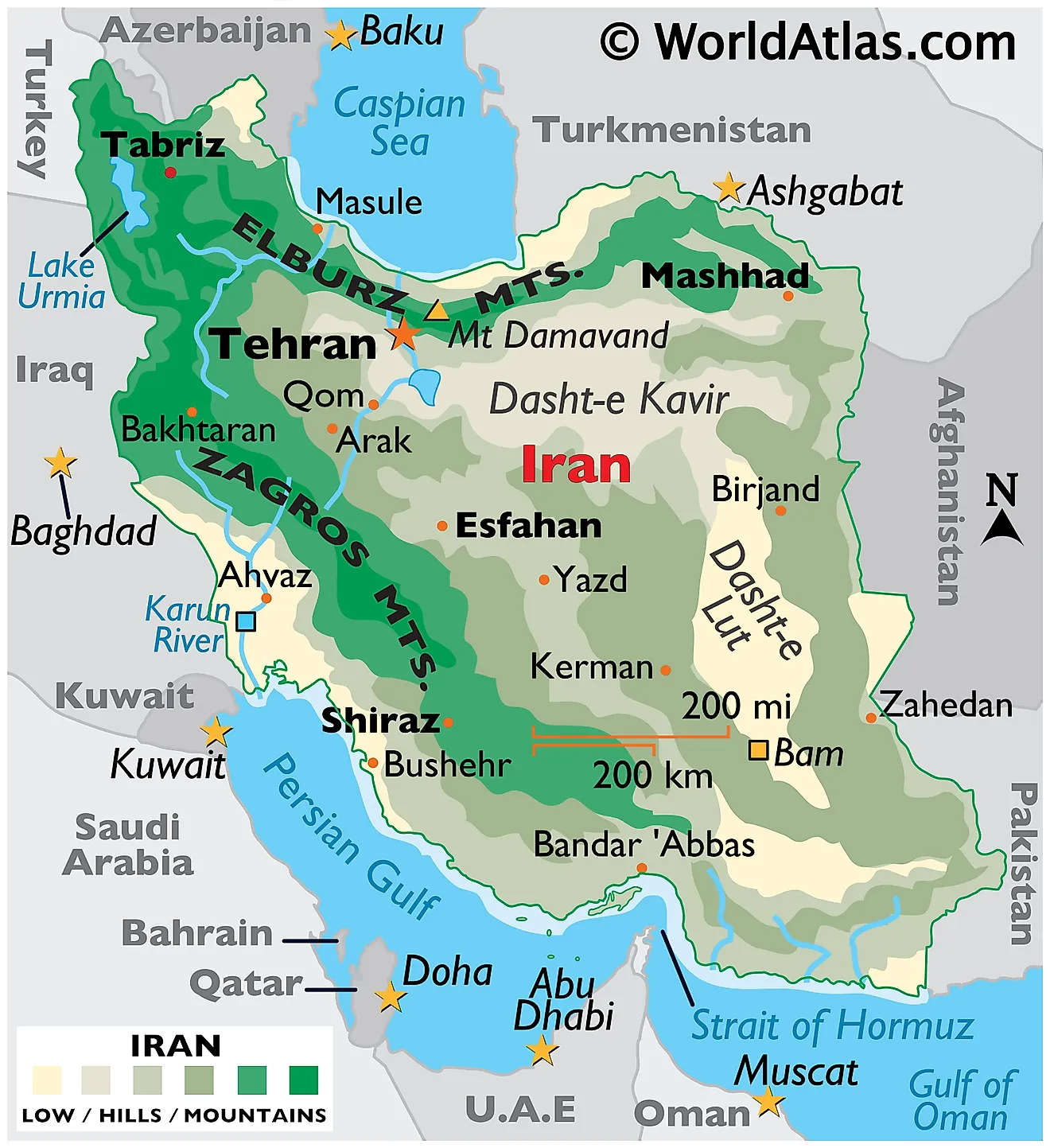
- In the west, the Zagros Mountains rise like a jagged wall – steep, impassable cliffs that stop armies cold.
- In the north, the Alborz Range creates an almost unbroken barrier between the Caspian Sea and the rest of the country.
- In the centre lie two vast killer deserts – Dasht-e Kavir and Dasht-e Lut – where there is no water, no roads, nothing but salt flats and death for hundreds of kilometres.
To picture better, see the image below. All mountain areas in brown.
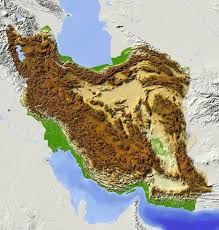
These mountains and deserts formed a natural moat. Cities hidden behind them were almost impossible to reach. Distance itself became Iran’s best weapon.
So rulers made a simple rule that lasted 3,000 years:
Keep power centres far from the sea. Let the mountains and qanats protect us. Never trust the coast.
The Water Reality That Made the Coast Useless
And the water situation made this choice even smarter.
All Iran’s big perennial rivers are in the north. Coastal rivers are mostly seasonal – they roar during rain and then disappear. Average rainfall across the country is only about 235 mm per year – roughly half of what Rajasthan in India gets. On the southern coast it is often less than 200 mm.
Groundwater exists, but only about 20% of it is drinkable, and most of that lies inland, not along the shore.
So the coast offered almost no reliable water for big cities or farms. Surface water was too easy for enemies to destroy. Underground qanats solved the problem inland – but not on the open shoreline.
The Decision That Shaped 3,000 Years
That is why, for century after century, Iran’s leaders treated the coast exactly the same way:
as a dangerous border to defend, not a place to build shining cities.
They were right for their time. The strategy kept the nation alive through countless invasions.
But that same ancient decision created a habit that still shapes Iran today.
And that brings us to the modern era – where the old shield has become a heavy chain.
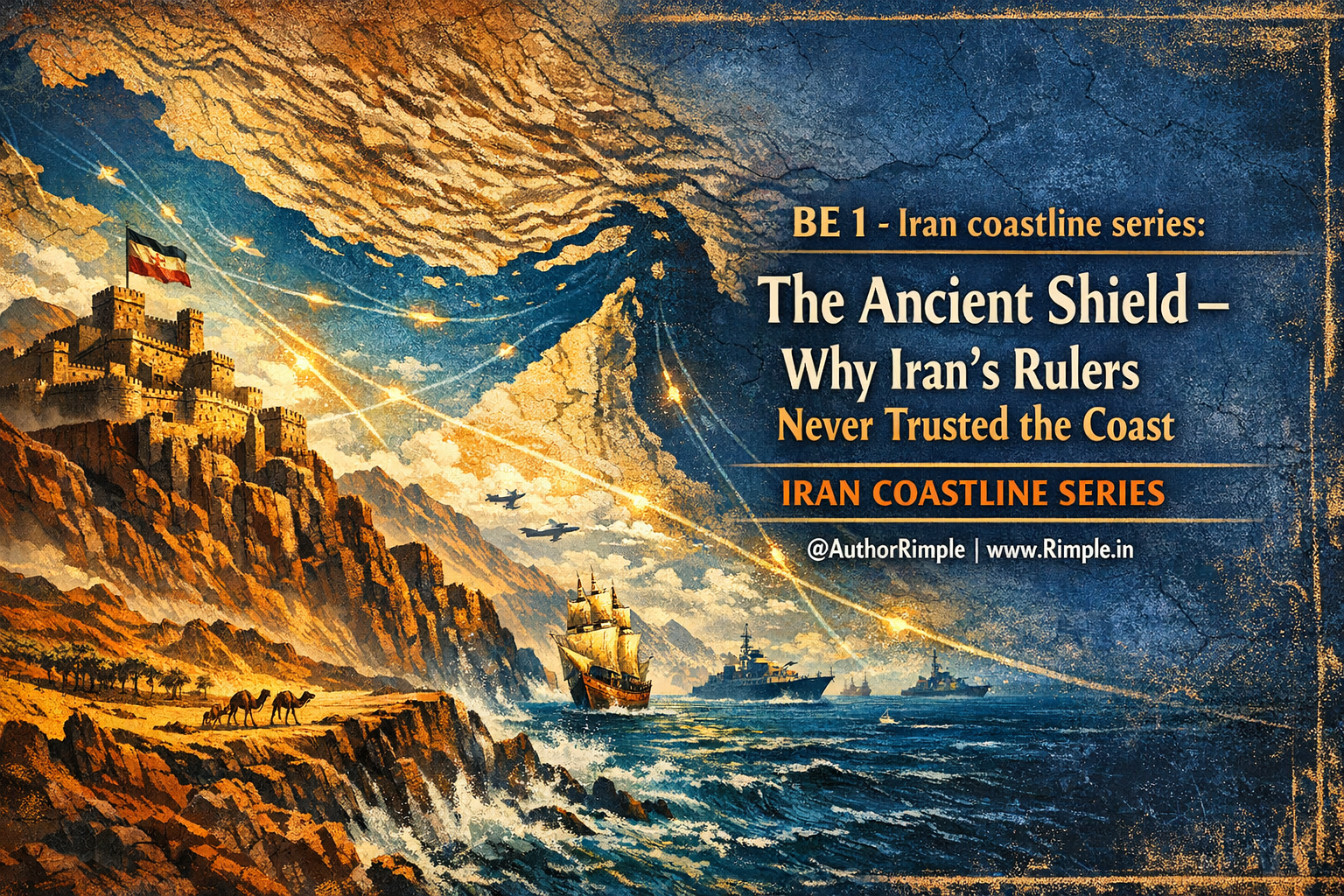
You can read all 3 episodes of Iran’s Coastline Series here: https://rimple.in/category/blog-episode-series/iran-coastline/
Also Read: