
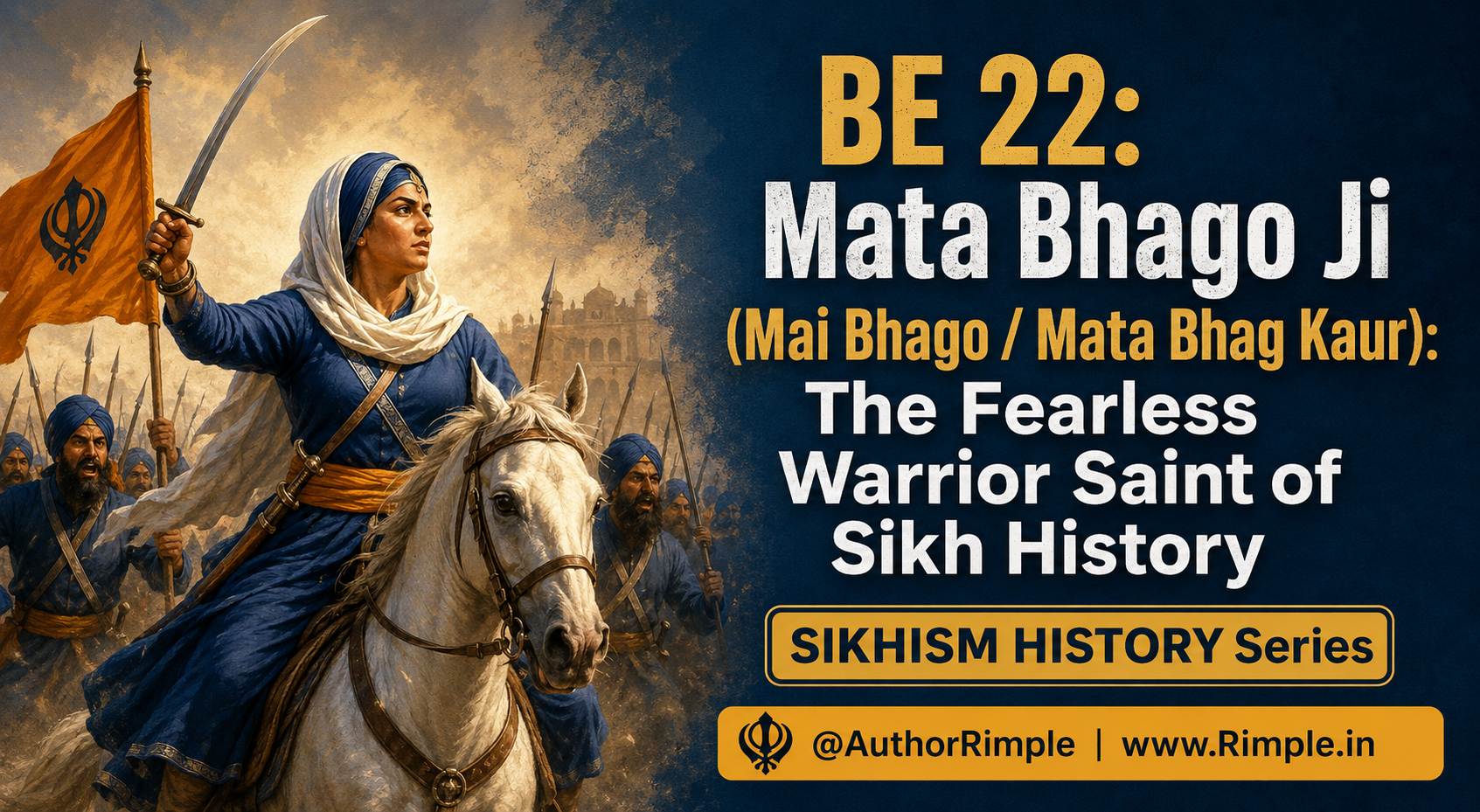
Mata Bhago Ji stands tall as one of the most inspiring figures in Sikh history—a brave woman who became a symbol of courage, devotion, and equality. Known also as Mai Bhago and Mata Bhag Kaur, she is remembered as a saint-soldier (Sant Sipahi) who fought fearlessly for her Guru and inspired generations. Her life teaches ordinary people that true strength comes from faith, determination, and love for righteousness.
Early Life and Family Background
Mata Bhago Ji was born around 1670 in the village of Jhabal Kalan (also called Chabhal Kalan) in present-day Tarn Taran district, Punjab. She belonged to a devout Sikh Jatt family of the Dhillon clan. Historical and genealogical records confirm that the Dhillon clan, like the vast majority of Punjabi clans, is historically rooted in Hindu origins. Her family had deep roots in Sikhism—her great-grandfather’s brother, Bhai Langah, was a respected chief who became a Sikh during Guru Arjan Dev Ji’s time. Her father, Bhai Malo Shah, served as a soldier in Guru Hargobind Sahib Ji’s army.
From a young age, she was called Bhag Bhari (the fortunate one). She grew up visiting the Guru’s court with her parents, learning Gurbani and training in the art of weapons (Shastar Vidya). She married Bhai Nidhan Singh Varaich from Patti. Her upbringing in a family of warriors and devotees prepared her for the extraordinary role she would later play.
The Story of the Chali Mukte: Her Defining Moment
In 1704-1705, Mughal forces and hill chiefs laid a long siege on Anandpur Sahib. Food and supplies ran out. Under pressure, a group of about 40 Sikhs (led by Mahan Singh) signed a document called bedava, declaring they were no longer disciples of Guru Gobind Singh Ji, and left for home. Some of these men were from Mata Bhago Ji’s area, including her husband and brothers.
When she heard the news, her heart filled with pain and anger. She openly criticized the men for abandoning the Guru in his time of need. Her passionate words and personal example shamed them into realizing their mistake. She rallied these 40 Sikhs and others, mounted her horse, and led them back to find and support Guru Gobind Singh Ji.
The Historic Battle of Muktsar (Khidrana) – December 29, 1705
Guru Ji was traveling through the Malwa region with Mughal armies in pursuit. Mata Bhago Ji’s group reached the dhab (pool) at Khidrana—the only source of water in the area. Mughal forces of around 10,000 soldiers had taken control of it to block the Guru.
Without hesitation, Mata Bhago Ji and the 40 Sikhs launched a fierce attack. They fought with immense bravery against overwhelming odds. Guru Gobind Singh Ji watched from a nearby hill and supported them by showering arrows on the enemy. By evening, the Mughals were forced to retreat.
All 40 Sikhs attained martyrdom (shaheedi). Guru Ji came to the battlefield and found only Mata Bhago Ji (badly wounded) and the dying Mahan Singh alive. He took Mahan Singh in his lap. The bedava paper slipped out, and Guru Ji tore it up, forgiving them all. He blessed the 40 as Chali Mukte—the Forty Liberated Ones. Their sacrifice and redemption are remembered every day in the Sikh Ardas prayer. Mata Bhago Ji’s husband and brothers also became martyrs in this battle. Guru Ji personally cared for her wounds and nursed her back to health.
Life as Guru Gobind Singh Ji’s Personal Bodyguard
After recovering, Mata Bhago Ji stayed with Guru Gobind Singh Ji as one of his trusted personal bodyguards. She dressed in the warrior style of a Nihang Singh, carrying heavy weapons. Historical accounts mention her arsenal included a massive lance weighing over 100 pounds and a long musket or rifle. Guru Ji had a female guard in his personal security, and her weapons on horseback were formidable—a 12- to 14-foot gun weighing around 50 kg.
She accompanied the Guru to places like Talwandi Sabo and finally to Nanded (Abchal Nagar) in Maharashtra. Her dedication and physical strength were extraordinary. Even today, handling such heavy weapons would be extremely challenging, yet Sikh warriors of the past carried them into battle on horses and through mountains, demonstrating remarkable skill and endurance.
Weapons Preserved at Hazur Sahib and Other Sites
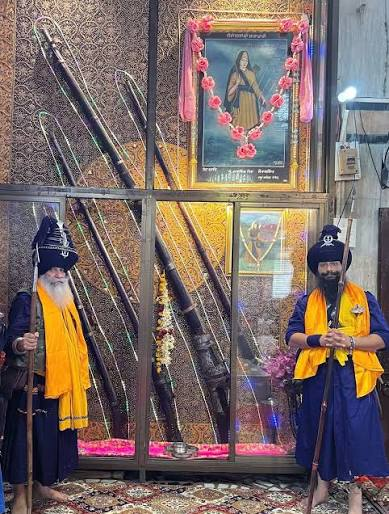
After Guru Gobind Singh Ji passed away in 1708, Mata Bhago Ji’s weapons were preserved with great respect. At Takht Sachkhand Sri Hazur Sahib in Nanded, Maharashtra, inside the Bunga Mai Bhago (a hall marking her residence), visitors can see her 12-foot rifle (made of sheesham and sandalwood, about 50 kg), lances, and other arms. The image above beautifully show these sacred relics displayed with honor, guarded by devoted Nihang Singhs.
Additional weapons linked to her legacy, such as a heavy 42 kg sword, are said to be at Jejuri Fort and Temple. These artifacts remind us of the physical power and discipline of past warriors. A small slip while demonstrating them today could be dangerous, yet our ancestors wielded them in real wars with grace and courage.
Later Life and Spiritual Legacy
After the Guru’s passing, Mata Bhago Ji retired to Janwada (Jinwara), about 11 km from Bidar in Karnataka. She lived a simple life of meditation, prayer, and teaching Gurmat (the Guru’s way). Her humble hut became a place of worship and learning, now known as Gurdwara Tap Asthan Mai Bhago Ji. She lived to a ripe old age and passed away around 1720.
Prayers, Sayings, and Couplets About Mata Bhago Ji
Punjabi Script (Gurmukhi):
ਮਾਈ ਭਾਗੋ ਤੇਰੀ ਬਹਾਦਰੀ ਅਮਰ ਹੋਵੇ, ਖਾਲਸਾ ਪੰਥ ਤੇਰੇ ਨਾਮ ਤੋਂ ਪ੍ਰੇਰਿਤ ਹੋਵੇ।
ਚਾਲੀ ਮੁਕਤਿਆਂ ਦੀ ਅਗਵਾਈ ਕਰਨ ਵਾਲੀ ਮਾਤਾ ਭਾਗ ਕੌਰ, ਤੂੰ ਸਿੱਖ ਇਤਿਹਾਸ ਦੀ ਸ਼ਾਨ ਹੈਂ।
ਵਾਹਿਗੁਰੂ ਜੀ ਕਾ ਖਾਲਸਾ, ਵਾਹਿਗੁਰੂ ਜੀ ਕੀ ਫਤਿਹ।
Hindi Script (Devanagari):
माई भागो तेरी बहादुरी अमर होवे, खालसा पंथ तेरे नाम से प्रेरित होवे।
चाली मुक्तियों की अगुवाई करने वाली माता भाग कौर, तू सिख इतिहास की शान है।
वाहेगुरु जी का खालसा, वाहेगुरु जी की फतिह।
English Translation and Explanation:
“O Mai Bhago, may your bravery be immortal; may the Khalsa Panth be inspired by your name.
Mata Bhag Kaur, who led the Forty Liberated Ones—you are the pride of Sikh history.
Waheguru Ji Ka Khalsa, Waheguru Ji Ki Fateh.”
These lines reflect the deep respect Sikhs hold for her. While there is no single traditional prayer exclusively for her like the Ardas, she is honored through the daily remembrance of the Chali Mukte in Ardas, as her leadership made their redemption possible. Devotees often recite such couplets and praises at Gurdwaras dedicated to her, invoking her courage for strength in daily life.
Why Mata Bhago Ji Matters Today
- Role Model for Women: She showed that Sikh women can be warriors, leaders, and spiritual teachers.
- Message of Redemption: Even those who falter can return to the right path with sincere effort and Guru’s grace.
- Equality in Sikhism: Her story highlights that the Khalsa spirit is for everyone—men and women alike.
- Physical and Mental Strength: Her ability to wield massive weapons reminds us of the discipline and readiness expected of a Khalsa.
Statues of her (such as in Shahidi Park, New Delhi) and paintings often depict her in battle with a turban, sword, and determined expression. Modern art, animations like KAUR, and Gurdwaras keep her memory alive.
Mata Bhago Ji’s life is a shining example for every layperson. Whether facing challenges at home, work, or in society, her story encourages us to stand up for truth, support our community, and remain devoted to our faith. Her weapons at Hazur Sahib and the sacred sites linked to her continue to inspire thousands of pilgrims every year. Instead of following fake feminists today in the name of entertainment celebrities or social media influencer, choose women like Mata Bhagoji as your Role Model. And if you are a male, choose such warriors of our history as your role model, and not fake protein shake entertainment or cricket celebrities or stupid social media influencers.
Waheguru Ji Ka Khalsa, Waheguru Ji Ki Fateh!
You can read entire Sikhism Blog Series here
Jai Shri Ram!
Also Read:
ISRO and Science Series | Pandharpur Series | Kamakhya Temple Series | Jagannath Series | Rothschild Family Series | Sikhism Series | Durga Saptashati Series | Navratri Series | British Agent Gandhi Series | Operation Sindoor Series | Satan Teresa (and not Mother Teresa) Series | Hinduism Articles | Ramakrishna Paramhansa Series | Ayodhya Ram Mandir Legal Battle Series