
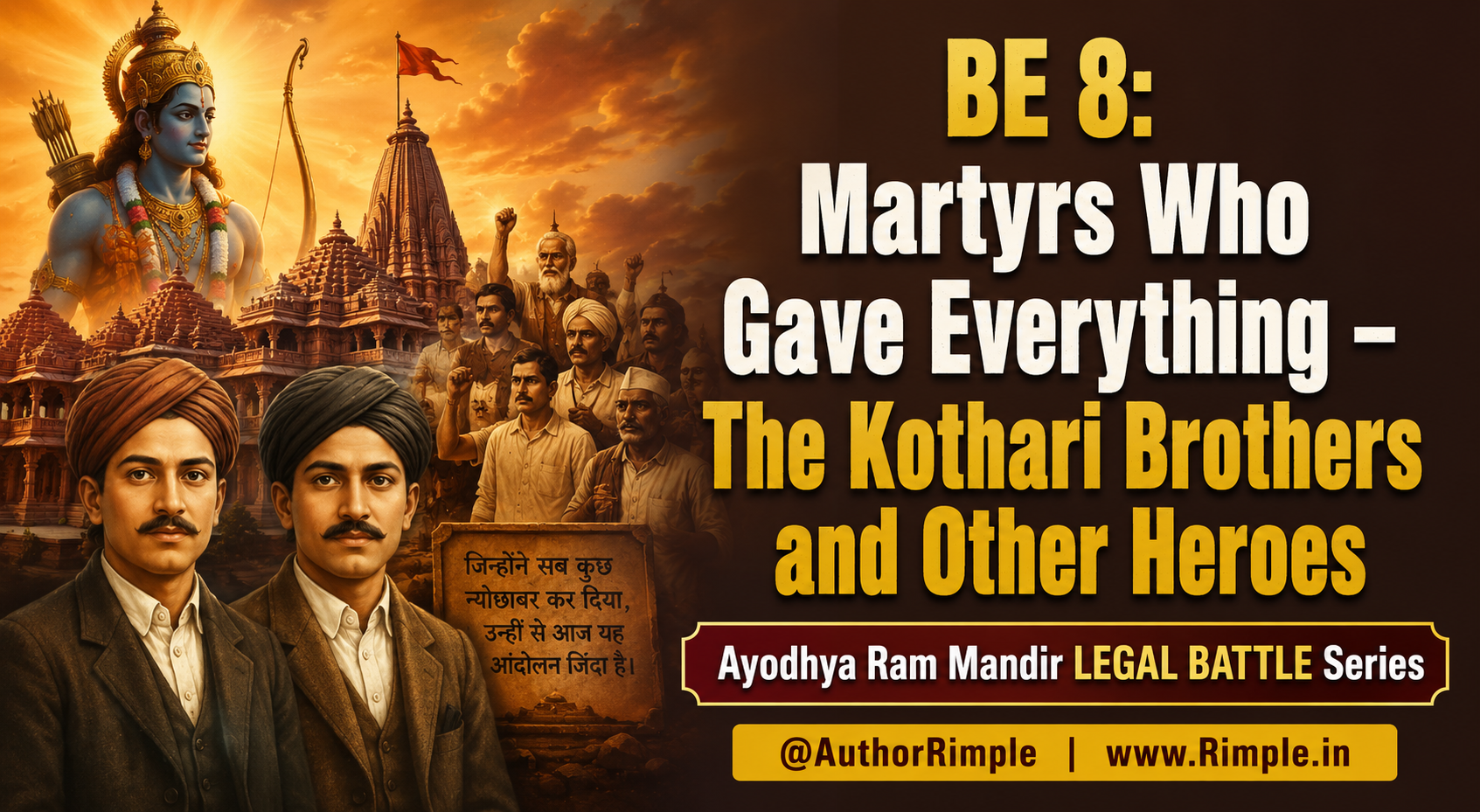
The fight for Ram Janmabhoomi was never easy. It demanded blood, tears, and the ultimate sacrifice. While many Hindus fought through courts and peaceful movements, some gave their lives so that future generations could see a temple at Shri Ram’s birthplace. This episode is about those real heroes – the martyrs whose sacrifice should make every Hindu heart cry with gratitude and burn with anger at the injustice they faced.
The Deadly Kar Seva of 1990
In 1990, the Ram Janmabhoomi movement reached a boiling point. Lakhs of kar sevaks from every corner of India answered the call to reach Ayodhya. They wanted to perform symbolic kar seva – offering their labor to build the Ram Temple.
The Uttar Pradesh government was then led by Mulayam Singh Yadav. Instead of respecting the sentiments of millions of Hindus, he ordered the police to stop the kar sevaks at any cost. He gave clear instructions: “Use bullets if needed.” On October 30 and November 2, 1990, the police opened fire on unarmed, peaceful Hindu devotees.
This was not a riot. These were ordinary Hindus – students, farmers, shopkeepers, and saints – marching with saffron flags and chanting “Jai Shri Ram.” They carried no weapons. Yet the government treated them like enemies in their own country. Bullets rained down on them. Many fell on the sacred ground of Ayodhya, their blood mixing with the soil of Ram Janmabhoomi.
Official records say 17 people died. The real number was much higher. Many bodies were quietly disposed of. This state-sponsored killing shocked the Hindu community. A government elected by the people had ordered police to shoot their own citizens for wanting to worship their God.
The Immortal Story of the Kothari Brothers
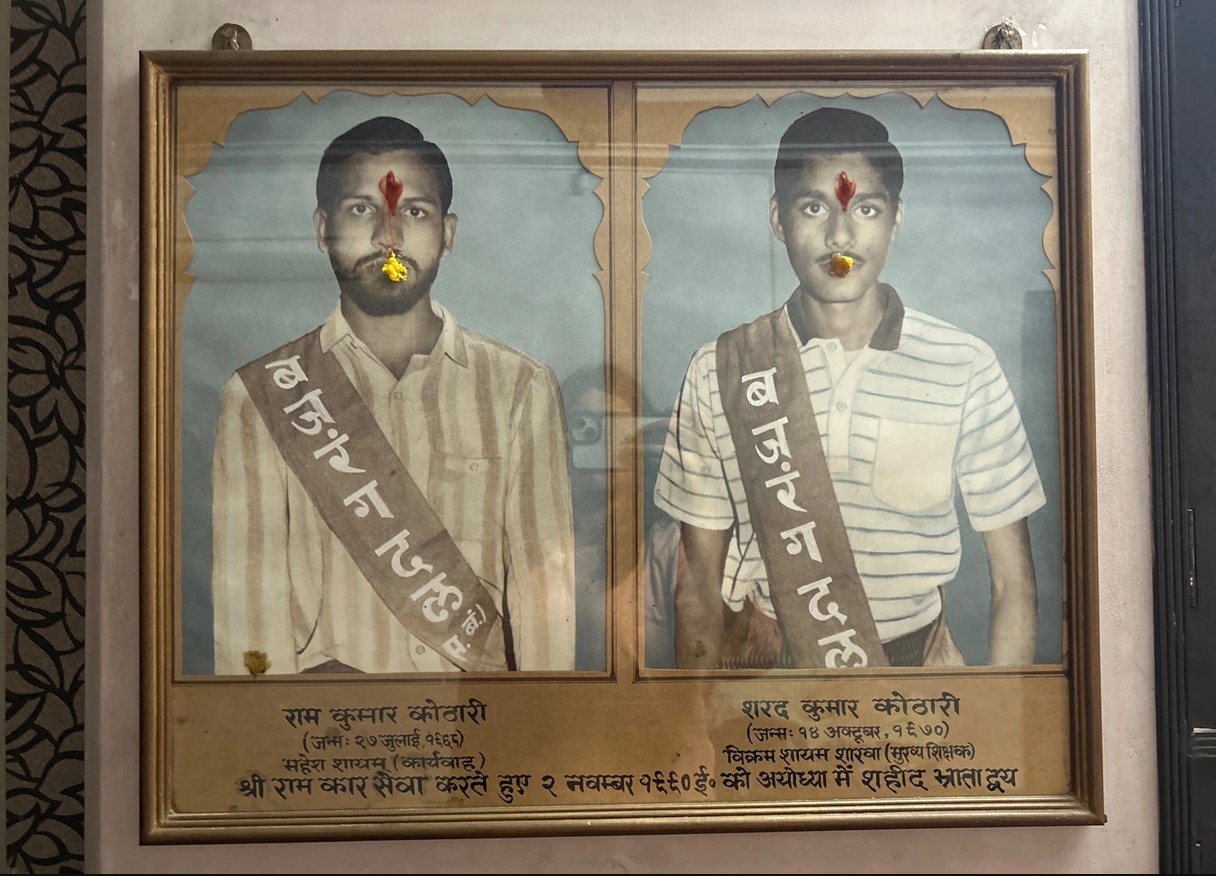
Among the many martyrs, two young brothers from Kolkata became symbols of supreme sacrifice. Their names were Ram Kothari (22 years old) and Sharad Kothari (20 years old).
These two brothers came from a simple, devoted Hindu family. Inspired by the Ram Janmabhoomi call, they left their home and studies to serve Shri Ram. They reached Ayodhya full of bhakti and courage.
On that fateful day in 1990, as police bullets flew, Ram and Sharad showed unbelievable bravery. Eyewitnesses say the brothers climbed the Babri Masjid structure and hoisted a big saffron flag on top. That fluttering flag was a direct challenge to centuries of humiliation. It declared: “This land belongs to Shri Ram.”
Moments later, police bullets hit both brothers. They fell down, their bodies soaked in blood, but their faces peaceful. They died smiling, with the name of Ram on their lips. Two young lives, full of dreams, were cut short for the love of Shri Ram.
Their mother, when she received the news, did not break down in despair. With tears in her eyes and pride in her voice, she said:
“My sons died for Ram. I am proud of them.”
The entire nation was shaken. The bodies of the Kothari brothers were taken in Asthi Kalash Yatra (procession of sacred ashes) across many states. Lakhs of Hindus lined the roads, crying openly, offering flowers, and chanting “Jai Shri Ram.” The processions awakened millions who had been sleeping. Young boys and girls took vows to continue the fight. The Kothari brothers became legends – symbols of Hindu youth power and sacrifice.
Other Brave Martyrs Who Laid Down Their Lives
The Kothari brothers were not alone. Many others gave their lives in the same firing and related incidents:
- Mahant Avaidyanath: A fearless saint and spiritual leader of Gorakhnath Peeth. He faced death threats many times but never stopped supporting the temple movement. His courage inspired thousands of sadhus to join the struggle.
- Ashok Singhal: Senior VHP leader who was brutally beaten and injured during the 1990 events. He continued fighting despite physical pain and police cases till his last breath.
- Santosh Dubey: A dedicated kar sevak who was arrested and tortured after the events. Even in jail, he proudly declared, “I would do it again for Shri Ram.” He spent years behind bars but never regretted his sacrifice.
- Hundreds of unnamed kar sevaks: Poor farmers from Bihar and Uttar Pradesh, young students from small towns, and saints from different akharas. Many died on the spot. Many more died later from bullet injuries. Their families never received justice. No big compensation. No national mourning. Just silent tears in villages across India.
Each of these martyrs had families – mothers who waited for them, wives who became widows, children who lost fathers. Their sacrifice was not for power or money. It was pure love for Shri Ram and a burning desire to free his birthplace.
The Painful Reality of Hindu Suffering
Think about what these families went through.
A mother in Kolkata lighting a lamp every day for her two dead sons. A wife in a village waiting for her husband who never returned from Ayodhya. Young children growing up hearing stories of how their father died for Ram Mandir. These images should break your heart.
The government that ordered the firing never apologized properly. Instead, they tried to hide the numbers and blamed the Hindus for “provoking” the police. Muslim leaders celebrated the deaths and demanded more action against kar sevaks. The same system that had betrayed Hindus for centuries showed its anti-Hindu face once again.
Police, who were supposed to protect citizens, became killers on government orders. This was the harsh reality Hindus faced even after independence. They were attacked in their own holy city for demanding what was stolen from them.
How Media and System Hid These Heroes
Most big media channels and school textbooks almost erased these martyrs. They called the kar sevaks “extremists” and “rioters.” They rarely showed the emotional stories of the Kothari brothers or the pain of their families. Instead, they focused on painting Hindus as aggressors.
This was part of the bigger brainwashing. For years, we were taught to feel shame for our own martyrs while feeling pity for those who supported the mosque built on our temple. Many Hindus grew up not even knowing the names of these brave sons who died for Shri Ram. We were made to feel that our culture, our faith, and our heroes were somehow inferior.
The Eternal Debt We Owe These Martyrs
These heroes did not die in vain. Their blood became the foundation for future victories. Every brick of the Ram Mandir carries their sacrifice. Their courage inspired the 1992 reclamation and the long legal battle that followed.
When you hear “Kothari Brothers,” remember two young men from Kolkata who chose death over compromise. When you hear “Jai Shri Ram,” remember the martyrs who made that slogan powerful with their blood.
Their sacrifice teaches us that protecting Dharma has a price. Hindus have paid this price again and again – from Mughal times to police bullets in independent India. Yet they never gave up.
The pain of these families should make every Hindu emotional. The injustice should make us angry. The bravery should make us proud. We must never forget these real heroes who gave everything so that Ram Lalla could finally sit on his throne.
Their stories are a permanent reminder: Hindus have suffered greatly, but their bhakti and courage have always been greater.
Jai Shri Ram!
More Episodes in this Series will be added. Save / Bookmark this site or link: Ayodhya Ram Mandir Legal Battle Series
Also Read:
ISRO and Science Series | Pandharpur Series | Kamakhya Temple Series | Jagannath Series | Rothschild Family Series | Sikhism Series | Durga Saptashati Series | Navratri Series | British Agent Gandhi Series | Operation Sindoor Series | Satan Teresa (and not Mother Teresa) Series | Hinduism Articles | Ramakrishna Paramhansa Series | Ayodhya Ram Mandir Legal Battle Series