
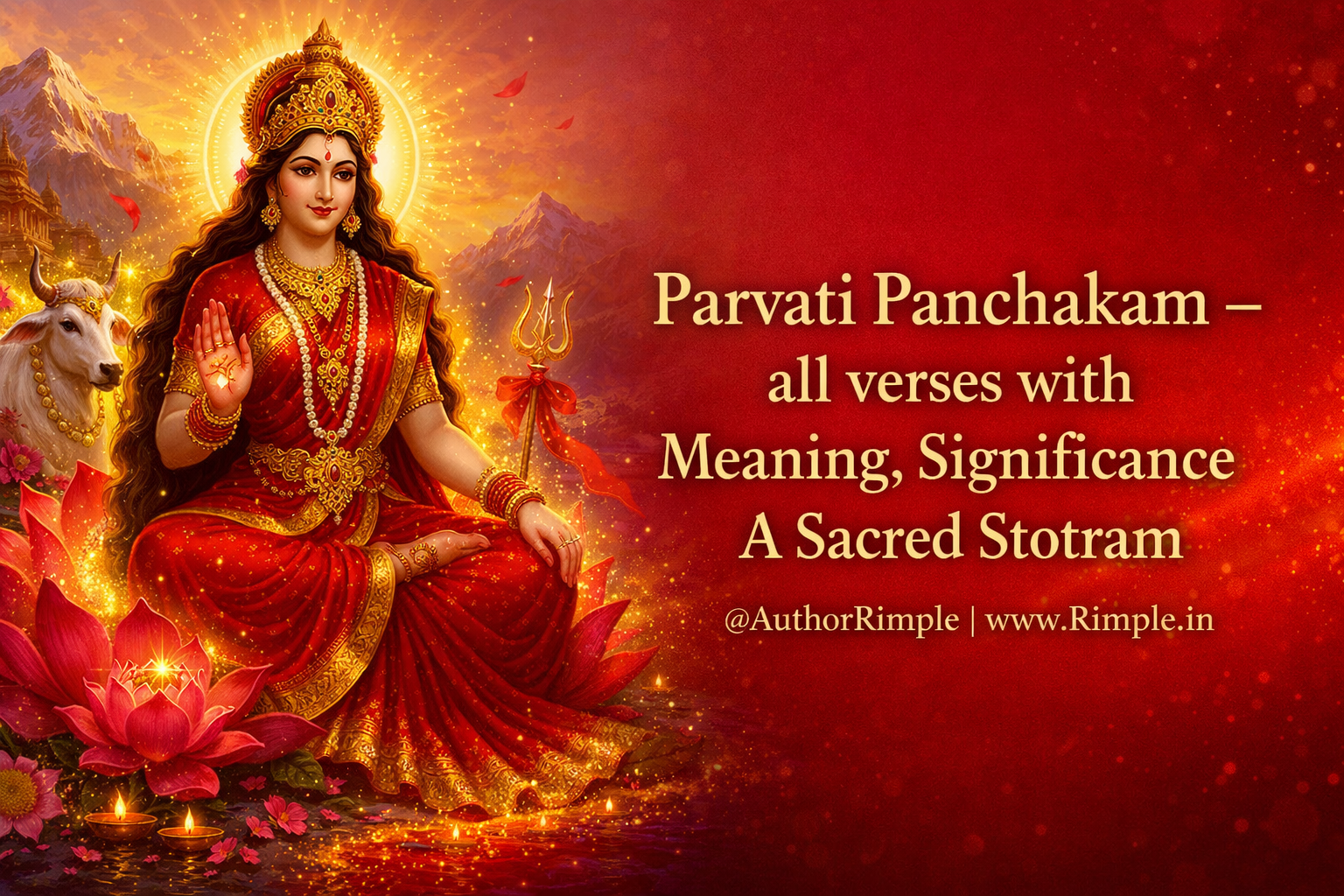
This is one of my favorite. Parvati Panchakam is a sacred five-verse hymn composed by the great saint and Jagadguru Sri Adi Shankaracharya. This beautiful stotra, found in traditional collections of devotional hymns across India, lovingly praises the Divine Mother Goddess Parvati – the eternal energy of creation, the compassionate protector, and the beloved consort of Shiva. With its powerful yet tender words, it describes her fierce form that destroys evil, her gentle grace that guides souls through life’s ocean, and her blissful presence that brings peace and fulfillment. Devotees, especially young women, chant it with faith to receive her blessings for a happy married life, inner strength, and spiritual joy. May the Divine Mother’s grace flow through these verses and touch every heart.
Verse 1
Sanskrit:
विनोदमोदमोदिता दयोदयोज्ज्वलान्तरा
निशुम्भशुम्भदम्भदारणे सुदारुणाऽरुणा ।
अखण्डगण्डदण्डमुण्डमण्डलीविमण्डिता
प्रचण्डचण्डरश्मिरश्मिराशिशोभिता शिवा ॥ १॥
English Transliteration:
vinodamodamoditā dayodayojjvalāntarā
niśumbhaśumbhadambhadāraṇe sudāruṇā’ruṇā ।
akhaṇḍagaṇḍadaṇḍamuṇḍamaṇḍalīvimanditā
pracandacaṇḍaraśmiraśmirāśiśobhitā śivā ॥ 1 ॥
Explanation
The Divine Mother is filled with pure joy and playful delight. Her heart glows brightly with the light of endless compassion. With fierce beauty, she shatters the pride of the demons Nishumbha and Shumbha. Radiant like the crimson glow of dawn, she wears a garland of unbroken maces and skulls, shining with the dazzling rays of a thousand suns. O auspicious Shiva, you stand as the fierce yet tender protector who removes all darkness with your divine light.
Verse 2
Sanskrit:
अमन्दनन्दिनन्दिनी धराधरेन्द्रनन्दिनी
प्रतीर्णशीर्णतारिणी सदार्यकार्यकारिणी ।
तदन्धकान्तकान्तकप्रियेशकान्तकान्तका
मुरारिकामचारिकाममारिधारिणी शिवा ॥ २॥
English Transliteration:
amandanandinandinī dharādharendranandinī
pratīrṇaśīrṇatāriṇī sadāryakāryakāriṇī ।
tadandhakāntakāntakapriyeśakāntakāntakā
murārikāmacārikāmamāridhāriṇī śivā ॥ 2 ॥
Explanation
The Divine Mother is the source of boundless bliss and joy. She is the beloved daughter of the king of mountains, Himalaya. With her gentle hands, she helps us cross the vast and stormy ocean of worldly sorrows. Always engaged in noble and auspicious deeds, she is the dearest beloved of Shiva, who destroyed the demon Andhaka. As the companion of Vishnu’s consort, she carries the power to remove every obstacle and enemy. O gracious Shiva, you guide every soul toward goodness and light.
Verse 3
Sanskrit:
अशेषवेषशून्यदेशभर्तृकेशशोभिता
गणेशदेवतेशशेषनिर्निमेषवीक्षिता ।
जितस्वशिञ्जिताऽलिकुञ्जपुञ्जमञ्जुगुञ्जिता
समस्तमस्तकस्थिता निरस्तकामकस्तवा ॥ ३॥
English Transliteration:
aśeṣaveṣaśūnyadeśabhartṛkeśaśobhitā
gaṇeśadevateśaśeṣanirnimeṣavīkṣitā ।
jitasvaśiñjitā’likuñjapuñjamañjuguñjitā
samastamastakasthitā nirastakāmakastavā ॥ 3 ॥
Explanation
The Divine Mother shines even in the empty spaces beyond all forms, adorned beautifully in the matted locks of her beloved Shiva. Ganesha and all the gods worship her with unblinking eyes full of love and wonder. Her soft tresses create a sweet, humming melody like gentle bees in a garden of flowers. She stands supreme above all worlds and has completely conquered and cast away every trace of selfish desire. In her presence, the heart finds perfect peace and freedom.
Verse 4
Sanskrit:
ससम्भ्रमं भ्रमं भ्रमं भ्रमन्ति मूढमानवा (look at the end of the article after all 5 verses)
मुधाऽबुधाः सुधां विहाय धावमानमानसाः ।
अधीनदीनहीनवारिहीनमीनजीवना
ददातु शंप्रदाऽनिशं वशंवदार्थमाशिषम् ॥ ४॥
English Transliteration:
sasambhramaṃ bhramaṃ bhramaṃ bhramanti mūḍhamānavā
mudhā’budhāḥ sudhāṃ vihāya dhāvamānamānasāḥ ।
adhīnadīnahīnavārihīnamīnajīvanā
dadātu śaṃpradā’niśaṃ vaśaṃvadārthamāśiṣam ॥ 4 ॥
Explanation
Deluded human beings wander restlessly in circles of confusion, chasing empty illusions and forgetting the sweet nectar of true devotion. Like foolish fish struggling without water, the weak and helpless souls run after fleeting things. Yet the compassionate Divine Mother, who lovingly sustains even the tiniest creatures in need, grants her eternal blessings of peace and control over life. May she bless every heart with unending joy and guide us gently back to her.
Verse 5
Sanskrit:
विलोललोचनाञ्चितोचितैश्चिता सदा गुणैर्-
अपास्यदास्यमेवमास्यहास्यलास्यकारिणी ।
निराश्रयाऽऽश्रयाश्रयेश्वरी सदा वरीयसी
करोतु शं शिवाऽनिशं हि शंकरांकशोभिनी ॥ ५॥
English Transliteration:
vilolalocanāñcitocitaiścitā sadā guṇair-
apāsyadāsyamevamāsyahāsyalāsyakāriṇī ।
nirāśrayā’’śrayāśrayeśvarī sadā varīyasī
karotu śaṃ śivā’niśaṃ hi śaṅkarāṅkaśobhinī ॥ 5 ॥
Explanation
The Divine Mother’s beautiful eyes move gracefully, always adorned with the finest virtues. Her lovely smile and enchanting dance fill every heart with joy and devotion. Though she herself needs no support, she is the ultimate refuge for all who seek shelter. Ever supreme and most excellent, she shines radiantly in the embrace of Shiva, multiplying his glory. O auspicious Shiva, may you forever bestow peace and goodness upon us, day and night, with your infinite grace.
इति पार्वतीपञ्चकं समाप्तम् ॥
May the loving gaze of the Divine Mother Parvati bless you with peace, strength, and pure devotion. Chant these verses with an open heart, and feel her gentle presence guiding your life toward everlasting joy.
Glimpse of Adi Shankaracharya’s Poetic Brilliance
Like I shared, this is one of my favorite. It’s because its very very poetic. I cannot stop praising the poetical tone of any works of Adi Shankaracharya. But in this, I shall explain his brilliance using just one line.
Yes, that line in bold in Verse 4 ससम्भ्रमं भ्रमं भ्रमं भ्रमन्ति मूढमानवा is pure poetic magic!
Listen to how it flows:
Sa-sam bhramam bhramam bhramam bhramanti mūḍha-mānavā…
The repetition of “bhramam bhramam bhramam” and then “bramamti” creates a spinning, dizzying rhythm – exactly like the restless, confused circling of the mind. It feels as if the words themselves are whirling around, mimicking the endless, dizzy dance of deluded souls who keep going round and round in the same old patterns of life.
Simple and beautiful meaning:
Deluded human beings (mūḍha-mānavā) wander in great confusion and hurry (sa-sambhramam), spinning again and again (bhramam bhramam bhramam), lost in endless circles of illusion.
Adi Shankaracharya paints a tender yet piercing picture here:
We, the ordinary souls, run frantically after fleeting pleasures, chasing shadows, forgetting the sweet nectar (sudhā) of true devotion to the Divine Mother. Like foolish fish (mīna) struggling without water, we exhaust ourselves in this dry desert of ego and desire.
Yet right after this vivid image of our helpless wandering, the verse turns into a loving prayer to the Goddess:
She, the compassionate Divine Mother, who sustains even the tiniest, most helpless creatures, may she grant us her blessings of peace (śam) and inner control, so we may finally rest in her.
The poetic beauty lies in that contrast – first the dizzy, breathless repetition that makes us feel the madness of worldly life, and then the gentle invitation to surrender to Parvati’s grace, which alone can stop the spinning wheel and bring stillness.
When you chant it slowly, you can almost feel the whirling mind slowing down… and her peaceful presence quietly entering the heart.
It’s one of those lines that stays with you – simple Sanskrit, yet deeply touching. The rhythm itself becomes a meditation on how lost we are without her, and how safe we become when we turn to the Divine Mother.
One day, I shall write a book on the poetical brilliance of Adi Shankaracharya using his stotrams. Imagine, explaining each line like this, I don’t even know if someone reads such lengthy articles in the times when distraction every 1 minute is normal and Reading is a lost art.
Also Read: