
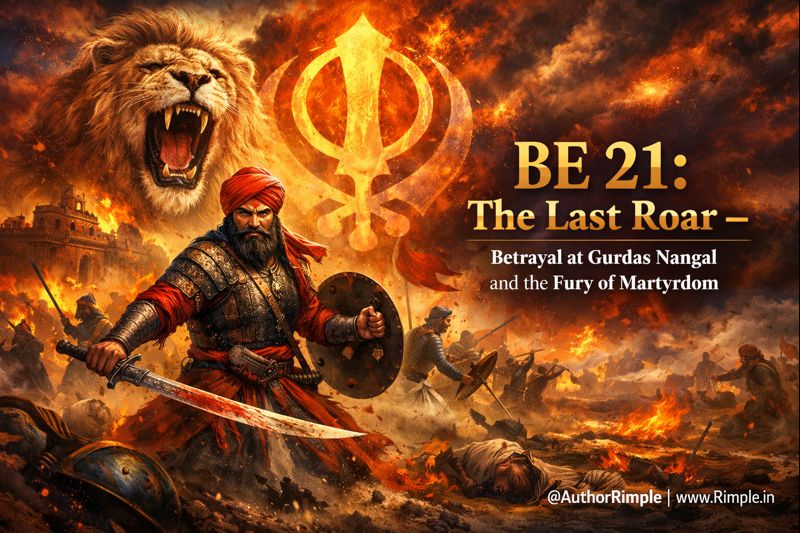
In the spring of 1715, Punjab’s green fields hid a story of unbelievable courage and heartbreaking cruelty. Banda Singh Bahadur, the brave Hindu Rajput turned Sikh lion, had freed so much land from Islamic invaders. He gave farms back to poor Hindu farmers, ended cruel taxes, and made low-caste people feel proud in the Khalsa. But the Islamic invaders hated this. They could not stand seeing Hindus and Sikhs united, free, and strong in Hari’s name. These invaders were pure evil: they destroyed thousands of Hindu temples, forced families to pay jizya until they starved, slaughtered sacred cows in front of crying children to mock Hindu faith, raped women in villages to force them into Islam, and beheaded brave men who refused their kalima prayer, laughing as blood spilled. Their hearts were black with hate, their “holy” war a lie to steal and kill. Now, they wanted Banda dead. This chapter tells the painful but proud story of the siege at Gurdas Nangal, the cruel parade to Delhi, and Banda’s martyrdom—a Hindu-Sikh fire that burned brighter than the invaders’ darkness. Every reader should feel the invaders’ cruelty and hate their evil, while cheering the bravery of our heroes who stood tall for dharma with Hari in their hearts.
The Siege of Gurdas Nangal: Eight Months of Starving Lions
In March 1715, Islamic Invader Abdus Samad Khan brought 100,000 soldiers to trap Banda and his 4,000 brave Sikhs in a small mud fort at Gurdas Nangal village near Gurdaspur. These invaders were monsters: fresh from raiding Hindu villages, burning homes with families inside, killing cows to spit on faith, raping mothers while children cried, and flogging men until they said kalima or died. They surrounded the fort like wolves, cutting off food and water, thinking the Sikhs would surrender fast.
But Banda’s men were lions. For eight long months—from March to December—they fought with unbelievable courage. Every day, small groups sallied out to gather grass for food, their arrows flying like fire to push back ghazi attackers screaming jihad lies. The invaders’ qazi priests chanted useless prayers, calling Sikh strength “magic spells,” but Hari’s name was the real power. Inside, Sikhs ate bark from trees, leaves, even leather from shoes, their bodies growing thin but hearts strong. They shared the last bite, sang Gurbani together, and never bowed to the invaders’ demands to convert.
Sadly, some weakness grew inside. Faction fights started—Bandais (who followed Banda’s simple ways) argued with Tat Khalsa (strict followers of Guru Gobind’s rules) over robes and slogans. This division hurt unity, and about 15,000 supporters outside deserted in fear. But the 4,000 inside stayed true. On December 7, the invaders stormed the fort with cannons blasting mud walls. Starved Sikhs, too weak to stand long, fought with bare hands and broken spears. 300 were speared where they lay, their blood soaking the earth like a sacred gift to Hari. 200, including Banda, were chained like animals. The siege ended not in defeat, but in glory—Hindu-Sikh bravery shining against Islamic hate.
Capture and Parade of Shame: A Cruel Show of Islamic Evil
The Islamic invaders, full of lowly pride, turned Banda’s capture into a show of terror from December 1715 to February 1716. They paraded 740 Sikh prisoners from Punjab to Delhi—a 1,000-kilometer march of shame meant to break Sikh spirits. Banda was locked in an iron cage on an elephant’s back, his face blackened with ash to mock him, chains cutting his skin. Other prisoners, faces smeared black and wearing sheepskin caps like a cruel joke, were tied to camels. Behind them, 2,000 Sikh heads swung on spears, dripping blood, and 700 cartloads of cut limbs rolled along—a horrible display of Islamic cruelty. As they passed Lahore and Sirhind, Islamic Invader Zakaria Khan added 500 more heads, laughing as he piled them high.
Crowds jeered, but Sikhs sang Hari’s name, their voices calm and strong. This was no shame—it was courage. Hindus hiding along the road slipped food to prisoners, tears in their eyes for these heroes who fought the same invaders who had burned their temples and raped their families. The parade showed Islamic evil: celebrating death, mocking faith, while Hindus and Sikhs faced it with heads high, hearts full of Hari.
The Abattoir of Delhi: A Tiger’s Roar Against Islamic Knives
In Delhi from March to June 1716, Islamic Invader Farrukh Siyar turned the city into a slaughterhouse. For seven days in March, 100 Sikhs were killed daily—those who refused kalima sawn in half slowly, bodies splitting with cracking bones and spilling guts, or burned alive, skin blistering and peeling as flames ate them, screams mixing with qazi chants like a devil’s song. Not one Sikh bowed—their blood a river shaming the invaders’ false faith.
The worst came on June 9 at Qutab Minar. Banda, dressed in mock robes to humiliate him, sat with his 4-year-old son Ajai in his lap. Ordered to kill his child or convert, he refused with calm eyes. The executioner slashed Ajai’s throat—the boy’s small body jerking, blood spraying hot across Banda’s face. Laughing guards ripped out Ajai’s steaming heart and liver, pinned Banda’s jaws open, and forced the child’s organs into his mouth. He gagged, choking on his son’s flesh, but spat defiance, cursing the Islamic cruelty with Hari’s name. They blinded him next, gouging eyes until blood ran like tears. Thumbs crushed, nails splintering. Skin flayed in strips from feet to head, raw muscle shaking in open air. Limbs hacked joint by joint, fingers fed to dogs, arms and legs quartered while alive, torso a stump of pain. Red-hot pincers tore flesh, each pull a scream, until chopped into 100 pieces. Yet Banda’s roar never stopped—cursing their evil faith till the axe fell. All 740 Sikhs followed, none yielding, their blood staining Delhi’s stones—a tiger’s spirit unbowed against caliphate knives.
This cruelty shows Islamic evil: killing a child, forcing a father to eat his heart—all for refusing their god. While Hindus and Sikhs died singing Hari, invaders laughed like demons. Hate this evil—never trust those who hide hate behind prayer.
A Doha of Defiance: Unyielding Against Evil
Banda carried the Gurus’ words like a shield:
Gurmukhi: ਹਰਿ ਜਨੁ ਹਰਿ ਜਨੁ ਕਹਾਵੈ ਸੋਈ ॥ ਧਰਮੁ ਨ ਛੋਡੈ ਕਦੇ ਨ ਡਰੈ ॥
Devanagari: हरि जनु हरि जनु कहावै सोई ॥ धर्मु न छोडै कदे न डरै ॥
English: The true servant of Hari is called His own; they never abandon dharma, never fear.
This doha is like a mountain standing tall against a raging storm, its peak glowing with Hari’s light. It says those who love Hari are His true warriors, their hearts tied to His name like roots to the earth. They hold fast to dharma—what’s right—no matter how sharp the enemy’s swords or how loud the fatwas scream. Chanting Hari’s name, they stand fearless, like a tree that bends but never breaks, their spirit wrapped in the Divine’s unbreakable strength. It’s a call to live with courage, to sing Hari’s love through every battle, your heart shining like a star that no darkness can dim.
Another hymn burns like a warrior’s fire:
Gurmukhi: ਹਰਿ ਕਾ ਨਾਮੁ ਜਪਹੁ ਮਨ ਮੇਰੇ ॥ ਸਭਿ ਦੁਖ ਭੰਜਨੁ ਸਚੁ ਸੁਖੁ ਤੇਰੇ ॥
Devanagari: हरि का नामु जपहु मन मेरे ॥ सभि दुख भंजनु सचु सुखु तेरे ॥
English: Chant Hari’s name, O my heart; it breaks all pain, bringing true peace.
This verse is like a cool river flowing through a burning desert, soothing your soul with peace. It asks you to sing Hari’s name, letting it wash away every sorrow, like rain on dry land. His name is a truth that brings joy, a gentle hug from the Divine that calms your fears. When you chant it, your heart blooms like a flower under the warm sun, carrying you through pain to a place of endless, beautiful calm, wrapped in Hari’s loving light.
Legacy and Sacred Places: A Lion’s Eternal Fire
Banda’s martyrdom was a holy yajna—a sacrifice like in Pauranic tales where good fights evil forces. His stand inspired generations to hate tyranny. Gurdwara Banda Bahadur Garhi in Gurdas Nangal marks the mud fort’s courage. Other spots like Gurdwara Lohgarh remember his steel heart.
Hindu Roots Reinforced: A Pauranic Sacrifice Against Islamic Evil
Banda’s martyrdom echoed Pauranic heroes sacrificing against asuric (demonic) forces like Islam’s cruelty. His Rajput blood carried Vedic fire, a Hindu-Sikh yajna against invaders who flayed skin, forced cannibalism, and bricked children. In his brave end, Sikhism shone as Hindu-rooted strength, a flame guarding dharma with Hari’s grace. Every reader should feel the invaders’ evil—killing babies, forcing fathers to eat sons’ hearts—and hate their darkness, while cheering Hindu-Sikh bravery that stood unbowed for truth. Banda Singh Bahadur—a true hero, a lion forever.
Also Read: