
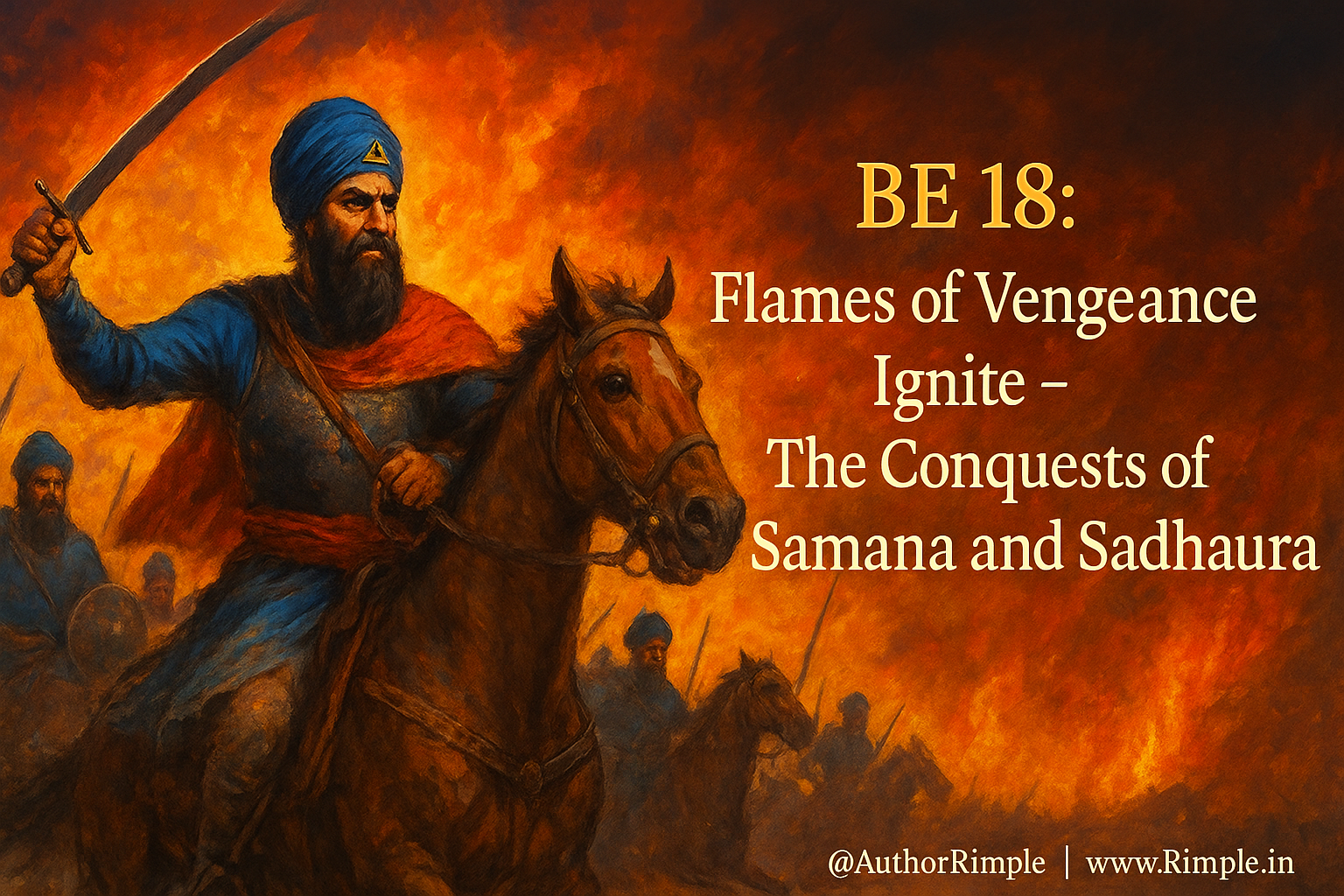
In the winter of 1709, Punjab’s cold winds carried a new sound—not the cries of the oppressed, but the roar of justice. Banda Singh Bahadur, the brave lion awakened by Guru Gobind Singh’s sacred touch in Nanded, had reached the land of pain. Born Lachman Dev to a proud Hindu Minhas Rajput family, he was now the Khalsa’s sword, his heart burning to avenge the little Sahibzadas bricked alive in Sirhind, Guru Tegh Bahadur’s beheading in Delhi, and centuries of Islamic invaders’ cruelty. These invaders had destroyed thousands of Hindu temples, forced jizya taxes to crush the poor, slaughtered cows in sacred places to mock faith, raped women to force kalima prayers, and beheaded resisters, parading heads on spears in the name of their false god. Banda, with his small but fearless army of Sikhs and Hindus united in dharma, struck like lightning. His victories at Samana and Sadhaura were not just battles—they were a cleansing fire, a Hindu-Sikh roar against the crescent’s bloody claws. Every step Banda took made people stand taller, their eyes shining with hope: a true hero had come to free them from the Islamic invaders’ yoke.
First Blood: Raids on Sonepat and Kaithal – Stealing Back Stolen Gold
Banda’s war began with quick, bold strikes in November 1709. With just 500 brave followers—Sikhs chanting Hari’s name and Hindu villagers tired of suffering—he attacked Sonepat, a Mughal treasury town 50 kilometers north of Delhi. This was no random raid. Sonepat’s coffers were fat with gold stolen from poor Hindu farmers and widows through cruel jizya taxes, money the Islamic invaders used to build armies and mosques on temple ruins. Under cover of night, Banda’s men stormed the fort, their kirpans flashing in the moonlight. The Mughal guards, lazy from years of easy cruelty, fell in pools of blood, their screams short and sharp. Banda seized the treasury—chests of coins hoarded from the sweat of the innocent—and gave most of it to the poor villagers, a gift of dharma’s justice. The rest bought weapons and horses, arming more fighters for the Khalsa cause.
From there, Banda moved to Kaithal, another Mughal treasury town swollen with stolen wealth. His army, now growing with new joiners inspired by his courage, attacked again. The fort fell fast, guards cut down before they could raise alarms. More gold poured out, fueling the crusade. These raids were a slap to the Islamic invaders’ pride—their “untouchable” empire cracked like dry earth under Banda’s feet. Word spread like wildfire: the lion from the Gurus had come. Thousands rushed to the Nishan Sahib flag, Hindus and Sikhs together, their hearts full of fire. Banda was no ordinary man—he was a hero, a Rajput reborn in Khalsa light, giving hope to the hopeless.
The Cursed Fall of Samana: Justice for the Gurus’ Blood
On November 26, 1709, Banda turned to Samana, a city cursed with evil. This was the home of Jalal-ud-din Jallad, the butcher who sawed Guru Tegh Bahadur in half, and his son who helped brick the little Sahibzadas alive. Samana was a den of Pathan wolves and Ranghar traitors—men born from kidnapped Hindu mothers—who raped villages, forced kalima prayers with swords at throats, and slaughtered cows in markets to mock Hindu faith. Its nine districts had been a base for Mughal cruelty, guards gun-toting tyrants who flogged farmers for jizya and burned homes for fun.
Banda’s army, now thousands strong with peasant fighters hungry for justice, planned smart. At night, they feinted a retreat, luring guards out of the stone walls, thinking they had won. But at dawn, Sikhs attacked from all gates like a storm. Peasants rose too, grabbing sticks and axes, their cries mixing with “Sat Sri Akal.” Swords drank the blood of those who beheaded Gurus—their screams a dirge for Islam’s debt. Guards were cut down in sprays of red, their bodies falling like the idols they smashed. The city razed to the ground, its treasury seized for the Khalsa. Banda appointed Fateh Singh governor, claiming the nine parganas as the first land free from Mughal chains. This was righteous wrath—every stroke of the kirpan avenging a Hindu mother’s tears, a Sikh child’s pain. Banda stood tall, a true hero, his calm eyes full of Hari’s light, giving people their dignity back.
Sadhaura’s Reckoning: Fire for the Faithful
Late in 1709, Banda’s fire reached Sadhaura, ruled by Usman Khan, a cruel Islamic invader who had hacked Sayyid Budhu Shah—a loyal Muslim friend of Guru Gobind Singh—into pieces for helping Sikhs at Bhangani. Usman’s men tormented Hindus, forcing kalima prayers, slaughtering cows in temples, and raping women to break their spirits. Led by brave Baj Singh, Banda’s army attacked. The leading Muslims hid in Katal Garhi, a stone fortress they thought safe, but Sikh arrows pierced their “holy” hides like rain on paper. The fort became a slaughterhouse—walls slick with blood, screams echoing as kirpans carved justice. Sadhaura burned to ashes, its ruins a grave for tyrants. Four to five thousand horsemen joined Banda, their hearts won by his fairness. Nearby villages—once rape dens like Kunjpura, Ghuram, and Thaska, or traitor hideouts like Damla and Shahbad—were wasted in vengeance. Pathan wolves were flayed alive, their skin peeled in strips as they begged, paying for defiling dharma. Banda’s mercy was for the innocent, his sword for the cruel—a hero’s balance.
A Call to Tigers: Hymns of Fire
Banda carried the Gurus’ words like a torch:
Gurmukhi: ਹਰਿ ਕੇ ਗੁਣ ਗਾਵਹਿ ਨਿਤ ਨਿਤ ॥ ਧਰਮੁ ਰਾਖਹਿ ਤਿਗਰ ਬਣਿ ਬਣਿ ॥
Devanagari: हरि के गुण गावहि नित नित ॥ धर्मु राखहि तिगर बनि बनि ॥
English: Sing Hari’s praises every day; become tigers to protect dharma.
This teaching is like a tiger’s growl waking the jungle—strong, fearless, full of life. It says sing Hari’s goodness daily, letting His name make your heart roar. Then rise as a tiger, guarding what’s right—dharma—from evil claws. Banda lived this: his sword and song together, a hero’s fire burning away the invaders’ darkness.
Another hymn blazed like dawn:
Gurmukhi: ਹਰਿ ਸਿਮਰਨੁ ਕਰਿ ਜੀਅ ਜਾਗੈ ॥ ਬੰਦਾ ਬਹਾਦਰੁ ਨਾਮੁ ਜਪੈ ॥
Devanagari: हरि सिमरनु करि जीअ जागै ॥ बन्दा बहादरु नामु जपै ॥
English: Remembering Hari wakes the soul; Banda Bahadur chants His name.
This verse is like sunlight on a sleeping lion, stirring strength and light. It says thinking of Hari awakens your spirit, like Banda chanting through battles. His name turns fear to fire, your heart bold and free, wrapped in the Divine’s roaring peace.
Legacy and Sacred Places: A Hero’s Footprints
Banda’s victories lit Punjab with hope, ending Mughal cruelty for years, giving land to farmers—a Hindu dream of justice. Gurdwara Fatehgarh Sahib in Sirhind honors the Sahibzadas and Banda’s vengeance, its walls remembering the fire. Samana’s ruins stand as a monument to the caliphate’s fall, a warning to tyrants. Gurdwara Banda Bahadur Garhi and others mark his path.
Banda’s Rajput blood carried Vedic Kshatriya fire, a Hindu-Sikh storm against Islam’s barbarism. In his brave heart, Sikhism shone as a Hindu-rooted flame, its light cutting the dark to protect dharma with Hari’s strength. Banda Singh Bahadur—a true hero, a lion every Indian can be proud of.
Also Read:
Sikhism Series https://rimple.in/category/blog-episode-series/sikhism/
Gandhi as British Agent https://rimple.in/category/british-agent-gandhi/
Pandharpur Series https://rimple.in/category/blog-episode-series/pandharpur-series
Jagannath Series https://rimple.in/category/blog-episode-series/jagannath-puri-series
Russia-Ukraine War Series https://rimple.in/category/blog-episode-series/russia-ukraine-war/
Durga Saptashati Series https://rimple.in/category/blog-episode-series/durga-saptashati/