
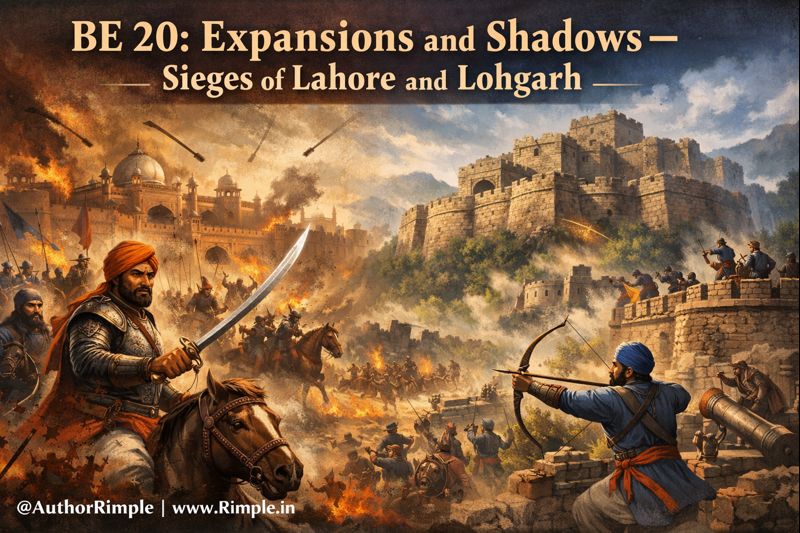
In the bright spring of 1710, Punjab’s fields were blooming with hope after Banda Singh Bahadur’s thunderous victories at Chappar Chiri and Sirhind. This brave Hindu Rajput turned Sikh warrior had crushed the evil Islamic invaders, avenging the little Sahibzadas bricked alive and freeing land from their cruel jizya taxes. Banda was a true hero—a lion whose heart burned with Hari’s light, giving poor Hindu farmers their own soil and making low-caste people stand tall in the Khalsa. But the Islamic invaders, those wolves who had destroyed thousands of Hindu temples, forced kalima prayers with swords at throats, slaughtered cows to mock faith, raped women in villages to break their spirits, and beheaded brave resisters for centuries, were not finished. They hated seeing Hindus and Sikhs united, free, and strong. Their cruelty was endless: burning homes with families inside, boiling priests alive, parading heads on spears—all in the name of their false god, while laughing like demons. But Banda’s fire spread, and every victory made people feel proud—Hindus and Sikhs together, one family in dharma, hating the invaders’ evil and loving Hari’s truth.
Lohgarh’s Rise: A Steel Fort for Free People
Early in 1710, Banda turned Mukhlispur in the Shiwalik hills into Lohgarh—the Fortress of Steel—a strong safe place high above the plains. Its walls rose like a mountain, a symbol of Hindu-Sikh strength against the invaders’ lies. Here, Banda struck coins with the words “Sikkay deg te khali halal”—meaning justice, food for all, and no cruel slaughter of animals like the Islamic invaders did to mock Hindus. He ended the zamindari system, where greedy Muslim landlords stole from poor Hindu farmers, giving the land back to the people who worked it—a dream from old Hindu times where everyone could live with dignity. Lohgarh was a golden start, a place where Hari’s name echoed in peace.
Banda’s wins kept coming. In Malerkotla, he took ransom money but spared lives for old ties. In Morinda, he punished betrayers who had helped Islamic invaders hand over Guru Gobind’s family. Towns like Hoshiarpur, Jalandhar, and Batala fell to his brave fighters, their youth joining the Khalsa with joy. In Amritsar, offerings poured in from Majha’s young men, inspired by Banda’s courage. Then came the bold siege of Lahore’s suburbs—the big city where Islamic invaders ruled with fear. Banda’s army devastated the outer areas, burning markets built on stolen Hindu gold, freeing low-caste people who joined the Khalsa in thousands, their hearts full of fire. The main walls held for now, but the suburbs lay in ruins—a message to the invaders: your time is ending.
Islamic Invaders Strike Back: The Cruel Siege of Lohgarh
But the Islamic invaders, full of hate for losing Sirhind, struck back hard. In November 1710, Islamic Invader Bahadur Shah sent 60,000 jihadist soldiers under Munim Khan to retake Sirhind and crush Lohgarh. These wolves retook Sirhind first, burning Sikh homes and shaving Hindu beards to hunt disguised fighters—a lowly trick to humiliate and catch the brave. Their cruelty was fresh: raiding villages, slaughtering cows in front of crying families, raping women to force Islam, flogging men until they said kalima or died, their bodies left for dogs. Fatwas called Sikhs kafirs, ordering death for anyone helping Banda.
The siege of Lohgarh was a storm of evil. 60,000 surrounded the hills, cutting food and water, starving the Sikhs inside. But Banda’s men fought like tigers—sallying out at night, arrows piercing invader hearts in silent kills, kirpans flashing in moonlight raids. Gulab Singh, a brave Sikh, tricked the enemy by dressing as Banda, drawing their chase so the real Banda escaped to the hills. From hiding, Banda sent a Hukumnamah urging Sikhs to wear the five K’s and shun intoxicants, keeping the Khalsa pure and strong. Even in shadows, wins came: in 1711 at Kalanaur, Banda showed mercy to surrendering Muslims, winning some to truth. In 1712, hill rajas in Kiratpur submitted, seeing his justice. In 1713, guerrilla fights in Gurdaspur ambushed invader patrols, arrows and swords carving freedom.
A Doha of Defiance: Unyielding Against Evil Storms
Banda carried the Gurus’ words like a shield:
Gurmukhi: ਹਰਿ ਜਨੁ ਹਰਿ ਜਨੁ ਕਹਾਵੈ ਸੋਈ ॥ ਧਰਮੁ ਨ ਛੋਡੈ ਕਦੇ ਨ ਡਰੈ ॥
Devanagari: हरि जनु हरि जनु कहावै सोई ॥ धर्मु न छोडै कदे न डरै ॥
English: The true servant of Hari is called His own; they never abandon dharma, never fear.
This doha is like a mountain standing tall against a raging storm, its peak glowing with Hari’s light. It says those who love Hari are His true warriors, their hearts tied to His name like roots to the earth. They hold fast to dharma—what’s right—no matter how sharp the enemy’s swords or how loud the fatwas scream. Chanting Hari’s name, they stand fearless, like a tree that bends but never breaks, their spirit wrapped in the Divine’s unbreakable strength. It’s a call to live with courage, to sing Hari’s love through every battle, your heart shining like a star that no darkness can dim, carrying the beauty of fearless faith.
Another hymn burns like a warrior’s fire:
Gurmukhi: ਹਰਿ ਕਾ ਨਾਮੁ ਜਪਹੁ ਮਨ ਮੇਰੇ ॥ ਸਭਿ ਦੁਖ ਭੰਜਨੁ ਸਚੁ ਸੁਖੁ ਤੇਰੇ ॥
Devanagari: हरि का नामु जपहु मन मेरे ॥ सभि दुख भंजनु सचु सुखु तेरे ॥
English: Chant Hari’s name, O my heart; it breaks all pain, bringing true peace.
This verse is like a cool river flowing through a burning desert, soothing your soul with peace. It asks you to sing Hari’s name, letting it wash away every sorrow, like rain on dry land. His name is a truth that brings joy, a gentle hug from the Divine that calms your fears. When you chant it, your heart blooms like a flower under the warm sun, carrying you through pain to a place of endless, beautiful calm, wrapped in Hari’s loving light.
Legacy and Sacred Places: A Hero’s Unbroken Fire
Banda’s expansions lit Punjab with freedom, ending Islamic invaders’ cruelty for years, giving land to farmers—a Hindu dream of justice. Gurdwara Lohgarh Sahib near Nahan marks his first capital, where steel walls stood for dharma. Gurdwara Sri Anandpur Sahib echoes his brave marches, a place of Khalsa pride. These spots are full of peace, remembering how one hero made the invaders run.
Hindu Roots Reinforced: A Vedic Golden Age Against Islamic Chains
Banda’s reforms mirrored Manu’s old Hindu laws of fair land and justice for all, purging the Islamic exploitation that stole from the poor to feed their jihad. His Rajput blood carried Vedic Kshatriya fire, a Hindu-Sikh storm against Islam’s barbarism. In his brave heart, Sikhism shone as a Hindu-rooted flame, its light cutting the dark to protect dharma with Hari’s strength. Every reader should feel the invaders’ cruelty—burning homes, raping women, killing children—and hate their evil, while cheering the bravery of our heroes who stood tall for dharma. Banda Singh Bahadur—a true legend, a lion every Indian can love and follow.
Also Read:
Gandhi as British Agent https://rimple.in/category/british-agent-gandhi/