
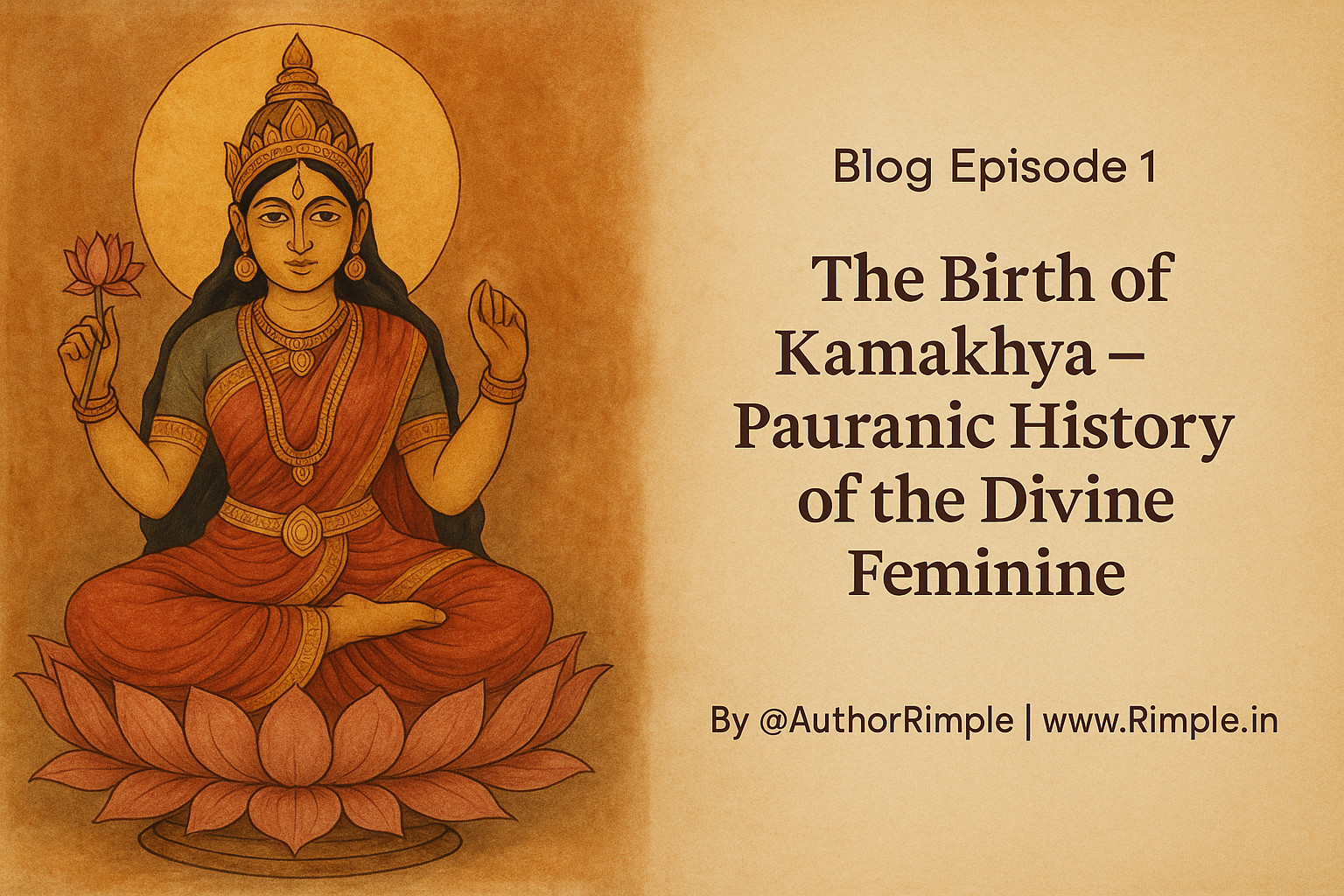
Stand atop Nilachal Hill, where the Brahmaputra River glimmers below like a silver ribbon under the moon’s soft glow. The air hums with an ancient song, carrying whispers of Devi Kamakhya, the mother of all creation. Here, where the yoni (womb) of Devi Sati fell, a sacred space was born—a temple that cradles the heart of womanhood. Close your eyes, feel the breeze kiss your face, and let’s journey into the Pauranic tales that weave the eternal tapestry of Kamakhya, stories that awaken bhakti and celebrate the divine feminine.
Long ago, when the cosmos swayed to the rhythm of creation, Devi Sati, daughter of King Daksha, gazed upon Bhagwan Shiva, the cosmic wanderer. His matted locks danced with the Ganga, his eyes burned with the fire of truth. Her heart, alight with bhakti, chose him as her beloved. But Daksha, proud and unyielding, scorned Shiva, the ash-smeared ascetic. Against her father’s will, Sati wed Bhagwan Shiva, their union a dance of shakti and shiva, feminine and masculine entwined. Imagine their love: the scent of wildflowers in their Himalayan abode, the sound of Shiva’s damaru echoing through misty valleys, the warmth of their bond lighting the stars.
Yet, sorrow loomed. Daksha held a grand yagna, inviting all deities but shunning Shiva. Sati, torn between father and beloved, arrived unbidden. The air grew heavy with Daksha’s insults, his words like daggers piercing Shiva’s honor. Unable to bear the pain, Sati stood tall, her eyes blazing. With a final breath, she offered her body to the sacrificial fire, her shakti merging with the flames. Picture the scene: the crackle of fire, the stunned silence of gods, the scent of smoke rising to the heavens. Bhagwan Shiva, heartbroken, cradled her lifeless form, his cosmic dance, the Tandava, shaking the universe to its core.
To calm his rage, Bhagwan Vishnu’s Sudarshan Chakra spun gently, dividing Sati’s body into 51 sacred parts. Each piece touched the earth, birthing a Shakti Peeth, a seat of divine feminine power. Where her yoni (womb) fell upon Nilachal Hill, Devi Kamakhya arose, her energy pulsing like the heartbeat of creation. Feel the hill tremble as her shakti took root, the rocks glowing with her presence, the Brahmaputra singing her name. This was no ordinary place—it became Kamarupa, the land of desire, where the yoni is worshipped as the source of life, a celebration of every woman’s sacred power.
Another tale weaves through these hills, one of Kamadeva, the deity of love. Long ago, he dared to pierce Bhagwan Shiva’s meditation with arrows of desire, awakening him to love for Devi Parvati. Angered, Shiva’s third eye reduced Kamadeva to ashes, stripping him of his potency. Bereft, Kamadeva sought refuge at Nilachal Hill, where the yoni of Devi Kamakhya radiated compassion. He offered bhakti, his heart pouring out like a river. Smell the incense he lit, hear his soft prayers blending with the rustle of leaves. Devi’s grace restored his virility, and in gratitude, the land was named Kamarupa, a testament to her power to kindle creation and desire. Women who hear this tale feel their own shakti stir, their hearts echoing Devi’s boundless love.
These stories pulse with the essence of womanhood. The yoni, revered at Kamakhya, is not hidden in shame but celebrated as the cradle of existence. Hinduism sees every woman as a reflection of this divine shakti, her body a sacred vessel, her spirit a spark of Devi. Imagine a young girl standing before the temple, her eyes wide, feeling the Devi within her—a creator, a nurturer, a force of life. The tales of Kamakhya whisper to her, to every woman, that their essence is divine, their power eternal.
Let’s pause and chant a sacred verse from the Kalika Purana, which sings of Devi Kamakhya’s glory:
कामाख्या कामदा देवी सर्वं विश्वं चराचरम् ।
योनिमण्डलरूपेण संनादति नितं शिवे ॥
Poetic Translation:
Kamakhya, granter of desires, divine,
All worlds, moving, still, in her shrine,
In yoni’s form, eternal, she sings,
With Shiva’s grace, creation she brings.
Meaning: This shloka praises Devi Kamakhya as the fulfiller of desires, whose yoni (womb) form resonates with the energy of creation. United with Bhagwan Shiva, she sustains the universe, her song echoing through all that moves and rests. It celebrates her as the cosmic mother, the divine feminine who births life and love.
As we linger in these tales, the scent of sandalwood wafts through the air, the distant chant of priests rises like waves, and the cool stone of Nilachal Hill hums beneath our feet. Devi Kamakhya’s presence wraps around us, her shakti flowing through every woman’s heart, every bhakt’s soul. These Pauranic stories are not just myths—they are the breath of the divine feminine, alive in Kamakhya’s sacred yoni, calling us to bhakti.
Our journey has begun, but the tapestry of Kamakhya is vast. In the next article, we’ll trace her historical journey, from ancient kings to the temple’s timeless glory, stepping closer to the heart of Nilachal’s eternal mother.
This is Blog Episode 1 of Kamakhya Temple Series.
If you like this article, then also read “Pandharpur Series” and “Jagannath Series”. Here are the links:
https://rimple.in/category/blog-episode-series/pandharpur-series
https://rimple.in/category/blog-episode-series/jagannath-puri-series
Also Read: