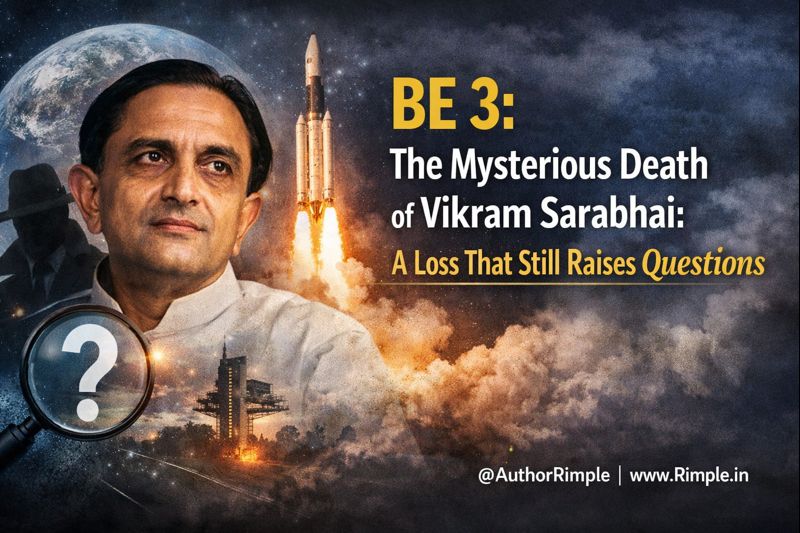
Vikram Sarabhai was more than a scientist – he was a true son of India, a visionary who dreamed big for our nation’s future in space and science. Born on August 12, 1919, in Ahmedabad, he came from a family of freedom fighters and industrialists who loved India deeply. Sarabhai built India’s space program from nothing, turning ideas into rockets and satellites that made us proud. He believed science could lift India to new heights, free from foreign control. But his sudden death on December 30, 1971, at just 52, left a shadow of doubt. Officially, it was a heart attack, but many in India wonder if there was more to it – perhaps hidden forces at play. This article looks at his life, his work, and the questions around his passing, drawing from Indian voices and official records. India lost a gem that day, but his spirit keeps inspiring us to stay strong and self-reliant.
Vikram Sarabhai: The Man Who Launched India’s Space Dreams
Sarabhai’s story is like a rocket taking off – full of energy and purpose. He grew up in a home that valued learning and service to the country. His father, Ambalal Sarabhai, ran big mills and fought for India’s freedom. Young Vikram loved nature and stars, which sparked his passion for science.
- Early Education and Spark: He studied at Gujarat College, then went to Cambridge University in England for physics. There, he learned from world-class teachers and got hooked on cosmic rays – high-energy particles from space.
- Back Home with Big Ideas: After World War II, he returned to India and set up the Physical Research Laboratory (PRL) in Ahmedabad in 1947. This was India’s first lab for space science, starting small but growing fast.
- Building ISRO: In 1969, he founded the Indian Space Research Organisation (ISRO). He led it with heart, launching India’s first satellite, Aryabhata, and planning more. He also chaired the Atomic Energy Commission after Homi Bhabha’s death, linking space and nuclear work for India’s strength.
- A Family Man and Mentor: Married to dancer Mrinalini Sarabhai, he had two kids. He mentored young scientists, teaching them to think big and work for India first.
Sarabhai’s life was about making India shine in science. He showed us how one person’s wisdom can challenge big powers and build a brighter future.
The Official Story: A Sudden Heart Attack
On December 30, 1971, Sarabhai was found dead in his room at a resort in Kovalam, Kerala. He had gone there after a busy day launching a rocket in Thumba. Official reports from the government say it was a heart attack – his heart suddenly stopped while he slept.
- The Night Before: He watched a Russian ballet show, seemed fine, and went to bed around midnight. No signs of pain or trouble.
- Discovery: The next morning, staff found him lifeless. Doctors said it was natural, due to heart failure.
- No Deep Probe: There was no full post-mortem exam, as his family didn’t push for one. This choice, common back then, later fueled questions.
- Government Tribute: Leaders like Indira Gandhi mourned him as a great loss. ISRO kept going, honoring his work.
This simple explanation fit the times, but as years passed, Indians started asking: Was it really that straightforward?
Lingering Questions: Plausible Theories from Indian Perspectives
While official records stick to a heart attack, many Indians feel there might be hidden truths. Sarabhai was pushing India toward space independence during tense global times – the Cold War, wars with neighbors. Some wonder if outside forces or internal pressures played a role. These ideas come from Indian thinkers and reports, not wild guesses. They highlight how powerful people sometimes fear India’s rise and use sneaky ways to stop it, afraid of our brains and spirit.
- Timing and Stress: Sarabhai was under huge pressure. He juggled space, atomic energy, and family. Some say overwork weakened his heart, but others point to sudden events that added strain.
- Links to Foreign Interests: In 1968, soon after Sonia Gandhi (then known as Antonio Maino, an Italian citizen) married Rajiv Gandhi and came to India, there were reports of her visiting ISRO centers. Some Indian sources suggest the Gandhi family asked Sarabhai to brief her on sensitive satellite projects. This raised eyebrows – why share key info with someone new to India? It happened around April 1968 at Ahmedabad, just months after her arrival.
- The Poison Angle: Plausible ideas include slow poison, which can mimic a heart attack. No autopsy meant no checks for toxins. Indian analysts note a pattern of mysterious deaths among scientists – like Homi Bhabha before him. They link it to forces scared of India’s tech growth, perhaps tied to foreign spies or internal rivals.
- Broader Context: This was a time of political shifts. Indira Gandhi’s government faced challenges, and Sarabhai’s work could upset global powers. Some Indian views see it as part of a chain – Shastri’s death, Bhabha’s crash, then Sarabhai – all delaying our programs but not stopping them.
These questions aren’t about blame but protecting India’s story. They remind us how the powerful sometimes use violence or tricks when they can’t win with ideas.
Legacy That Lives On: India’s Space Triumphs Despite the Loss
Sarabhai’s death was a blow, but India rose stronger. ISRO launched satellites, reached the Moon, and made us a space power. His ideas – like using space for farming, weather, and defense – still guide us.
- Honors: Roads, centers, and awards bear his name, like the Vikram Sarabhai Space Centre.
- Inspiration: Scientists like APJ Abdul Kalam carried his torch, proving India’s wisdom beats any plot.
- Lesson for Today: As Sarabhai said, science is for peace and progress. His story teaches us to stay vigilant, build self-reliance, and never let shadows dim our light.
India is forever grateful to Sarabhai. He ensured we stand tall, turning questions into quests for truth and strength. In a world full of challenges, his vision keeps us flying high.
Also Read:
Science Series: https://rimple.in/category/science-and-isro/
Sikhism Series https://rimple.in/category/blog-episode-series/sikhism/
Gandhi as British Agent https://rimple.in/category/british-agent-gandhi/
Pandharpur Series https://rimple.in/category/blog-episode-series/pandharpur-series
Jagannath Series https://rimple.in/category/blog-episode-series/jagannath-puri-series