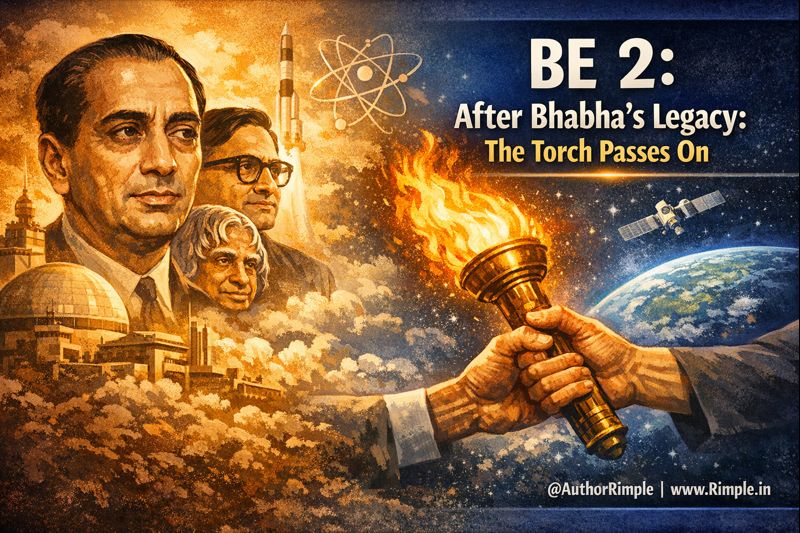
Homi Bhabha’s sudden death in 1966 left a big hole in India’s nuclear dreams, like losing the captain of a ship mid-voyage. But India didn’t give up. His vision of a strong, self-reliant nation lived on through brilliant minds who picked up where he left off. Leaders like Vikram Sarabhai stepped in, facing tough times but keeping the fire burning. Later, heroes like APJ Abdul Kalam added their spark, turning challenges into triumphs. This is the story of how India pushed forward, proving that no single loss could stop our march toward scientific power. Despite pressures from outside, our scientists showed the world that India’s wisdom and grit could overcome anything.
The Brief Setback and Revival
Right after Bhabha’s plane crash, India’s nuclear program hit a rough patch. There was confusion and a short pause as the team mourned and regrouped. But Prime Minister Indira Gandhi, who took office soon after, saw the importance of continuing. She called Bhabha’s loss a “terrible blow” but inspired everyone to build on his work for self-reliance.
- A Moment of Discontinuity: For a few months, progress slowed. Labs kept running basic operations, but big decisions waited.
- Indira Gandhi’s Push: By 1968, she revived the program fully. With wars looming (like the 1971 Indo-Pak conflict), she made sure India stayed ready. She trusted scientists to lead, just like Nehru did with Bhabha.
This revival showed India’s spirit – we turned grief into action, ensuring Bhabha’s blueprint for nuclear energy and security didn’t fade away.
Role of Vikram Sarabhai: Guiding Through Turbulent Times
Vikram Sarabhai, a close friend and fellow visionary, became the new chairman of the Atomic Energy Commission in 1966. He was already a star in science, known for his work in space and cosmic rays. Sarabhai brought fresh ideas, linking nuclear tech with space exploration. He focused on peaceful uses like power generation but kept doors open for defense if needed. Sadly, he too passed away mysteriously in 1971 at just 52, from a heart attack – another loss that raised questions, but his contributions endure.
- Taking the Helm: Sarabhai managed both atomic energy and the growing space program. He opposed rushing into weapons but built key facilities, like advanced reactors and uranium projects.
- Founding ISRO: In 1969, he set up the Indian Space Research Organisation (ISRO), using nuclear know-how for rockets and satellites. This dual focus made India stronger in tech.
- Navigating Challenges: He dealt with global pressures, like the Nuclear Non-Proliferation Treaty (NPT) that tried to limit countries like India. Sarabhai stood firm, saying India had the right to peaceful nuclear explosions (PNEs) for things like mining or canals.
- Mentoring the Next Generation: He guided young talents, including APJ Abdul Kalam, teaching them to dream big and work hard.
Sarabhai’s time was short, but he bridged the gap after Bhabha, making sure India’s programs grew interconnected and self-sufficient. His gentle yet firm style kept the team motivated amid international doubts.
The Pokhran Milestone: India’s Bold Step Forward
After Sarabhai’s death in 1971, Raja Ramanna took charge. A brilliant physicist who worked under Bhabha, he pushed the program toward a major breakthrough. Under Indira Gandhi’s leadership, India conducted its first nuclear test in 1974 at Pokhran, Rajasthan. Called “Smiling Buddha,” it was officially a peaceful explosion, but it showed the world India’s capability.
- Planning in Secret: Scientists worked quietly for years, building on Bhabha’s three-stage plan. They used home-grown tech to avoid foreign spies.
- The 1974 Test: On May 18, a device equal to 15 kilotons of TNT went off underground. It was a proud moment – India joined the nuclear club on its own terms.
- Global Backlash: Big powers like the USA imposed sanctions, cutting off supplies. But this only made India more determined to go solo.
- Raja Ramanna’s Leadership: As director, he oversaw the test. Later, he headed the AEC from 1983-1987, advancing reactors and research.
This test was a game-changer, proving Bhabha’s foundation could lead to real power. It boosted national pride and security, especially against neighbors.
APJ Abdul Kalam: From Rockets to Nuclear Guardian
APJ Abdul Kalam, often called the “Missile Man of India,” entered the scene under Sarabhai’s wing. Starting in the space program, he learned rocketry and later applied it to defense. By the 1990s, Kalam played a key role in making India a nuclear power. His simple life and big dreams inspired millions, and he became President in 2002.
- Early Days with Sarabhai: Kalam joined ISRO in the 1960s, working on satellite launch vehicles (SLV). Sarabhai mentored him, teaching teamwork and innovation.
- Missile Program: In the 1980s, he led the Integrated Guided Missile Development Programme (IGMDP), creating missiles like Agni and Prithvi. These could carry nuclear warheads, linking space tech to defense.
- Pokhran-II in 1998: As scientific advisor, Kalam coordinated the tests under Prime Minister Atal Bihari Vajpayee. On May 11 and 13, five underground blasts happened – a thermonuclear device and more. He called it “Operation Shakti,” announcing India’s full nuclear status.
- Overcoming Hurdles: Tests were super-secret to dodge satellites. Despite sanctions after 1974, Kalam pushed indigenous tech, making India self-reliant.
- Beyond Nuclear: Kalam witnessed the 1974 test as a guest and later dreamed of using nuclear power for energy and peace.
Kalam’s journey shows how Bhabha’s spark ignited a chain – from one genius to another, building India’s shield.
Continued Progress and Challenges: India’s Unbreakable Spirit
The nuclear program didn’t stop at Pokhran. Despite tough times like economic crises and foreign blocks, India kept innovating. Today, we have advanced reactors, thorium tech (from Bhabha’s plan), and a no-first-use policy for peace.
- Post-1998 Sanctions: More restrictions came, but scientists like R. Chidambaram (Kalam’s partner in 1998) advanced research.
- Modern Milestones: Deals like the Indo-US nuclear pact in 2008 opened doors. ISRO’s Moon missions honor Sarabhai, while missiles protect our borders.
- Ongoing Threats: Mysterious deaths of scientists continue, hinting at external meddling, but India stands strong.
Through it all, challenges made us tougher, turning Bhabha’s dream into a reality that keeps India safe and proud.
Eternal Gratitude: Building on Bhabha’s Foundation
India’s nuclear story after Bhabha is one of heroes rising together – Sarabhai’s bridge, Ramanna’s boldness, Kalam’s fire. They ensured we never stayed weak, as Bhabha warned. Today, our power plants light homes, our deterrence guards peace, and our space feats inspire the world. India owes these visionaries everything; they turned scratches into stars, proving that with unity and wisdom, no force can hold us back.
Also Read: