
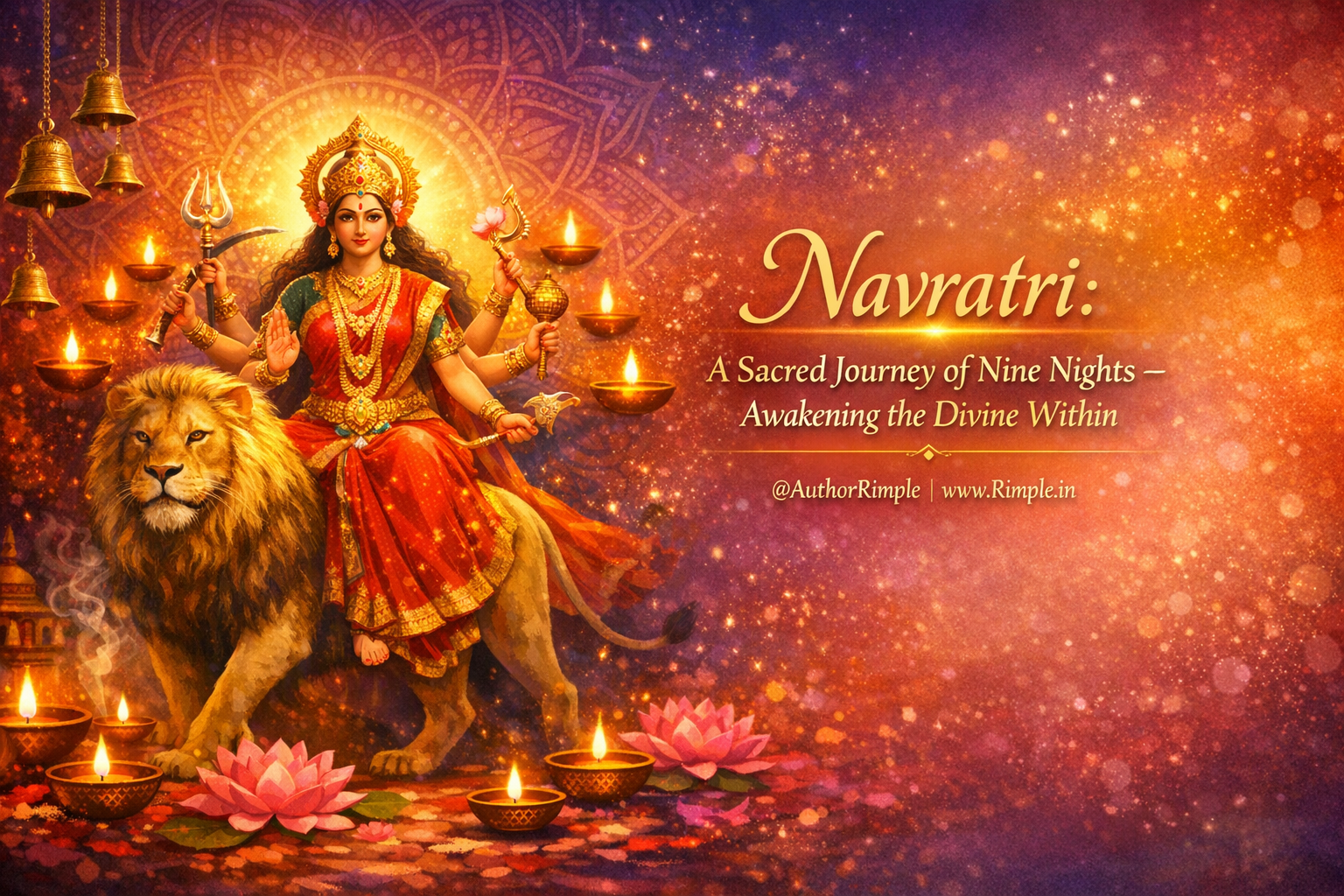
Navratri, meaning “nine nights,” is one of the most beautiful and profound festivals in Hinduism. It is a time when we honor the Divine Mother – Shakti – the pure feminine energy that creates, nurtures, and transforms everything in the universe. But Navratri is much more than rituals, fasting, or celebrations. At its heart, it is a personal spiritual journey – a sadhana – to awaken the hidden power inside you, purify your mind and body, and connect deeply with your true self.
Many people know only two Navratris – the popular ones in spring and autumn. But tradition speaks of four Navratris in a year, aligning with the changing seasons and the rhythms of nature. These are:
- Chaitra Navratri (Spring, March-April) – Also called Vasant Navratri or Rama Navratri. It marks new beginnings, the Hindu New Year in many places, and ends with Ram Navami, celebrating Lord Rama’s birth.
- Sharad Navratri (Autumn, September-October) – The most widely celebrated, full of joy, music, and community worship.
- Magha Navratri (Winter, January-February) – A Gupt (secret) Navratri, focused on deep inner work.
- Ashadha Navratri (Monsoon, June-July) – Another Gupt Navratri, often linked to intense spiritual practices and Tantric sadhana.
The two public ones (Prakat) – Chaitra and Sharad – are filled with outward devotion, dances like Garba, and shared joy. The two Gupt ones – Magha and Ashadha – are quieter, more hidden. They are for serious seekers who do secret sadhana, mantra japa, meditation in solitude, and deep inner transformation. Gupt means “secret” because these periods are not for show; they are private times to connect with the mysterious, powerful aspects of the Goddess, like the Mahavidyas or hidden energies of Shakti.
Right now, as we sit in Chaitra Navratri (the spring one), the energy feels fresh and renewing – like nature waking up after winter. Flowers bloom, days grow longer, and inside us, a gentle call arises to start fresh spiritually.
The Body as a City of Nine Gates – From the Bhagavad Gita
In the Bhagavad Gita, Lord Krishna beautifully describes the human body as a “city of nine gates.” This idea comes from Chapter 5, Verse 13:
Sanskrit:
सर्वकर्माणि मनसा संन्यस्यास्ते सुखं वशी ।
नवद्वारे पुरे देही नैव कुर्वन्न कारयन् ॥
Transliteration:
Sarva-karmāṇi manasā sannyasyāste sukhaṁ vaśī
Nava-dvāre pure dehī naiva kurvan na kārayan
Simple English Meaning:
The wise person who controls their senses and mind mentally gives up all actions. They live happily in the body – this “city of nine gates” – without doing anything themselves or making others do it.
The nine gates (openings) are:
- Two eyes (for seeing)
- Two ears (for hearing)
- Two nostrils (for breathing and smell)
- One mouth (for eating and speaking)
- One genital opening (for creation/reproduction)
- One anus (for elimination)
These gates connect us to the outside world. Through them, we take in sights, sounds, smells, tastes, and pleasures – but they also pull us outward, scattering our energy and mind. In everyday life, we live through these gates, chasing desires and reacting to the world.
In spiritual sadhana like Navratri, the goal is to turn inward. We “close” these gates – not literally, but by controlling the senses, reducing distractions, and directing energy inside. This doesn’t happen one gate per night for everyone; it depends on your dedication and readiness as a sadhaka (seeker). Some may feel all gates quieting from day one through strong focus; others take the full nine nights or more. The process awakens the tenth “gate” – the Brahmarandhra at the crown of the head (sahasrara) – where divine union happens, leading to inner peace and realization.
Navratri supports this turning inward perfectly. It is a time to practice pratyahara (withdrawal of senses) from yoga.
Why Meditation Feels So Powerful During Navratri
Navratri is like a cosmic window when nature itself helps your sadhana. Here’s why meditation goes deeper:
- Seasonal Transition and Nature’s Alignment
Navratri arrives at key turning points in the year—spring awakening in Chaitra, autumn renewal in Sharad, and the quieter shifts in the Gupt Navratris. When seasons change, nature itself is in a state of flux: shedding the old, embracing the new. Your body and prana (life energy) mirror this—becoming more receptive, lighter, and open to transformation. Aligning meditation with these cycles feels natural and harmonious, like flowing with a gentle river rather than pushing against it. This seasonal balance (day-night equilibrium around equinox-like periods) makes the mind calmer and meditation deeper, helping you rest in your true nature. - Lunar Influence and Cosmic Vibrations
Navratri often begins near Amavasya (new moon—intense inner darkness for deep introspection) or builds toward Purnima (full moon—expansion and illumination). The moon governs emotions, mind (manas), and bodily fluids (like water element in us). At these lunar peaks, mental fluctuations intensify but also become easier to observe and transcend. The collective devotion during Navratri heightens subtle cosmic energies, creating a supportive field where intentions manifest faster and awareness sharpens. Astrologically, this period balances planetary influences (like Sun in transition signs), purifying negative karmas and boosting positive ones—making focused meditation more potent for inner clarity and emotional stability. - Collective Energy Field (Yagna Effect)
When millions chant, fast, pray, and meditate on the same Divine Mother simultaneously, a massive shared energy field forms—like a powerful yagna (sacred fire ritual) on a global scale. This collective consciousness multiplies individual efforts: your meditation rides the wave of devotion, gaining momentum and depth. Alone, practice is beautiful; in this unified field, it accelerates—bringing quicker glimpses of peace, bliss, or subtle vibrations. Group practices during Navratri become a yagna whose benefits multiply, enriching subtle creation and pulling you deeper inward faster. - Fasting and Light Body
Traditional fasting (phalahar—fruits, milk, or minimal sattvic food) lightens the digestive load. Energy usually spent on processing heavy meals is redirected upward—through the nadis (energy channels) toward higher centers (brain, chakras). This purifies the body, reduces tamas (dullness), and makes the mind clearer and more alert. Scientifically, fasting supports detoxification, hormonal balance, and reduced inflammation—creating a lighter, more receptive state where meditation flows naturally and samadhi feels closer. Many experience heightened awareness, reduced mental chatter, and easier access to stillness. - Ratri Jagran (Night Vigil) Tradition
Staying awake at night—especially on Ashtami or during key nights—has deep significance. The world quiets: external noise fades, distractions vanish, and prana turns naturally inward. Night is called “ratri” because it rejuvenates at physical, subtle, and causal levels. Staying up shifts consciousness to a liminal state—neither full wakefulness nor sleep—ideal for profound meditation. The pre-dawn hours (Brahma Muhurta, roughly 3:30–5:30 a.m.) are especially sacred: pineal gland secretions peak, mind is freshest, and cosmic silence amplifies awareness. Chanting, bhajans, or silent sitting here can bring extraordinary experiences—inner light, sounds (anahata nada), or deep samadhi—as the atmosphere is charged with purity and spiritual potency. - Mantras, Symbols, and Vibrational Support
Special mantras (Durga Saptashati, bija sounds like Dum, Shreem, Aim) create precise vibrations that activate chakras and nadis. Meditating amid these sounds, with symbols like kalash, lamps, and Devi images, speaks directly to the subconscious—directing energy upward and enhancing focus. The entire environment becomes a supportive mandala, making concentration effortless and insights spontaneous.
In essence, Navratri isn’t just a festival—it’s a cosmic invitation to dive deep. The stars, moon, seasons, collective devotion, fasting, and night silence all conspire to make your meditation richer, your awareness brighter, and your inner journey smoother. Whether in Chaitra’s fresh spring energy or another cycle, use this window: sit, breathe, surrender. The Mother herself lifts you higher—one sincere moment at a time.
The Threefold Journey: Durga, Lakshmi, Saraswati
Navratri unfolds as a gentle yet powerful inner evolution, divided into three sacred phases of three days each. This is not random; it mirrors the transformation of your own consciousness—from heavy inertia to vibrant action, and finally to pure light and clarity. Each phase invites you to connect with one face of the Divine Mother, awakening corresponding energies within you.
First Three Days – Durga: Breaking the Inner Forts (Destruction of Tamas)
Durga is the fierce, protective warrior Mother. The word “Durga” itself comes from “durga,” meaning a fort or fortress—impenetrable walls built of stone. But in the spiritual sense, these forts are the strongholds we create inside ourselves: the fortress of ego (ahamkara), rigid habits, deep-seated conditioning (samskaras), fears, attachments, and patterns that keep us trapped and limited. We live imprisoned within these self-built walls, cut off from our true freedom and light.
Durga rides a lion (symbol of courage and raw power) and wields weapons to shatter these inner forts. She destroys the demons—Mahishasura (ego/inertia), and others representing tamas: laziness, darkness, ignorance, procrastination, greed, anger, jealousy, fear, and depression. These “demons” are not outside enemies; they are our own suppressed negativities that pull us down, keep us dull, and block spiritual growth.
In these first three days, her energy is ugra (fierce) and purifying. She awakens you, ignites inner fire, and clears the path. You may feel buried emotions rising—intense anger, sudden tears without reason, restlessness, or vivid dreams of battles. This is purification: old tamas surfacing to be released. Let it flow safely—cry, shout alone, channel energy into positive action—but never direct it outward to harm.
Simple Meditation Practice for Durga Phase
Sit straight after a morning bath. Take deep breaths, then practice Bhastrika pranayama (rapid breaths) 15–20 times to awaken energy.
Chant her bija (seed) mantra with feeling, at least 108 times:
ॐ दुं दुर्गायै नमः
(Om Dum Durgayai Namah) – “Dum” vibrates at the root (muladhara), awakening dormant Shakti and protection.
Visualize Durga before you—majestic on her lion, weapons gleaming. See her fiercely yet lovingly slaying your inner demons one by one: fear dissolves, anger burns away, ego crumbles like old walls. After japa, sit in silence 15–20 minutes, feeling the lightness and inner cleanliness she brings. End with gratitude: “Maa, thank you for freeing me.”
Next Three Days – Lakshmi: Cultivating Inner Abundance (Development of Rajas)
Once Durga has cleared the debris and broken the forts, a softer, radiant energy flows in—Lakshmi, the gentle Goddess of true prosperity. She sits on a lotus (symbol of purity rising from mud), showers golden coins, but these are not merely material wealth. They represent inner riches: virtues like compassion, love, kindness, forgiveness, generosity, beauty, contentment, and harmony.
Lakshmi embodies rajas—the quality of movement, activity, enthusiasm, and zest for life. When tamas fades, rajas awakens: you feel alive, motivated, drawn to create and give. But rajas can scatter if misused (leading to greed or distraction), so her worship teaches balanced action—active yet satisfied, giving without attachment.
These days bring noticeable shifts: relationships soften, opportunities flow, beauty appears in small things (a flower, a smile). Inner peace grows: “I have enough; I am full.”
Simple Meditation Practice for Lakshmi Phase
Decorate your space with flowers, colors, and fragrance—Lakshmi loves beauty. Practice Nadi Shodhana (Anulom-Vilom) for balance between solar/lunar energies.
Chant her bija mantra:
ॐ ह्रीं श्रीं महालक्ष्म्यै नमः
(Om Hreem Shreem Mahalakshmyai Namah) – “Shreem” vibrates the heart, awakening abundance and love. (Variations include ॐ श्रीं लक्ष्मीभ्यो नमः – Om Shreem Lakshmibhyo Namah.)
Visualize golden light raining virtues upon you—compassion fills your heart, forgiveness washes away grudges. Practice gratitude: thank for body, loved ones, breath, everything. Resolve to give—share time, kindness, knowledge. Sit in silence feeling complete and abundant.
Last Three Days – Saraswati: Awakening Pure Light (Emergence of Sattva)
With tamas destroyed and rajas rightly directed, sattva blooms—pure clarity, knowledge, peace. Saraswati, dressed in white, seated on a swan (discernment), holding a veena (inner harmony), brings wisdom, creativity, intuition, and understanding.
She awakens true knowledge: Who am I? Why am I here? Insights dawn—problems untangle, creativity surges, inner music (anahata nada) may be heard. Your speech becomes sweet and meaningful; a deep stillness settles.
These days are for silence, witnessing, and emptiness—where truth reveals itself naturally.
Simple Meditation Practice for Saraswati Phase
Wear white if possible; offer white flowers. Practice slow, calm breath observation—no force, just witnessing.
Chant her bija mantra:
ॐ ऐं सरस्वत्यै नमः
(Om Aim Saraswatyai Namah) – “Aim” vibrates the third eye (ajna), opening insight and wisdom.
Invoke her gently: “Maa, grant me understanding, remove ignorance, illuminate my mind.” Then enter silence—no mantra, no image. Become the witness: watch thoughts, emotions, sensations arise and pass. Stay in emptiness as long as possible—20–60 minutes. Insights may come suddenly: profound peace, answers, or simple knowing “all is well.”
This threefold journey is your personal alchemy: Durga clears, Lakshmi enriches, Saraswati illuminates. Together, they make you whole—strong, abundant, wise. The Goddess within awakens, and you remember your true nature. Jai Mata Di. 🌺
Practical Steps for Your Navratri Sadhana (Especially in Chaitra)
Prepare your body, mind, and space:
- Clean eating: Sattvic food, fasting as you can.
- Daily routine: Early rise, bath, yoga/pranayama (Anulom-Vilom for balance, Bhastrika for energy).
- Sacred spot: Clean corner with lamp, Goddess image, kalash if possible.
- Resolve: Promise yourself regular meditation, silence periods, positive thoughts.
- Mantras: Simple ones like Om or Devi names – feel them in every cell.
In Chaitra, the journey ends with Ram Navami – the “birth” of divine order inside you after nine nights of work. No separate victory day here, but the fruition is the same: inner awakening, balance, and joy.
In Chaitra Navratri, the “victory state” integrates into Ram Navami itself. Ram embodies dharma, ideal manhood, and the balanced union of Shiva-Shakti (as an avatar who worshipped Durga). His birth on the ninth day (or the transition) symbolizes the fruition of the sadhana: the awakened inner Rama (pure consciousness, righteousness) as the victory over inner Ravana (ego/ignorance).
Navratri reminds us: The Goddess is not outside – she is you. Your strength (Durga), your abundance (Lakshmi), your wisdom (Saraswati). When they awaken, you become whole.
This Chaitra Navratri, make it yours. Nine nights – nine chances to turn inward, close the gates gently, and let the divine light shine. The Mother waits – one sincere step toward her, and she takes a thousand toward you.
Om Jai Mata Di. May your sadhana bloom like spring itself.
Also Read:
Durga Saptashati Series https://rimple.in/category/blog-episode-series/durga-saptashati/
Navratri Series https://rimple.in/category/blog-episode-series/navratri/
Pandharpur Series https://rimple.in/category/blog-episode-series/pandharpur-series
Kamakhya Series https://rimple.in/category/blog-episode-series/kamakhya-series
Jagannath Series https://rimple.in/category/blog-episode-series/jagannath-puri-series