Stupid people wait for Valentine’s Day to celebrate love, but legends wait for Mahashivratri to celebrate real love. In a world full of temporary affections, where partnerships change like seasons, Mahashivratri stands as a timeless reminder of deep, eternal connections that go beyond the body and touch the soul. This festival is not just a night of devotion; it is a profound journey into spirituality, science, and the essence of genuine love. Let’s explore its stories, meanings, and why it calls us to awaken to something far more meaningful.
What is Mahashivratri?
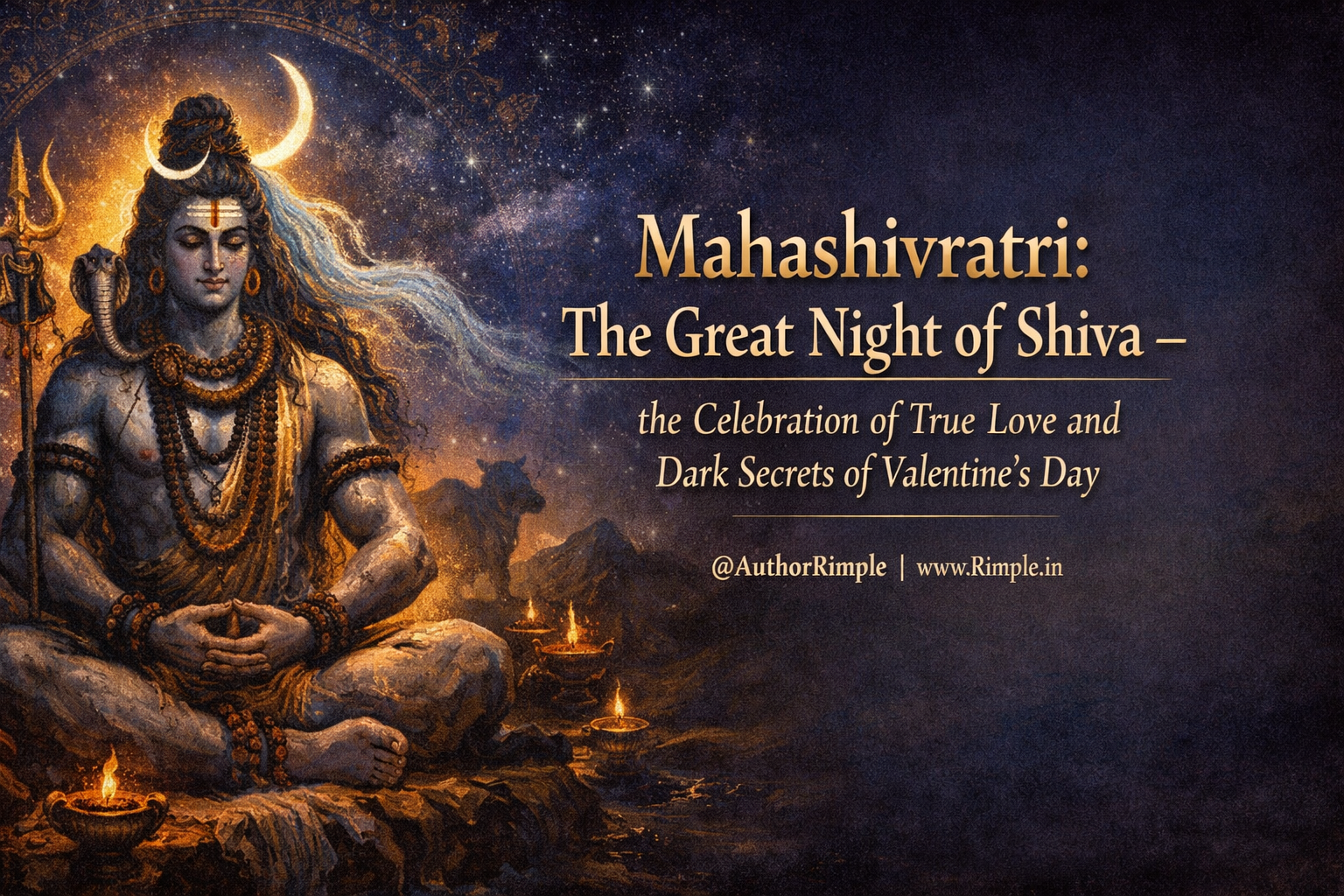
Mahashivratri, known as the “Great Night of Shiva,” is one of the most important festivals in Hinduism. It falls on the 14th day of the dark half of the lunar month of Phalguna, usually in February or March. This night marks a time when devotees across the world come together to honor Shiva, the destroyer and transformer in the Hindu trinity. Unlike other festivals filled with lights and feasts, Mahashivratri is about inner reflection, fasting, and staying awake all night in meditation and prayer.
- A Night of Awakening: Devotees believe this night helps overcome darkness and ignorance in life. It is a call to spiritual growth, where one seeks peace and enlightenment.
- Global Celebration: From temples in India to homes around the world, people chant mantras, offer bilva leaves, and pour milk over the Shiva lingam, symbolizing purity and devotion.
- Union of Energies: At its core, Mahashivratri celebrates the coming together of Shiva and Shakti, the masculine and feminine forces that balance the universe.
This festival has been observed for thousands of years, drawing from ancient texts like the Puranas and Shiva Purana. It is more than a religious event; it aligns with natural cycles that boost human energy and awareness.
The Legends Behind Mahashivratri
Mahashivratri is rich with stories from Hindu Pauranic History that explain its origins. These tales show Shiva’s role in creation, preservation, and destruction, while highlighting themes of love, sacrifice, and cosmic balance. Here are some key legends:
1. The Eternal Love Story of Sati and Parvati
One of the most touching stories is about Shiva’s deep love for his consort. In her first form as Sati, she was the daughter of King Daksha. When Daksha insulted Shiva at a grand sacrifice, Sati could not bear the humiliation. In her anger and sorrow, she immersed herself in fire, ending her life. Shiva, overcome with grief, carried her lifeless body across the world for twelve years, refusing to let go. To stop his endless mourning, Vishnu used his discus to cut Sati’s body into 51 pieces, which fell to earth and became sacred sites known as Shakti Peethas. These places span regions like India, Nepal, Bhutan, Sri Lanka, Pakistan, and even parts of China today.
Sati’s soul was reborn as Parvati, who won Shiva’s heart through intense devotion and penance. Their marriage on Mahashivratri symbolizes the reunion of eternal souls. Bodies may change, but true love binds souls across lifetimes. This story teaches that real love is about soul connections, not fleeting attractions. It also explains karmic bonds: the fewer deep connections we form, the closer we get to liberation from the cycle of birth and death. In today’s world, where people often have multiple affairs due to past-life ties, this legend urges us to focus on meaningful bonds that lead to spiritual freedom.
2. The Churning of the Ocean (Samudra Manthan)
Another legend comes from the Puranas. Gods and demons churned the cosmic ocean to find the nectar of immortality. During this, a deadly poison called halahala emerged, threatening all life. Shiva drank the poison to save the universe, holding it in his throat, which turned blue—earning him the name Neelkantha. Mahashivratri honors this selfless act, showing Shiva’s compassion and his power to transform destruction into protection.
3. The Emergence of the Shiva Lingam
According to the Linga Purana, once Brahma and Vishnu argued over who was superior. A massive pillar of light (lingam) appeared, endless in both directions. Neither could find its end, revealing Shiva’s infinite nature. This formless symbol of Shiva emerged on Mahashivratri, reminding us of the universe’s boundless energy.
4. Shiva’s Cosmic Dance (Tandava)
Mahashivratri also celebrates Shiva’s Tandava, the dance of creation, preservation, and destruction. This rhythmic dance represents the life cycle, where everything begins, exists, and ends, only to begin again. It evokes balance in the cosmos and inspires devotees to find harmony in their lives.
These stories from our Pauranic History are not myths or fiction; they carry deep lessons about love, duty, and the universe’s rhythms.
The Spiritual Significance of Mahashivratri
Spiritually, Mahashivratri is a night for inner transformation. It urges people to let go of ego, anger, and illusions, much like Shiva destroys negativity to make way for renewal.
- Triumph Over Darkness: The festival symbolizes victory over ignorance, encouraging meditation to connect with the divine.
- Fasting and Vigil: Staying awake (jagran) and fasting purify the body and mind, helping devotees absorb positive energies.
- Union of Shiva and Shakti: This represents the balance of energies in all beings, leading to harmony and enlightenment.
- Path to Liberation: By focusing on Shiva, one can break free from worldly attachments and achieve moksha.
In yogic traditions, this night is ideal for practices that raise kundalini energy, awakening higher consciousness.
The Scientific Basis of Mahashivratri
Hinduism blends spirituality with science, and Mahashivratri is no exception. Its timing is based on precise astronomical events, showing how ancient sages understood planetary influences on human life.
Planetary and Lunar Alignments
Mahashivratri occurs when the moon is at its weakest, on the 14th day before the new moon. This lunar phase aligns with Earth’s position in a way that creates a natural upsurge of energy. The northern hemisphere experiences this pull, making it easier for energies to flow upward in the body.
- Moon’s Influence: The moon affects human physiology, like tides in oceans. On this night, its position supports alertness and clarity.
- Solar and Jovian Cycles: Ancient texts like Surya Siddhanta calculate planetary motions, linking festivals to cosmic events for optimal benefits.
- Energy Flow: Yogic science explains that the spine becomes receptive, aiding meditation and energy movement toward higher awareness.
Upsurge of Energy in the Human Body
On Mahashivratri, planetary alignments cause a surge in subtle energies. In yogic philosophy, the human body has energy channels (nadis) that respond to these cosmic shifts.
- Upward Movement: Energies naturally move upward, like during solstices, promoting spiritual practices.
- Staying Awake: Keeping the spine upright enhances this flow, leading to better focus and inner peace.
- Health Benefits: Fasting and meditation align with natural rhythms, improving mental clarity and reducing stress.
This scientific foundation makes Mahashivratri a beautiful blend of ancient wisdom and modern understanding, far from superstition.
Mahashivratri’s Cosmic Alignment: Why This Night Is Astronomically Special
Mahashivratri falls on Krishna Paksha Chaturdashi, the 14th night of the waning moon phase, just before the new moon (Amavasya), when the moon is almost invisible. This darkest phase reduces lunar pull on emotions, mind, and body, creating deep stillness and introspection—ideal for turning inward.
Ancient yogis observed repeating cosmic patterns over generations, noting how lunar cycles, seasonal shifts from winter to spring, and Earth’s rhythms influence human energy and behavior. They chose this night precisely because it aligns the human system with universal harmony, without needing modern tools like telescopes.
The waning moon quiets mental noise, symbolizing freedom from distractions. This nocturnal timing—unlike vibrant daytime festivals—emphasizes silence, wakefulness, and meditation until sunrise, making it uniquely suited for spiritual discipline.
Midnight holds special meaning as the cosmic midpoint between darkness and dawn, a time of profound stillness where reflection deepens.
In yogic view, the body is energetic, not just physical. Practices direct energy upward toward higher awareness, supported by this alignment.
The Natural Upsurge of Energy: Yogic and Planetary Perspective
In yogic traditions, on Mahashivratri night, the northern hemisphere’s position creates a natural upsurge of energy in every human being. This surge pushes one toward spiritual peaks, with energies rising naturally through the spine.
Ancient sages saw this as a gift from nature: planetary positions, lunar darkness, and seasonal transition combine to amplify inner energy. Staying awake with the spine upright allows this upsurge to flow freely, maximizing benefits like heightened awareness, clarity, and emotional balance.
Fasting supports detoxification and conserves energy during this renewal phase. Modern insights align with this—meditation reduces stress, fasting resets metabolism, and quiet nights improve focus.
This makes the night ideal for seekers, as the cosmic setup supports turning inward and experiencing profound stillness.
Mahashivratri as a Symbol of Real Love
In a time when love is often shallow—changing partners year after year, or even involving deceit and multiple affairs—Mahashivratri shines as a beacon of true, soul-deep love. The story of Shiva and Parvati shows love that transcends bodies and lifetimes.
- Eternal Souls United: Shiva’s grief for Sati and reunion with Parvati prove that souls are bound forever, limiting karmic ties to lead toward freedom.
- Karmic Bondage: Every interaction creates bonds that carry over lives. Focusing on one deep connection reduces the cycle of rebirth.
- Beyond Physical: Real love is about spiritual union, not temporary pleasures. No one escapes all bonds, but wise choices bring liberation.
Legends celebrate this on Mahashivratri, awakening us to love that is pure and everlasting.
Dark / Satanic side of Valentines Day History.
The Fleeting Nature of Modern Love Celebrations
While some chase superficial gestures on days like Valentine’s Day, true seekers know these are hollow. Valentine’s Day started with dark roots in ancient Rome’s Lupercalia festival, involving animal sacrifices, naked rituals, and matchmaking lotteries where couples were paired for fertility rites. Priests slapped women with blood-soaked hides, believing it boosted childbearing—far from romance.
Over time, it linked to beheaded saints and pagan customs Christianized by the church. Stories of executed Valentines for secret marriages add a bloody layer, but the holiday became a commercial trap, pushing gifts over genuine bonds. Today, it often masks immaturity, with people celebrating fake loves that fade, leading to cheating and heartbreak.
Recent scandals, like those in the Epstein files, expose flaws in Western elite culture—networks of power hiding exploitation and abuse. These revelations show a system where freedom turns to excess, contrasting sharply with meaningful traditions.
Why Hinduism Stands Out
Hinduism offers festivals like Mahashivratri that are beautiful, meaningful, and grounded in science. Based on planetary movements, lunar cycles, and cosmic alignments, they align life with nature’s rhythms—not random or dark origins.
- Scientific Roots: Texts like Surya Siddhanta detail planetary orbits, making calendars precise for spiritual growth.
- Planetary Festivals: Events like Kumbh Mela follow Jupiter’s cycles, showing advanced astronomy.
- Not Superstitious: Hinduism explores science, math, and astronomy to celebrate creation’s glory, free from satanic undertones seen in some Abrahamic tales.
This makes Hindu practices uplifting, guiding toward harmony and enlightenment.
How to Celebrate Mahashivratri
Celebrating Mahashivratri is simple yet profound, focusing on inner peace.
- Fasting: Eat light fruits or fast fully to purify the body.
- Temple Visits: Offer bilva leaves, fruits, and milk to the Shiva lingam.
- Meditation and Chanting: Stay awake, chant “Om Namah Shivaya” to raise energies.
- Yogic Practices: Sit upright for jagran, aligning with the night’s surge.
- Acts of Kindness: Share food with the needy, embodying Shiva’s compassion.
These steps make the night transformative.
Conclusion
Mahashivratri is a call to celebrate real love—the kind that binds souls, aligns with the cosmos, and leads to liberation. In its stories, science, and spirituality, it awakens us from shallow pursuits. While brainless celebrations come and go, legends embrace this great night for true awakening. Let Mahashivratri inspire you to seek eternal bonds and inner light.
A Call to all Women: Awaken. Realize that celebrating Valentines Day reduces you to a sex object and kids producing machine. Like these Satanic Rituals you hate reading about in Epstein Files.
A Call to all Men: Choose to rise above lust. You lose your vitality in every birth with as many bodies you associate with and it creates a karmic baggage that goes on for 100s and 1000s of lifetimes.
Hinduism is targeted all over the world because it awakens everyone with its natural way of living, according to the laws of the world. No one wants you to awaken so that you can be controlled.
Embrace Hinduism at its core and not superficially. Dive deep into it.