
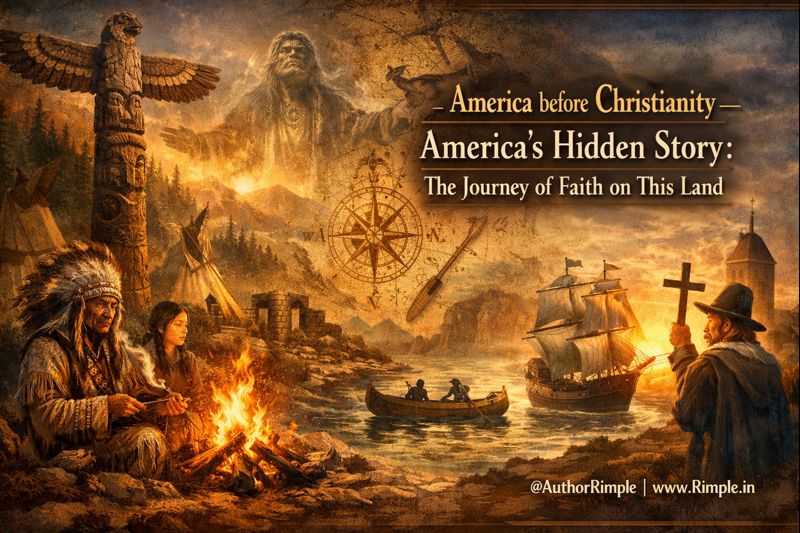
America is a nation built on strength, diversity, and the spirit of its people. From the earliest days, this vast land was home to rich cultures and deep spiritual traditions that shaped the lives of those who lived here. Families gathered around sacred fires, honored the earth that sustained them, and passed down stories of harmony with nature. These ways of life were woven into every part of daily existence—celebrating the seasons, healing with ancient knowledge, and finding meaning in the world around them.
Over time, waves of change came from across the ocean. European explorers and settlers arrived, bringing their own beliefs, including Christianity. What started as small missions and settlements grew into something much larger. Through centuries of contact, trade, wars, and policies, Christianity took root and spread across the continent. Today, it is the faith of many Americans. But the path to get here was long, complex, and often filled with hardship.
Let’s look closer at that journey—the real history of how faith changed on this land, and the price that was paid along the way.
The Original Spiritual Heart of America
Picture this: Long before any European ships appeared on the horizon, America was a vast, vibrant home to millions of indigenous peoples. They lived with deep spiritual connections to the earth, without a single unified religion but with hundreds of unique traditions varying by tribe, region, and culture.
- Animism and Interconnectedness: Everything in nature—animals, plants, rivers, mountains, the sun, thunder—was seen as alive with spirit or sacred power. There was no strict divide between the natural world and the spiritual one.
- A Creator or Great Spirit: Many traditions recognized a supreme creative force, such as Wakan Tanka among the Lakota Sioux, often viewed as distant, with daily interactions involving lesser spirits, ancestors, or natural forces.
- Oral Traditions: Beliefs were shared through myths, stories, songs, and ceremonies, not written books.
- Rituals and Ceremonies: Practices included vision quests, sweat lodges, dances like the Sun Dance among Plains tribes, pipe ceremonies, puberty rites, and seasonal festivals to maintain harmony with the world.
- Shamanism: Spiritual leaders, often called medicine people or shamans, served as healers, intermediaries with spirits, and guides for visions or dreams.
- Harmony and Reciprocity: Life focused on balance with nature, community, and the cosmos; offerings and rituals expressed gratitude and sought to restore equilibrium.
Regional variations were rich:
- Plains Tribes (e.g., Sioux, Cheyenne): Centered on the buffalo, Sun Dance, and vision quests.
- Southwest (e.g., Pueblo peoples like Hopi, Navajo): Involved kachina spirits, elaborate ceremonies tied to agriculture, and sacred sites like kivas.
- Northwest Coast (e.g., Haida, Tlingit): Featured potlatch ceremonies, totem poles representing clan spirits, and shamanic healing.
- Eastern Woodlands (e.g., Iroquois, Algonquian): Beliefs in manitous (spirits), Green Corn Ceremony, and mound-building for rituals.
- Great Basin and California: More individualistic vision-seeking in harsh environments.
These traditions were deeply tied to specific lands, with sacred sites like mountains, rivers, or earthworks central to practice. Many continue today, often blended with other faiths, protected by laws like the American Indian Religious Freedom Act of 1978. Indigenous peoples often saw their ways not as “religion” in a Western sense, but as a holistic way of life.
In this article, whenever the word “Indians” or “Native peoples” is used, it refers to the indigenous peoples of the Americas—commonly known as Native Americans or American Indians—who lived on this land for thousands of years before European arrival.
It does not refer to people from India.
This is the standard historical term for the original inhabitants of what is now the United States.
When Europeans Arrived: The Beginning of Change
In the late 1400s and 1500s, Spanish, French, and English explorers reached these shores. They came for land, resources, and new opportunities, but they also carried Christianity, viewing it as a mission to share their faith. At first, interactions were a mix of curiosity and tension. Missionaries built outposts and sought to teach their beliefs, while settlers established communities.
As more Europeans arrived, the dynamics shifted. Land disputes grew, and traditional spiritual practices were often seen as barriers to progress. Conversion efforts were framed as part of bringing “civilization,” with native traditions labeled as misguided or in need of replacement. This set the stage for deeper changes, where faith became intertwined with control and expansion.
The Hard Road: Wars, Loss, and Forced Change
As settlements expanded, conflicts emerged over land, resources, and ways of life. These struggles were not only about territory but also about imposing new beliefs, leading to profound losses for indigenous communities.
- Spanish Conquest’s Challenges: In areas like Florida and the Southwest, explorers like Columbus responded to resistance with harsh measures, including killings and enslavement to enforce obedience and conversion. Bodies were sometimes displayed as warnings, and systems like encomienda required labor while introducing Christian teachings. Missions in California, led by figures like Junipero Serra, involved strict routines, corporal punishment, and exposure to diseases that devastated populations.
- French Alliances and Conflicts: In the North, Jesuits formed partnerships through trade but armed converts, contributing to intertribal wars like the Beaver Wars. These efforts aimed to integrate Christianity while sidelining native traditions.
- English Settlements’ Pressures: In New England, settlers justified expansion through faith, leading to events where villages were destroyed to make way for colonies and churches.
Key conflicts highlighted the hardships:
- Pequot War (1636-1638): English forces attacked villages, resulting in hundreds of deaths and survivors sold into slavery, opening paths for missionary work.
- King Philip’s War (1675-1676): Native leader Metacom resisted growing pressures; retaliations included burning communities, with many non-combatants lost in events like the Great Swamp Fight.
- Pueblo Revolt (1680): In New Mexico, indigenous peoples rose against suppression of their ceremonies, temporarily driving out missionaries before a harsh return.
- Pontiac’s Rebellion (1763): Inspired by visions rejecting outside influences, natives challenged forts; responses included biological tactics like infected blankets.
- Indian Wars of the 1800s: U.S. forces used scorched-earth methods, like destroying crops in the Navajo Long Walk, forcing relocations and vulnerability to conversion.
- Sand Creek Massacre (1864): Over 150 Cheyenne and Arapaho were killed in a surprise attack.
- Wounded Knee (1890): Around 350 Lakota perished amid efforts to suppress the Ghost Dance, a movement blending old and new spiritual elements.
These events contributed to a sharp decline in native populations, from millions in 1492 to under 250,000 by 1900, with many traditions disrupted, though resilience allowed some to endure.
Missionary Efforts: Kindness Mixed with Control
Missionary work played a central role, often starting with offers of aid but backed by authority. While some approached with compassion, the methods could be coercive, blending support with expectations of change.
- Spanish Missions: Natives were gathered into communities with daily religious instruction, labor requirements, and punishments for continuing old practices, leading to cultural shifts amid hardship.
- French Jesuits: They built relationships but used alliances to promote conversion, sometimes escalating into conflicts when met with resistance.
- English Missionaries: “Praying towns” separated converts, imposing new rules like Sabbath observance, with fines or whippings in courts for non-compliance.
- Revival Movements: The Great Awakenings in the 1700s and 1800s brought emotional gatherings, drawing in diverse groups including enslaved Africans, but often served to reinforce control.
Other tactics included bounties during eras like the California Gold Rush, where rewards for scalps led to population drops, and survivors were directed toward missions.
The Deepest Wound: Taking the Children
In the 1800s and 1900s, a particularly heart-wrenching policy emerged: boarding schools run by the government and churches, aiming to assimilate Native children under the phrase “Kill the Indian, Save the Man.”
- Over 60,000 children were removed from families, sometimes forcibly, across more than 367 schools.
- Hair was cut (a symbol of cultural identity), languages banned, and traditional clothing forbidden, with harsh punishments like beatings or starvation for violations.
- Daily life focused on Christian education, prohibiting rituals like the Sun Dance, labeled as unacceptable.
- Conditions were overcrowded, leading to disease outbreaks; abuse, including physical and sexual violence, was widespread, contributing to high death rates and lasting trauma.
This approach aimed to erase cultures by reshaping the young, leaving intergenerational scars that echo today.
The goal was clear: end Native cultures by changing the next generation. You are descending from this generation if you are a Christian from America. Your forefathers, ancestors suffered all of these. I doubt if this is being taught to you in your American History textbooks. Some histories, they intentionally keep it away from people as it awakens people and keeps them in slavery mindset.
Chains of Faith: Impacts on Enslaved Africans
Enslaved Africans brought their own spiritual heritages, but these were often suppressed as Christianity was imposed to justify and maintain control.
- Planters encouraged conversion, using sermons to frame slavery as divinely ordained, while banning literacy and traditional practices.
- Resistance met violence: whippings, family separations, and lynchings.
- Yet, adaptations occurred—blending African elements with Christian worship in secret meetings or emerging Black churches like the African Methodist Episcopal, providing community and hope.
These experiences added layers to America’s faith landscape, born from endurance amid suffering.
A Quiet Reflection on Our Shared Past
Today, Christianity is woven into the lives of many Americans, shaped by this complex history of arrival, conflict, and adaptation. The journey involved immense sacrifices by those who called this land home first.
What echoes of these early traditions might still linger in the places we live?
How do the stories of resilience from the past influence our understanding of faith and identity now?
If we pause to consider the full path that brought us here, what lessons might it hold for building a more inclusive future?
Do you know what happened to your ancestors? Do you know your family history or are you clueless and blindly following what was forced upon your forefathers?
Also Read:
Sikhism Series https://rimple.in/category/blog-episode-series/sikhism/
Gandhi as British Agent https://rimple.in/category/british-agent-gandhi/
Pandharpur Series https://rimple.in/category/blog-episode-series/pandharpur-series
Jagannath Series https://rimple.in/category/blog-episode-series/jagannath-puri-series
Russia-Ukraine War Series https://rimple.in/category/blog-episode-series/russia-ukraine-war/
Durga Saptashati Series https://rimple.in/category/blog-episode-series/durga-saptashati/