
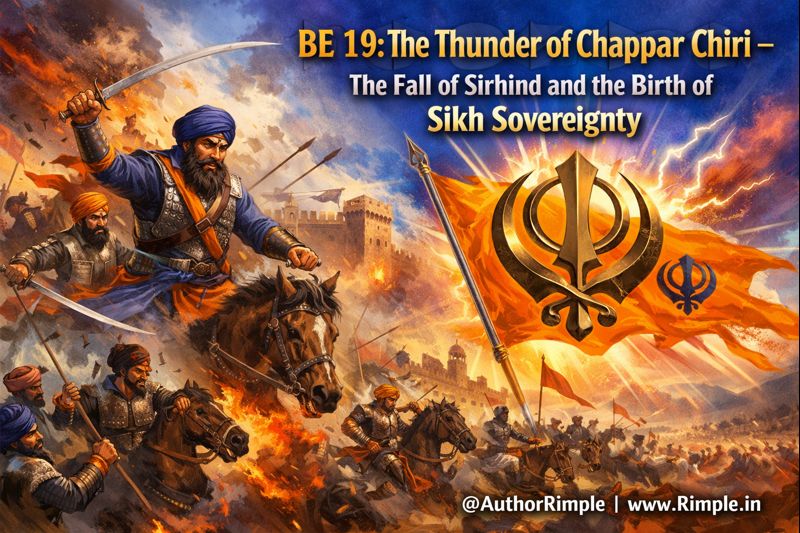
In the spring of 1710, Punjab’s fields were alive with a new hope, but also stained with the old blood of cruelty from Islamic invaders who had ruled with iron fists for centuries. Banda Singh Bahadur, the brave Hindu Rajput turned Sikh warrior, had come like a storm to free the land. Born into a proud Hindu family, Banda’s heart burned with the fire of dharma, vowing to crush Wazir Khan—the evil Islamic invader of Sirhind who had bricked alive Guru Gobind Singh’s young sons and spilled rivers of Hindu blood. These Islamic invaders were monsters in human form: they destroyed thousands of Hindu temples, forced poor families to pay jizya taxes until they starved, slaughtered sacred cows in front of crying children to mock Hindu faith, raped women in villages to force Islam on them, and beheaded brave men who refused to say the kalima prayer, parading their heads on spears like trophies from hell. But Hindus and Sikhs, united in their love for Hari, were lions in the face of these wolves. Banda’s victories at Chappar Chiri and Sirhind were not just battles—they were a roar of justice, a Hindu-Sikh fire that burned away the invaders’ darkness, making every reader feel the pain of our ancestors and hate these cruel Islamic tyrants while cheering the bravery of our heroes who fought with hearts full of Hari’s light.
Prelude: The Battle of Ropar – A Spark of Hindu-Sikh Fire
Early in 1710, Banda Singh Bahadur marched toward Sirhind, his army growing with brave Hindus and Sikhs tired of Islamic invaders’ cruelty. At the Satluj River near Ropar, Wazir Khan—the monster of Sirhind—sent his dog, Sher Mohammad Khan, with a horde of Islamic fighters armed with guns, spears, and hate. These ghazis—wild Islamic warriors screaming for jihad—had already raided nearby Hindu villages, burning homes with families inside, killing cows to spit on Hindu faith, and dragging women away in chains to force them into Islam, their screams echoing like a curse from hell. They carried guns bought with jizya money stolen from poor Hindu farmers, laughing as they planned to behead Banda and parade his head like they did to so many brave resisters.
But Banda’s Sikh reinforcements arrived like a storm. At dawn, they charged with kirpans flashing and hearts chanting Hari’s name. Guns boomed, but Sikh arrows flew like rain, piercing the ghazis’ chests in sprays of blood. Khizar Khan, a cruel Islamic leader, fell first—his body crumpling like the weak faith he pushed. The Mughals routed, their jihad cries drowned in screams as they ran like cowards, leaving guns and dead behind. Banda then sacked Banur, a town where Islamic invaders had slaughtered cows in temples, avenging the desecrations with fire that burned their evil strongholds to the ground. Hindus cheered, seeing Banda as Hari’s own hand, a brave hero who made them feel strong again after years of Islamic terror.
The Epic Clash at Chappar Chiri – A Thunder of Hindu-Sikh Bravery
On May 12, 1710, at Chappar Chiri’s muddy plains near Sirhind, Banda faced Wazir Khan’s massive horde of 30,000—6,000 cavalry on thundering horses, 10 big guns booming like devils, and elephants trumpeting their false power. These Islamic invaders were beasts: fresh from cow-slaughter orgies in Hindu villages, where they hacked sacred animals in front of crying children to mock faith, raped mothers to force kalima prayers, and burned homes with families inside, laughing as screams filled the air. Wazir Khan, the monster who bricked little Zorawar and Fateh alive, led them with hate in his eyes, his soldiers carrying spears dripping from recent raids where they beheaded Hindu farmers refusing jizya, their heads on poles like grim flags.
Banda’s 15,000—brave Sikhs and Hindus united in dharma—held the high ground, their hearts full of Hari’s strength. Tactics were smart: at night, Sikh commandos crept like shadows, silencing artillery by slitting gunner throats in silent kills. At dawn, archers shot arrows like a storm, stampeding elephants back into Mughal lines—the huge beasts trampling their own men in chaos, crushing bones and spilling guts under heavy feet. Baj Singh led the right flank, his men charging like tigers, kirpans hacking through cavalry in sprays of red blood. Binod Singh’s left closed like a trap, spears impaling ghazis who screamed for their god but found only death. Banda himself stood tall, his arrow darkening the sky like a divine storm, piercing hearts one by one. The reserves struck Wazir Khan’s center—Baj Singh or Fateh Singh speared his evil heart, raising his head on an elephant spear, roaring “Sat Sri Akal” as the Mughals fled in terror, 10,000 dead littering the field like the broken idols they smashed in temples.
The outcome was a huge win: Mughals routed, 2,000 brave Sikh martyrs honored with prayers, their blood a sacred offering to dharma. Sucha Nand, the traitor who betrayed the Sahibzadas, was slain like the dog he was. Hindus and Sikhs danced in joy, seeing Banda as a hero from Ramayana, a lion who made the Islamic invaders run like rats from fire.
Storming Sirhind – The Fall of the Evil Den
Two days later, on May 14, 1710, Banda stormed Sirhind, the cursed city where the Sahibzadas were bricked alive. Its gates, symbols of Islamic invaders’ power, shattered under Sikh battering rams like the temples they destroyed. The Khalsa poured in, kirpans flashing as guards fell in pools of blood—their screams short, like the lives they stole from innocent Hindus. The treasury, full of gold stolen from jizya and raided villages, was seized and taken to Lohgarh. Wazir Khan’s rotting corpse was tied to oxen and dragged through streets, then burned where he had murdered the little boys, a fire of justice for their blood. The province’s 28 parganas, from Satluj to Yamuna, came under Sikh rule, with Baj Singh as governor. Banda abolished zamindari, giving land back to poor Hindu farmers—a golden age like Satyug, where dharma ruled free from Islamic chains. The Khalsa flag flew high over Sirhind’s fort, mocking the crescent that had brought so much pain.
Vividly, picture the joy: Hindus, long crushed by invaders who flogged them for refusing kalima, now danced, hugging Sikh brothers. Banda, the hero, stood calm, his eyes full of Hari’s light, a Rajput lion who made every reader feel proud—his bravery a fire that burned away fear.
A Call to Tigers: Hymns of Fire
Banda carried the Gurus’ words like a torch:
Gurmukhi: ਹਰਿ ਕੇ ਗੁਣ ਗਾਵਹਿ ਨਿਤ ਨਿਤ ॥ ਧਰਮੁ ਰਾਖਹਿ ਤਿਗਰ ਬਣਿ ਬਣਿ ॥
Devanagari: हरि के गुण गावहि नित नित ॥ धर्मु राखहि तिगर बनि बनि ॥
English: Sing Hari’s praises every day; become tigers to protect dharma.
This teaching is like a tiger’s growl waking the jungle—strong, fearless, full of life. It says sing Hari’s goodness daily, letting His name make your heart roar. Then rise as a tiger, guarding what’s right—dharma—from evil claws. Banda lived this: his sword and song together, a hero’s fire burning away the invaders’ darkness.
Another hymn blazed like dawn:
Gurmukhi: ਹਰਿ ਸਿਮਰਨੁ ਕਰਿ ਜੀਅ ਜਾਗੈ ॥ ਬੰਦਾ ਬਹਾਦਰੁ ਨਾਮੁ ਜਪੈ ॥
Devanagari: हरि सिमरनु करि जीअ जागै ॥ बन्दा बहादरु नामु जपै ॥
English: Remembering Hari wakes the soul; Banda Bahadur chants His name.
This verse is like sunlight on a sleeping lion, stirring strength and light. It says thinking of Hari awakens your spirit, like Banda chanting through battles. His name turns fear to fire, your heart bold and free, wrapped in the Divine’s roaring peace.
Legacy and Sacred Places: A Hero’s Everlasting Fire
Banda’s victories at Chappar Chiri and Sirhind were a turning point, ending the Islamic invaders’ cruelty for years, giving land to farmers—a Hindu dream of justice. Gurdwara Fateh Burj in Chappar Chiri towers 328 feet, a monument to the thunder where Banda’s arrow pierced evil hearts. Gurdwara Chappar Chiri Sahib echoes the battle’s roar, a place where heroes’ spirits live. Sirhind’s ruins stand as a warning to Islamic tyrants—their forts crumbled like the false faith they pushed.
Hindu Roots Reinforced: A Vedic Golden Age Reborn
Banda’s sovereignty revived the Vedic rajya—a land of justice where Hindus and Sikhs lived free, sharing langar as one family. Hari’s grace flowed over the caliphate chains, breaking them like the brave Hindus who fought with Sikhs, their arrows and swords a storm against the invaders’ cowardly hordes. Banda’s fire showed the world: Hindu roots make Sikhism strong, a united shield against Islam’s hate. Every reader should feel the invaders’ cruelty—burning homes, raping women, killing children—and hate their evil, while cheering the bravery of our heroes who stood tall for dharma. Banda Singh Bahadur—a true legend, a lion every Indian can love and follow.
Also Read:
Sikhism Series https://rimple.in/category/blog-episode-series/sikhism/
Gandhi as British Agent https://rimple.in/category/british-agent-gandhi/
Pandharpur Series https://rimple.in/category/blog-episode-series/pandharpur-series
Jagannath Series https://rimple.in/category/blog-episode-series/jagannath-puri-series