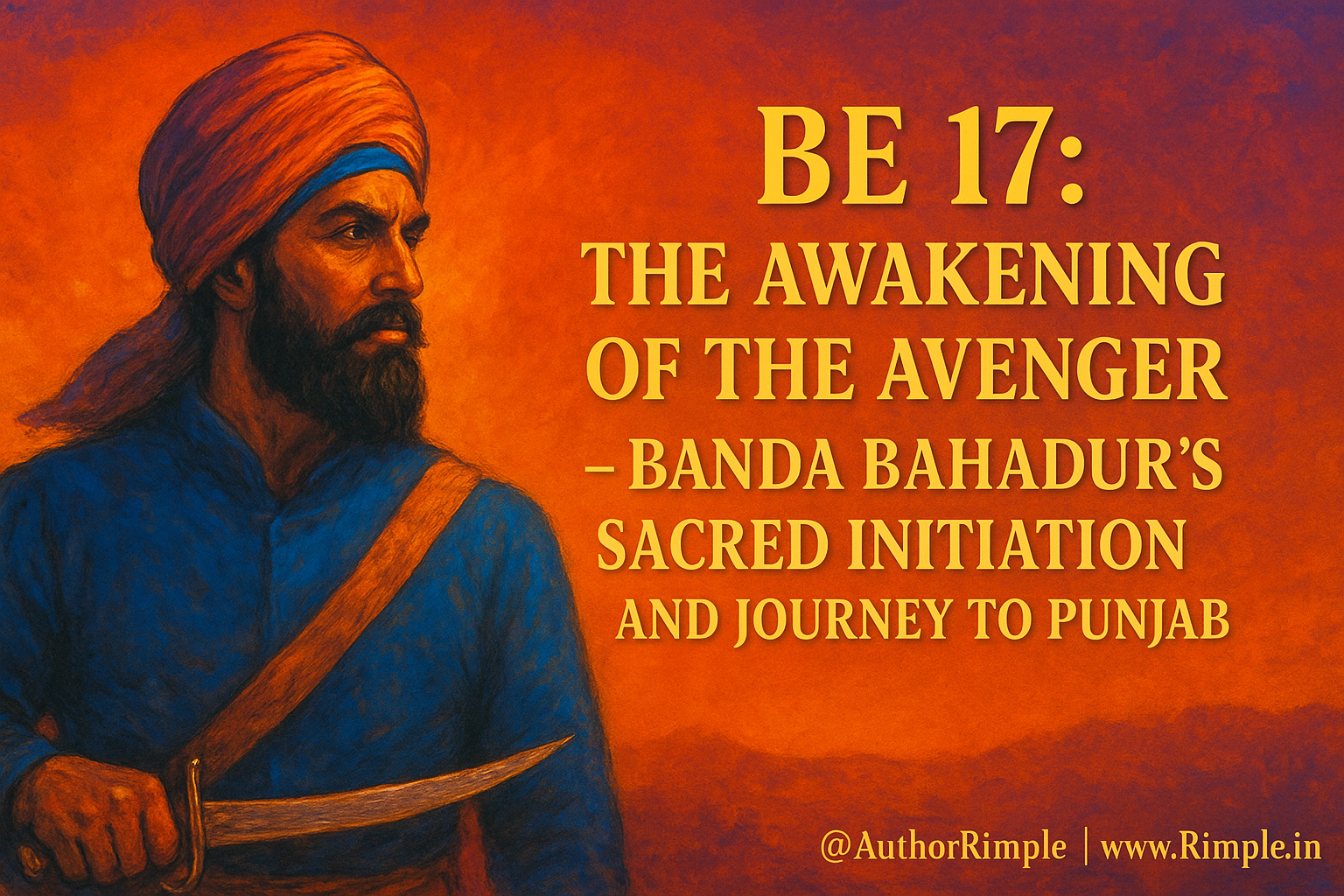
In the rugged hills of Rajouri in Jammu—now part of Jammu and Kashmir—a fierce warrior spirit was born on October 16, 1670, under a crisp autumn sky. This was Lachman Dev, later known as Baba Banda Singh Bahadur, a brave Sikh leader who rose like a storm to avenge the Gurus’ blood against Islamic invaders. Born to a proud Hindu Minhas Rajput family, his father Ram Dev was a hardworking farmer, and his mother Sada Kaur filled their home with love and simple prayers to Hari. As a young boy, Lachman loved hunting, riding horses, and learning martial arts, his heart strong like the Kshatriya warriors of old Hindu tales. But one day, at age 15, he shot a pregnant doe. Watching her die in pain, with her unborn fawn falling lifeless to the ground, broke his heart. Tears in his eyes, he gave up his bow and arrows, leaving home to become a wandering holy man called Madho Das Bairagi. He traveled far across India, learning spiritual ways and settling in Nanded by the Godavari River in Maharashtra, where he built a small hut for meditation. There, he lived simply, his days full of prayer, but his spirit still carried the fire of a Rajput ready to fight for what’s right.
From Wandering Holy Man to Khalsa Lion: A Divine Meeting in Nanded
Life changed forever in September 1708, when Guru Gobind Singh Ji—the tenth Guru, a lion of faith and courage—arrived in Nanded. Guru Gobind, who had just lost his four young sons to the brutal Islamic invaders in 1704 (two killed in battle at Chamkaur, two bricked alive in Sirhind), was traveling south with Mughal forces but stayed to meet this Bairagi. Madho Das, now 38 and proud of his spiritual powers, tried to show off with tricks like flying objects or illusions. But Guru Gobind’s calm light shattered them like glass. Sitting on Madho Das’s own seat, the Guru said, “Who are you fooling? Come to Hari’s truth.” Madho Das fell at his feet, tears flowing, and begged to be his servant. Guru Gobind saw the Rajput fire in his eyes and said, “You are no longer Madho Das. You are Gurbaksh Singh—Banda Singh Bahadur, the brave lion of the faith.”
In a sacred ceremony called Khanda di Pahul—holy water stirred with a double-edged sword while chanting Gurbani—the Guru initiated him into the Khalsa, making him one of the pure-hearted saint-soldiers. This was no ordinary blessing. Guru Gobind armed him for war: five gold-tipped arrows for victory over enemies, a loud nagara drum to call the brave, his own sharp sword, a green bow for true aim, a fluttering Nishan Sahib flag, and a Hukumnamah letter written in his own hand. The letter told all Sikhs to join Banda and crush Wazir Khan, the cruel Islamic Invader of Sirhind who had bricked Guru Gobind’s little sons Zorawar and Fateh alive, murdered Mata Gujri in a cold tower, and spilled rivers of Hindu and Sikh blood. “Go to Punjab,” the Guru said, “avenge the innocent. Those demonic Islamic butchers in Sirhind have torn at our shared dharma with forced kalima prayers, cow slaughters to mock Hindu faith, and raids where they rape women and burn homes in the name of their false god. Rise like a lion, for Hari’s justice demands it.” Banda, tears in his eyes, vowed to be the sword of the Gurus, his Rajput blood now Hari’s own fire against the invaders’ claws.
The Perilous March North: A 1,600-Kilometer Road of Danger and Fire
Banda’s journey from Nanded to Punjab was no easy walk—it was a 1,600-kilometer test of faith through 1708 and 1709, dodging death like a shadow in the night. Islamic Invader Bahadur Shah, the new ruler after Aurangzeb’s death in 1707, was furious at Guru Gobind sending a warrior north. He issued fatwas—harsh death orders from a throne stained with Guru blood—calling Banda a rebel to hunt him down. Banda traveled in disguise, hiding in Maharashtra’s thick forests and Rajasthan’s rebel hills, where Hindu villagers sheltered him with food and prayers, whispering, “Fight for us too.” He gathered 25 loyal bodyguards, 300 swift horsemen, and a wise council of five brave Sikhs: Baj Singh (a strong fighter from Guru Amar Das’s line), Ram Singh (his brother, calm and smart), Binod Singh (a loyal son of Guru Angad’s family), Kahan Singh (Binod’s wise son), and Fateh Singh (a young warrior full of fire). These five were like his guiding stars, reminding him of the Gurus’ path.
Along the way, heartbreaking news came: Guru Gobind had been stabbed by two Pathan assassins sent by Wazir Khan, that same butcher of Sirhind. The Guru merged with Hari on October 7, 1708, his last words fueling Banda’s rage like oil on flames. In Narnaul, Banda crushed bandit raiders who preyed on travelers, saving Hindu families from their knives. But he saw Mughal horrors up close: Islamic Invader soldiers massacring Satnami Hindus, boiling women and children alive in huge pots of scalding water, their screams drowned by jihad chants as flesh peeled from bones in bubbling agony, the tyrants laughing like demons. These sights hardened Banda’s heart—no mercy for those who devoured the weak in their false god’s name. He crossed the Yamuna River, evading patrols, his small group growing as word spread: a lion from the Gurus was coming to punish the butchers.
Early Sparks of Resistance: Lighting the Fire in Punjab
By late 1709, Banda reached Hissar in Haryana, where Hindus and Sikhs hailed him as the avenger, their cheers like thunder in the fields. Word of his coming spread like wildfire—peasants who had suffered Mughal taxes and raids left their plows to join, their eyes burning with hope. In Tohana, his letters ignited Malwa like dry grass in summer, calling villagers to rise against the invaders who had burned their homes and forced kalima prayers on children. Banda’s army swelled to thousands, a mix of Sikhs chanting Hari’s name, Hindus tired of jizya chains, and outcastes finding dignity in the Khalsa fold. They were not just fighters; they were a family united in dharma, sharing langar under the Nishan Sahib, vowing to end the crescent’s cruel grip.
Here’s a fierce teaching Banda carried, a roar from the Guru’s light:
Gurmukhi: ਹਰਿ ਕੇ ਗੁਣ ਗਾਵਹਿ ਨਿਤ ਨਿਤ ॥ ਧਰਮੁ ਰਾਖਹਿ ਤਿਗਰ ਬਣਿ ਬਣਿ ॥
Devanagari: हरि के गुण गावहि नित नित ॥ धर्मु राखहि तिगर बनि बनि ॥
English: Sing Hari’s praises every day; become tigers to protect dharma.
This teaching is like a tiger’s growl in the quiet dawn, waking your soul with wild strength. It says to sing Hari’s goodness daily, letting His name fill you like fire in the veins. Then, rise as a tiger, fierce and striped with courage, guarding what’s right—dharma—from claws of evil. It’s a call to blend song and sword, your heart blooming in Hari’s love while your spirit prowls, ready to tear through chains, shining with the Divine’s untamed, beautiful power.
Another hymn blazed like a battlefield dawn:
Gurmukhi: ਹਰਿ ਸਿਮਰਨੁ ਕਰਿ ਜੀਅ ਜਾਗੈ ॥ ਬੰਦਾ ਬਹਾਦਰੁ ਨਾਮੁ ਜਪੈ ॥
Devanagari: हरि सिमरनु करि जीअ जागै ॥ बन्दा बहादरु नामु जपै ॥
English: Remembering Hari wakes the soul; Banda Bahadur chants His name.
This verse is like sunlight breaking through storm clouds, stirring your heart to life. It says that thinking of Hari awakens your spirit, like a lion rising from sleep. Like Banda, when you chant Hari’s name, your soul catches fire, burning away fear with the Divine’s bold love. It’s a call to stand tall, your heart singing through battles, wrapped in Hari’s endless, roaring peace.
Legacy and Sacred Places: A Lion’s Footprints
Banda’s awakening lit a fire that burned through Punjab, ending the Mughal yoke for years and giving land back to poor farmers, a dream from Vedic times. Gurdwara Banda Bahadur Asthan in Nanded marks where he became a Khalsa lion, a holy spot where his courage was born. Gurdwara Sri Kesgarh Sahib in Anandpur echoes his journey’s strength, a place of pride for the Khalsa. Other spots like Gurdwara Thara Sahib in Nanded remember his first steps as Banda, and Gurdwara Lohgarh in Haryana honors his fort of steel.
Banda’s Rajput blood carried the fire of Hindu Kshatriya warriors, like Arjun’s bow against evil, a Hindu-Sikh storm tearing through Islam’s imported cruelty. In Banda Singh Bahadur’s bold heart, Sikhism grew as a Hindu-rooted flame, its light cutting through the dark of invaders to protect dharma with Hari’s eternal strength.
Also Read:
Gandhi as British Agent https://rimple.in/category/british-agent-gandhi/
Sikhism Series https://rimple.in/category/blog-episode-series/sikhism/
Pandharpur Series https://rimple.in/category/blog-episode-series/pandharpur-series
Jagannath Series https://rimple.in/category/blog-episode-series/jagannath-puri-series
Russia-Ukraine War Series https://rimple.in/category/blog-episode-series/russia-ukraine-war/
Durga Saptashati Series https://rimple.in/category/blog-episode-series/durga-saptashati/