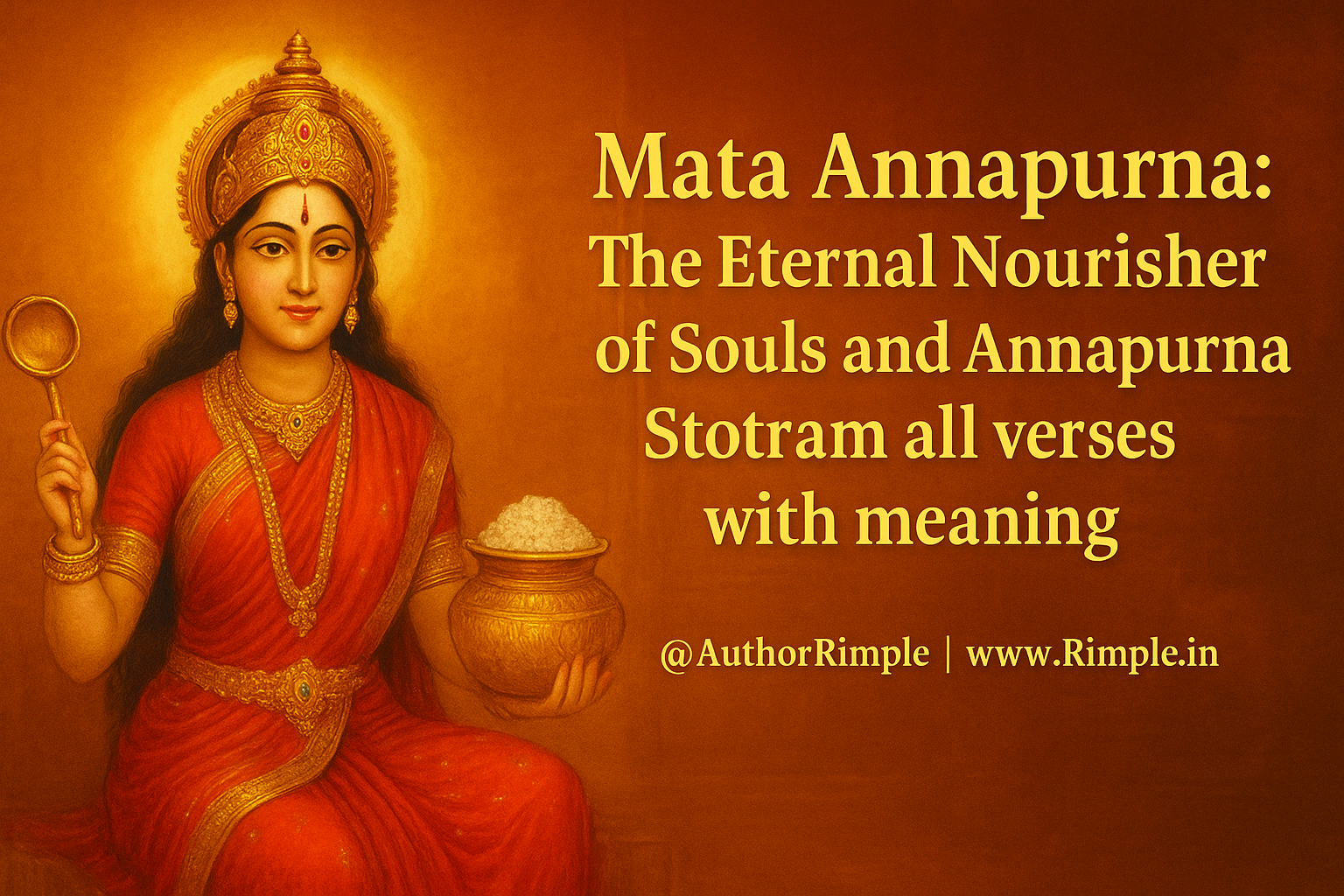
In the vast tapestry of Hindu wisdom, Mata Annapurna shines as the divine embodiment of abundance and care, a compassionate form of Mata Parvati, the eternal companion of Bhagwan Shiva. Her name whispers a sacred truth: “Anna” means food, the simple gift that sustains our bodies, and “Purna” means complete, full, unending—like the love of a mother who fills every empty heart and hungry belly without measure. She is the gentle guardian of kitchens and hearths, the quiet force behind every shared meal, reminding us that nourishment is not just for the flesh but for the spirit too. In the holy city of Kashi (Varanasi), her presence flows like the Ganges, offering rice and grace to pilgrims, ensuring no soul wanders empty. Devotees see her as the remover of scarcity, the bestower of plenty, and on her sacred days, homes bloom with offerings of sweets and grains, honoring her as the one who turns a single seed into a harvest of joy.
Today, on this blessed Annapurna Jayanti—the full moon of Margashirsha month, December 4, 2025—we celebrate the tender moment of her divine appearance. The story unfolds like a soft dawn breaking over Kailash. Once, in a playful exchange of deep truths, Bhagwan Shiva, immersed in the boundless silence of the spirit, spoke to Mata Parvati that all worldly things, even food, are like dreams, fleeting illusions in the dance of Maya. His words, born of highest wisdom, stirred a ripple of emptiness across the earth. Grains vanished from fields, rivers ran dry of sustenance, and hunger shadowed every home, teaching all beings the quiet ache of want. The cries of the world reached the heavens, and Brahma and Vishnu, moved by compassion, awakened Shiva from his meditation. He wandered the lands in the humble guise of a seeker, bowl in hand, feeling the weight of mortal need.
In Kashi, where devotion meets the eternal, Mata Parvati could no longer bear the sorrow. On this very day, she revealed herself as Mata Annapurna, radiant in golden silks, her hands brimming with endless rice from a single shining vessel. Seated on a throne of light, she became the alms-giver, serving not just Shiva—who bowed low, learning anew the sacred bridge between soul and body—but every weary traveler, every child, every forgotten heart. The pot never emptied; it poured forth warmth, flavor, and fullness, restoring life to the parched earth. Shiva, with tears of realization, understood: true enlightenment blooms when the body is fed, for in nurturing the outer, we touch the inner divine. This Jayanti calls us to light a lamp in our kitchens, share a morsel with the needy, and whisper gratitude—for in her grace, scarcity dissolves into songs of plenty, and every bite becomes a prayer. As the moon swells full tonight, may her blessings fill your life like warm rice on a winter’s eve, soft, sustaining, and forever sweet.
Now, let us immerse in the Annapurna Stotram, a hymn of pure devotion composed by the enlightened soul Adi Shankaracharya. Each verse is a petal unfolding her glory, sung in the ancient rhythm of Sanskrit to invoke her near.
Verse 1
Sanskrit:
नित्यानन्दकरी वराभयकरी सौन्दर्यरत्नाकरी
निर्धूताखिलघोरपावनकरी प्रत्यक्षमाहेश्वरी ।
प्रालेयाचलवंशपावनकरी काशीपुराधीश्वरी
भिक्षां देहि कृपावलम्बनकरी मातान्नपूर्णेश्वरी ॥१॥
Transliteration:
Nityānandakarī varābhayakarī saundaryaratnākarī
Nir dhūtākhilaghōrapāvanakarī pratyakṣamāhēśvarī |
Prālēyācalavaṁśapāvanakarī kāśīpurādhīśvarī
Bhikṣāṁ dēhi kṛpāvalambanakarī mātānnapurṇēśvarī ||1||
Beautiful Explanation:
Oh, what a soft embrace this verse offers, like the first light of dawn caressing a sleeping world! Here, the poet bows to her as the eternal bringer of bliss, filling souls with unending joy that dances like fireflies in the night. She grants boons with one hand and fearlessness with the other, her touch dissolving worries like mist before the sun. Her beauty gleams as a jewel-mine of grace, where every glance polishes the heart to shine. She sweeps away all dark storms of suffering, purifying the spirit with her holy breath, standing as the visible queen of divine power, so close you can feel her warmth. Born from the snow-capped lineage of the Himalayas, she cleanses ancient lineages with her flow, reigning supreme over Kashi’s sacred lanes. In humble plea, the devotee whispers, “Grant me alms, O Mother, for your mercy is my only staff on this journey.” In the Hindi tales of her glory, this verse whispers that she is the quiet river of compassion, where even the weariest beggar finds a feast for the soul—reminding us, in simple faith, that her endless giving turns our empty bowls into vessels of peace, one grain of kindness at a time.
Verse 2
Sanskrit:
नानारत्नविचित्रभूषणकरी हेमाम्बराडम्बरी
मुक्ताहारविलम्बमानविलसद्वक्षोजकुम्भान्तरी ।
काश्मीरागरुवासिताङ्गरुचिरे काशीपुराधीश्वरी
भिक्षां देहि कृपावलम्बनकरी मातान्नपूर्णेश्वरी ॥२॥
Transliteration:
Nānāratnavicitrabhūṣaṇakarī hēmāmbarāḍambarī
Muktāhāravilambamānavilasadvaksōjakumbhāntarī |
Kāśmīrāgaruvāsitāṅgarucirē kāśīpurādhīśvarī
Bhikṣāṁ dēhi kṛpāvalambanakarī mātānnapurṇēśvarī ||2||
Beautiful Explanation:
Imagine a garden of stars adorning twilight—this verse paints her in such splendor, a vision that stirs the heart like a lover’s first song. She adorns herself with jewels of every hue and wonder, each gem a story of hidden treasures within us. Draped in golden robes that sway like autumn leaves in a gentle breeze, she embodies the quiet luxury of the soul’s true wealth. A necklace of pearls cascades over her chest, resting like dewdrops on blooming lotuses, symbols of purity that guard the sacred spring of life. Her skin glows with the fragrance of Kashmir’s saffron fields, a scent that lingers like forgotten dreams, making her the radiant queen of Kashi’s whispered prayers. Again, the plea rises soft as morning mist: “Bestow your alms, Mother, for your grace alone steadies my faltering steps.” From the warm folds of regional Sanskrit hymns, this speaks of her as the eternal bloom in life’s garden, where beauty is not for show but a mirror to our own divine spark—inviting every simple soul to see that her adornments are but reflections of the joy she plants in our everyday graces, turning ordinary moments into garlands of light.
Verse 3
Sanskrit:
योगानन्दकरी रिपुक्षयकरी धर्मार्थनिष्ठाकरी
चन्द्रार्कानलभासमानलहरी त्रैलोक्यरक्षाकरी ।
सर्वैश्वर्यसमस्तवाञ्छितकरी काशीपुराधीश्वरी
भिक्षां देहि कृपावलम्बनकरी मातान्नपूर्णेश्वरी ॥३॥
Transliteration:
Yōgānandakarī ripukṣayakarī dharmārthanīṣṭhakarī
Candrārkānalabhāsamānalaharī trailōkyarakṣākarī |
Sarvaiśvaryasamastavāñchitakarī kāśīpurādhīśvarī
Bhikṣāṁ dēhi kṛpāvalambanakarī mātānnapurṇēśvarī ||3||
Beautiful Explanation:
Like a yogi’s breath merging with the wind, this verse flows into her as the awakener of inner bliss through sacred union, where body and spirit entwine in silent harmony. She crushes the shadows of inner foes—doubts and fears that gnaw like hidden thorns—leaving only the bloom of courage. Steadfast in the paths of righteousness and purpose, she roots the heart in what truly matters, like a banyan tree sheltering wanderers. Her waves of light rival the moon’s silver, sun’s gold, and fire’s dance, a luminous tide that guards the three realms of earth, sky, and beyond with tender vigilance. She fulfills every longing for true sovereignty, weaving desires into the fabric of divine will, as the supreme sovereign of Kashi’s eternal embrace. The heartfelt call echoes: “Give me your alms, O Kind One, for your mercy is the staff that lifts my weary soul.” In the soul-stirring Hindi commentaries of her leela, this reveals her as the quiet guardian of our hidden battles, a light that not only shields but illuminates the path home—whispering to every earnest heart that in her care, even the smallest wish blossoms into a garden of fulfilled dreams, simple and profound.
Verse 4
Sanskrit:
कैलासाचलकन्दरालयकरी गौरी उमा शङ्करी
कौमारी निगमार्थगोचरकरी ओङ्कारबीजाक्षरी ।
मोक्षद्वारकपाटपाटनकरी काशीपुराधीश्वरी
भिक्षां देहि कृपावलम्बनकरी मातान्नपूर्णेश्वरी ॥४॥
Transliteration:
Kailāsācalakandarālayakarī gauri umā śaṅkarī
Kaumāri nigamārthagōcarakarī ōṅkārabījākṣarī |
Mōkṣadvārakapāṭapāṭanakari kāśīpurādhīśvarī
Bhikṣāṁ dēhi kṛpāvalambanakarī mātānnapurṇēśvarī ||4||
Beautiful Explanation:
Envision the hush of mountain caves where echoes birth eternity—this verse honors her as the dweller in Kailash’s secret hollows, the fair one, Gauri, the tranquil Uma, the auspicious bringer of peace to Shiva’s heart. As the youthful maiden, she unveils the hidden meanings of sacred scriptures, making divine wisdom flow like a clear stream to thirsty minds. Seeded in the primal hum of Om, she is the root syllable of creation’s song, vibrating through every breath we take. She flings wide the gates of liberation, shattering the locks that bind the soul to endless cycles, as Kashi’s exalted queen. The plea rises like incense: “Bestow alms upon me, Mother, your compassion my sole support.” Drawing from the luminous Sanskrit depths cherished in Indian lore, this verse unfolds her as the key to inner freedom, a youthful whisper in the cave of self—gently teaching every seeker that her sacred sound unlocks not just heavens, but the quiet door within, where moksha waits like a long-lost friend, simple as a single, surrendered sigh.
Verse 5
Sanskrit:
दृश्यादृश्यविभूतिवाहनकरी ब्रह्माण्डभाण्डोदरी
लीलानाटकसूत्रभेदनकरी विज्ञानदीपाङ्कुरी ।
श्रीविश्वेशमनःप्रसादनकरी काशीपुराधीश्वरी
भिक्षां देहि कृपावलम्बनकरी मातान्नपूर्णेश्वरी ॥५॥
Transliteration:
Dṛśyādṛśyavibhūtivāhanakarī brahmāṇḍabhāṇḍōdari
Līlānāṭakasūtrabhēdanakarī vijñānadīpāṅkurī |
Śrīviśvēśamanaḥprasādanakarī kāśīpurādhīśvarī
Bhikṣāṁ dēhi kṛpāvalambanakarī mātānnapurṇēśvarī ||5||
Beautiful Explanation:
This verse is a lantern in the twilight of mysteries, portraying her as the bearer of seen and unseen splendors, the vast-bellied one who cradles the entire cosmos in her nurturing fold, like a mother holding the stars in her apron. She unravels the threads of life’s playful drama, revealing the script behind the veil of illusion with effortless grace. As the tender sprout of wisdom’s flame, she kindles the light of true knowing in hearts long dimmed. She soothes the mind of the universe’s guardian, bringing serenity to Shiva’s vast awareness, reigning as Kashi’s divine heart. Softly, the supplication: “Grant me your gift of alms, for your mercy upholds me.” From the poetic Hindi reflections on her cosmic play, this sings of her as the weaver who mends our tangled tales, a spark in the vast night—inviting every wandering spirit to see that her light dissolves the grand stage into simple truth, where the universe’s belly becomes our own safe hearth, warm with the glow of awakened wonder.
Verse 6
Sanskrit:
उर्वीसर्वजनेश्वरी भगवती मातान्नपूर्णेश्वरी
वेणीनीलसमानकुन्तलहरी नित्यान्नदानेश्वरी ।
सर्वानन्दकरी सदा शुभकरी काशीपुराधीश्वरी
भिक्षां देहि कृपावलम्बनकरी मातान्नपूर्णेश्वरी ॥६॥
Transliteration:
Urvisarvajanēśvarī bhagavatī mātānnapurṇēśvarī
Vēṇīnilasamānakuntalaharī nityānnadanēśvarī |
Sarvānandakarī sadā śubhakarī kāśīpurādhīśvarī
Bhikṣāṁ dēhi kṛpāvalambanakarī mātānnapurṇēśvarī ||6||
Beautiful Explanation:
Oh, the wave of maternal warmth in this verse, like earth’s own heartbeat calling all home! She is the sovereign of the wide world, the blessed divine mother, Annapurna supreme, whose tresses cascade like midnight rivers, dark and flowing with secrets of the deep. The eternal giver of nourishment, she pours daily gifts of sustenance, turning scarcity into songs of fullness. Bringer of all joys, ever the harbinger of good fortune, she blesses Kashi with her auspicious gaze. The gentle ask: “O Mother, fill my bowl with alms, your grace my faithful guide.” In the heartfelt regional chants of her endless giving, this portrays her as the blue-veiled sky that rains kindness on all— a reminder for every humble life that her waves of hair are like the Ganges’ flow, washing away lack, leaving only the simple bliss of a shared supper under stars, where joy ripples from one soul to another, boundless and bright.
Verse 7
Sanskrit:
आदिक्षान्तसमस्तवर्णनकरी शम्भोस्त्रिभावाकरी
काश्मीरात्रिजलेश्वरी त्रिलहरी नित्याङ्कुरा शर्वरी ।
कामाकाङ्क्षकरी जनोदयकरी काशीपुराधीश्वरी
भिक्षां देहि कृपावलम्बनकरी मातान्नपूर्णेश्वरी ॥७॥
Transliteration:
Ādikṣāntasamastavarṇanakarī śambhōstri bhāvākarī
Kāśmīrātrījalēśvarī trilaharī nityāṅkurā śarvarī |
Kāmākāṅkṣakarī janōdayakarī kāśīpurādhīśvarī
Bhikṣāṁ dēhi kṛpāvalambanakarī mātānnapurṇēśvarī ||7||
Beautiful Explanation:
This verse blooms like a night lotus under moonlight, celebrating her as the describer of all letters from alpha to omega, the weaver of creation’s sacred script. To Shambhu she brings the three moods of being—waking, dreaming, deep sleep—uniting them in harmonious flow. Queen of saffron-scented waters and triple waves of grace, she is the ever-sprouting night, birthing light from darkness. Fulfiller of heart’s deepest wishes, riser of the people’s dawn, she holds Kashi in her palm of power. The plea, soft as dew: “Bestow your alms, Mother, your kindness my steadying hand.” Echoing the mystical Hindi visions of her triple dance, this reveals her as the alphabet of the soul, scripting our longings into reality—a gentle dawn for every shadowed path, where her waves cradle our nights, turning whispers of want into the sunrise of contentment, simple as the first light kissing the earth.
Verse 8
Sanskrit:
देवी सर्वविचित्ररत्नरचिता दाक्षायणी सुन्दरी
वामं स्वादुपयोधरप्रियकरी सौभाग्यमाहेश्वरी ।
भक्ताभीष्टकरी सदा शुभकरी काशीपुराधीश्वरी
भिक्षां देहि कृपावलम्बनकरी मातान्नपूर्णेश्वरी ॥८॥
Transliteration:
Dēvi sarvavicitraratnaracitā dākṣāyaṇī sundarī
Vāmaṁ svādupayōdhaprīyakari saubhāgyamāhēśvarī |
Bhaktābhīṣṭakarī sadā śubhakarī kāśīpurādhīśvarī
Bhikṣāṁ dēhi kṛpāvalambanakarī mātānnapurṇēśvarī ||8||
Beautiful Explanation:
Like a rainbow arching over a meadow of gems, this verse adores her as the goddess crafted from every wondrous jewel, the lovely daughter of Daksha, beauty incarnate that captivates the gaze. To the left-handed path of tender devotion, she offers the sweet nectar of her breasts, delighting with life-giving milk, the supreme queen of fortunes that multiply like stars. Fulfiller of devotees’ deepest yearnings, ever the bearer of blessings, she reigns over Kashi’s fortunate folds. The call, warm as embrace: “Grant alms to me, O Merciful One, your grace my anchor.” From the affectionate regional lore of her nurturing form, this sings of her as the jewel-box of grace, where beauty feeds the soul’s quiet hunger— a fortune for every faithful heart, turning drops of longing into rivers of luck, simple and sweet as mother’s milk shared in the hush of home.
Verse 9
Sanskrit:
चन्द्रार्कानलकोटिकोटिसदृशा चन्द्रांशुबिम्बाधरी
चन्द्रार्काग्निसमानकुन्तलधरी चन्द्रार्कवर्णेश्वरी ।
मालापुस्तकपाशासाङ्कुशधरी काशीपुराधीश्वरी
भिक्षां देहि कृपावलम्बनकरी मातान्नपूर्णेश्वरी ॥९॥
Transliteration:
Candrārkānalakōṭikōṭisadṛśā candrāṁśubimbādhari
Candrārkāgnisamānakuntalahari candrārkavarṇēśvarī |
Mālāpustakapāśāsāṅkuśadhari kāśīpurādhīśvarī
Bhikṣāṁ dēhi kṛpāvalambanakarī mātānnapurṇēśvarī ||9||
Beautiful Explanation:
A symphony of celestial fires, this verse glows with her as vast as billions of moons, suns, and flames, holding the moon’s ray-like orb in her form, a bearer of soft lunar beauty. Her locks flow like the blaze of moon, sun, and fire entwined, queen of hues that paint the dawn in divine colors. In hands she cradles garland, book, noose, and goad—symbols of love’s chain, wisdom’s page, and guidance’s gentle prod—as Kashi’s exalted one. The supplication, luminous: “Fill my bowl, Mother, your mercy my light.” In the radiant Sanskrit hymns of eastern traditions, this illuminates her as the cosmos in feminine grace, where her tresses weave the colors of creation— a palette for every artist’s soul, turning the tools of life into bridges of beauty, simple as a moonlit path leading home through the night’s gentle fire.
Verse 10
Sanskrit:
क्षत्रत्राणकरी महाऽभयकरी माता कृपासागरी
साक्षान्मोक्षकरी सदा शिवकरी विश्वेश्वरश्रीधरी ।
दक्षाक्रन्दकरी निरामयकरी काशीपुराधीश्वरी
भिक्षां देहि कृपावलम्बनकरी मातान्नपूर्णेश्वरी ॥१०॥
Transliteration:
Kṣatrētrāṇakarī mahā’ bhayakarī mātā kṛpāsāgari
Sākṣānmōkṣakarī sadā śivakarī viśvēśvaraśrīdhari |
Dakṣākrandakarī nirāmayakarī kāśīpurādhīśvarī
Bhikṣāṁ dēhi kṛpāvalambanakarī mātānnapurṇēśvarī ||10||
Beautiful Explanation:
This verse surges like an ocean of refuge, hailing her as protector of warriors’ realms, the great dispeller of terrors, mother whose sea of compassion drowns all sorrows in waves of solace. Direct bestower of freedom, ever the maker of auspiciousness, bearer of glory to the lord of all, she weeps with Daksha’s lament yet heals without end, queen of Kashi’s boundless care. The plea, deep as tide: “Bestow your alms, O Vast Mercy, my soul’s true shore.” From the compassionate Hindi narratives of her protective leela, this portrays her as the healing balm for battle-worn hearts, where tears turn to triumph— a direct path to peace for every storm-tossed life, simple as her endless sea washing clean the shores of fear, leaving only the shine of eternal well-being.
Verse 11
Sanskrit:
अन्नपूर्णे सदापूर्णे शङ्करप्राणवल्लभे ।
ज्ञानवैराग्यसिद्ध्यर्थं भिक्षां देहि च पार्वति ॥११॥
Transliteration:
Annāpurṇē sadāpūrṇē śaṅkaraprāṇavallabhē |
Jñānavairāgyasiddhyarthaṁ bhikṣāṁ dēhi ca pārvati ||11||
Beautiful Explanation:
A crescendo of longing, this short verse gathers all her fullness like a ripe fruit falling into open palms. O Ever-Complete Annapurna, beloved of Shankara’s very life-breath, for the sake of wisdom’s clarity and detachment’s quiet strength, grant this alms, O Parvati. In the simple, soulful essence of Shankaracharya’s own vision, as shared in timeless Indian commentaries, this is the devotee’s raw cry—a bridge from hunger to higher knowing, where her completeness feeds not just the body but the questing spirit. Like a vine climbing to sunlight, it teaches that true fullness blooms in balance: fed by her grace, we rise to see beyond, simple as offering an empty hand to receive the fruits of inner peace.
Verse 12
Sanskrit:
माता च पार्वती देवी पिता देवो महेश्वरः ।
बान्धवाः शिवभक्ताश्च स्वदेशो भुवनत्रयम् ॥१२॥
Transliteration:
Mātā ca pārvatī dēvi pitā dēvō maheśvaraḥ |
Bāndhavāḥ śivabhaktāśca svadēśō bhuvanatrayam ||12||
Beautiful Explanation:
The hymn closes in a circle of belonging, vast as the horizons yet intimate as family hearth. Mother is Parvati divine, father the great Maheshvara, kin are all devotees of Shiva, and our true homeland the three worlds themselves. This final breath, drawn from the inclusive warmth of Hindu family tales in regional lore, dissolves all separation: in her embrace, we are all one kin, wandering no more. It whispers to every heart that home is not walls but worship, not blood but bhakti—simple as realizing the whole universe sits at her table, sharing the eternal meal of love, where every soul finds its place in the grand, gentle family of the divine.
May this stotram linger in your heart like her endless rice, nourishing your days with her quiet abundance. On this Jayanti, let her story inspire a shared plate, a whispered thanks— for in feeding another, we taste the divine.
Also Read: