
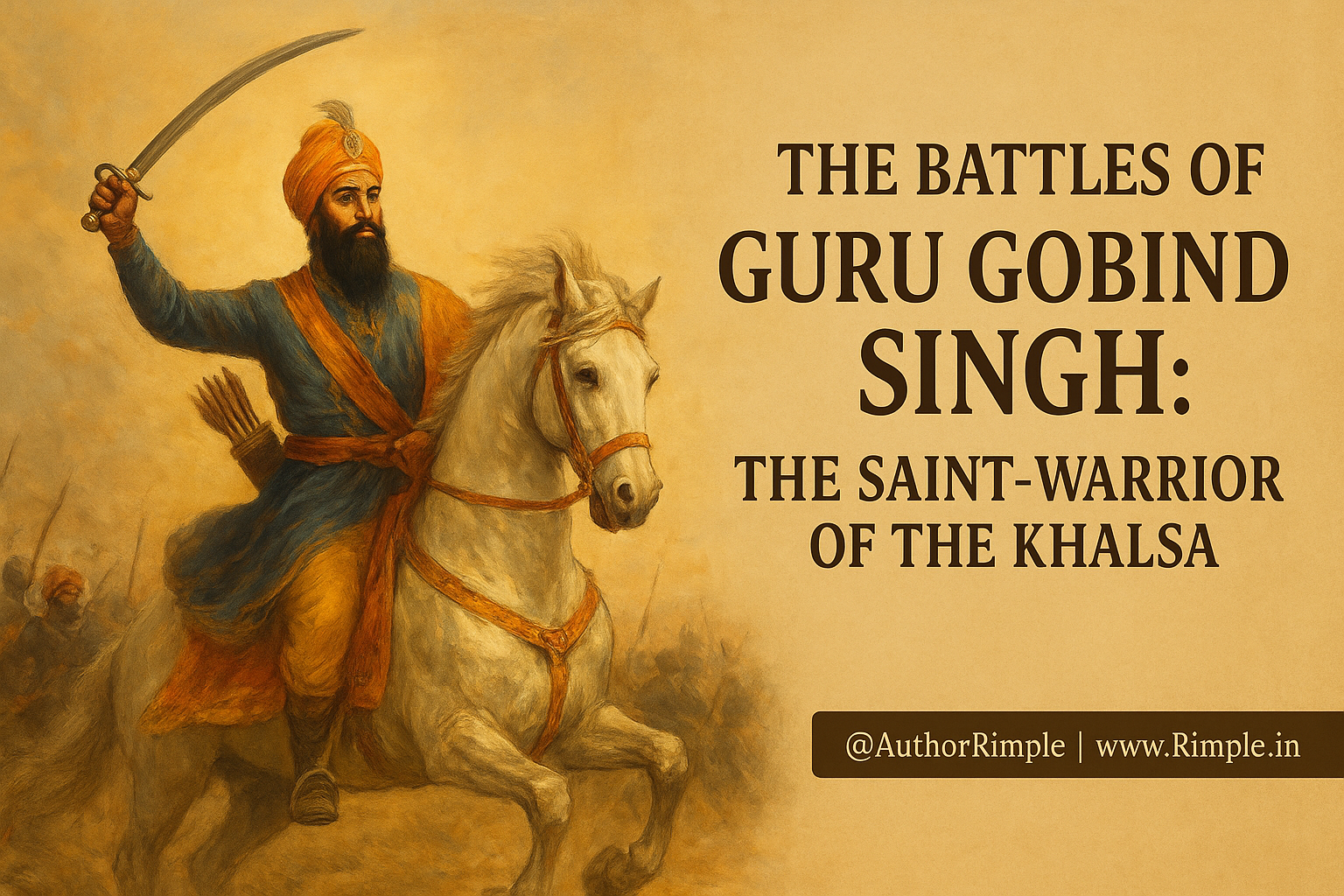
In the turbulent hills of Punjab during the late 17th century, Guru Gobind Singh Ji, the tenth and final human Guru of Sikhism, stood as a beacon of courage and faith against the brutal onslaught of Islamic invaders. Born in 1666 in Patna to Guru Tegh Bahadur and Mata Gujri, Guru Gobind Singh became the Guru at just nine years old after his father’s martyrdom at the hands of Islamic Invader Aurangzeb’s executioners in 1675. Raised in Anandpur Sahib, he inherited a legacy of resistance—his grandfather Guru Hargobind had already fought Mughal forces, and his father had sacrificed his life to protect Kashmiri Hindus from forced conversion. The Mughals, under Aurangzeb’s fanatical rule from 1658 to 1707, had unleashed a reign of terror: destroying thousands of Hindu temples (over 80 documented in farmans (orders) like the 1669 order to raze “kafir” structures), reimposing the humiliating jizya tax in 1679 to economically strangle non-Muslims, banning Hindu festivals, and enforcing kalima recitals under threat of floggings or death. Their jihadist soldiers raided villages, slaughtered cows to mock Hindu sanctity, raped women to force Islam, and beheaded resisters, parading heads on spears as “holy” trophies. Aurangzeb’s own letters, preserved in archives like the Bikaner State Records (accessible via rarebooksocietyofindia.org), reveal his cruelty: a 1685 farman to Lahore’s governor demanded “flog kafirs until they recite kalima,” while a 1669 order to Gujarat’s subahdar commanded “demolish all Hindu temples and fill holy tanks with broken idols.”
Guru Gobind Singh, witnessing this savagery—villages burned, priests boiled alive, children orphaned by scimitars—responded not with hate, but with divine resolve. His battles, totaling around 14 major engagements from 1688 to 1705 (as detailed in Sikh sources like SikhiWiki and the Bachitra Natak in Dasam Granth), were defensive stands for dharma, protecting the innocent from Islamic invaders’ cruelty. Hindus and Sikhs, united in faith, fought with unmatched bravery: one Sikh holding off hundreds with a single kirpan, or a handful of followers routing thousands through sheer spirit and Hari’s grace. These conflicts forged the Khalsa, Guru Gobind’s sacred order, as a shield against tyranny. Through headings, we’ll explore each battle, the invaders’ barbarity, and the heroic resistance, flowing like a river of truth to honor the fallen and warn against trusting wolves in prayer robes.
The Forging of the Khalsa: The Foundation Against Oppression
Before the battles intensified, Guru Gobind Singh created the Khalsa on Vaisakhi, April 13, 1699, at Anandpur Sahib—a revolutionary act born from Mughal atrocities. Khalsa means “pure” or “sovereign,” a community of saint-soldiers dedicated to Hari, equality, and justice. Facing spies and assassins sent by Aurangzeb to crush rising Sikh power, Guru Gobind called 80,000 followers to the Akal Takht. He asked for five volunteers willing to die for faith. The Panj Pyare (Five Beloved Ones)—Daya Ram (a shopkeeper from Lahore), Dharam Das (a farmer from Hastinapur), Himmat Rai (a laborer from Jagannath Puri), Mohkam Chand (a washerman from Dwarka), and Sahib Chand (a barber from Bidar)—stepped forward, from diverse backgrounds to show no caste divides.
Guru Gobind prepared amrit—sweet holy water stirred with a double-edged sword (khanda) while chanting Gurbani from Japji, Jaap, Chaupai, Anand Sahib, and Savaiye. He gave it to the five, naming men “Singh” (lion) and women “Kaur” (princess), symbolizing fearless equality. They then prepared amrit for him, emphasizing no hierarchy. Khalsa vows: chant Hari’s name (naam japna), earn honestly (kirat karna), share with others (vand chakna), meditate daily (simran), and defend the oppressed with kirpan. They wear the 5 Ks: Kesh (uncut hair, Hari’s gift), Kangha (comb for cleanliness), Kara (steel bracelet for righteousness), Kachera (undergarment for self-control), Kirpan (small sword for justice). Khalsa is “Guru’s own”—pure in heart, sovereign in spirit, one family against tyranny. As SikhiWiki notes, “Khalsa is the army of Hari, guarding dharma against evil, born to end oppression like the Mughals’ jizya and temple razings.” One Khalsa stood against thousands, their bravery a roar: no more bowing to invaders who flogged “kafirs” or forced cow slaughter.
The Battle of Bhangani (1688): First Stand Against Hill Rajas and Mughal Shadows
The first major clash came in September 1688 at Bhangani, 10 km northeast of Paonta Sahib, where Guru Gobind (then 22) faced a coalition of 22 hill Rajas led by Raja Bhim Chand of Kahlur, backed by Mughal arms from Sirhind. The Rajas, jealous of the Guru’s growing influence and pressured by Islamic Invader Aurangzeb’s agents, attacked with 30,000 men to crush Sikh power. Aurangzeb’s spies had incited them, promising gold for capturing the Guru, echoing the emperor’s 1669 farman ordering “demolition of kafir temples” to break resistance. The invaders’ cruelty was fresh: Pathan soldiers under Mughal command had raided nearby villages, beheading Hindu priests for refusing kalima, raping women in “conversion” rituals, and slaughtering cows in gurdwaras, leaving bodies for dogs to mock ahimsa.
Guru Gobind’s 4,000 Sikhs—mostly local Hindus and early followers—met them on Yamuna banks. The battle raged fiercely for hours. Raja Hari Chand’s arrows struck the Guru’s horse and waistband, but Guru Gobind’s counter-shot killed him instantly, shattering the enemy morale. General Sangha Shah slew Najabat Khan, but both died heroically, their blood mingling with 700 Sikh martyrs. The Rajas fled, their 5,000 dead littering the field in defeat. Hindu villagers, long oppressed by jizya and temple desecrations (like Mathura’s 1670 razing), saw Sikh bravery as hope—one wounded boy fighting off ten with a kirpan, or women carrying wounded while chanting Hari’s name. This victory showed Mughal-backed Rajas’ fragility; Sikhs, united in Khalsa spirit, routed superior numbers, their chants drowning jihad cries.
The Battle of Nadaun (1691): Aiding the Oppressed Against Mughal Might
In March 1691, Guru Gobind aided hill Rajas against Mughal forces led by Islamic Invader Alif Khan from Kangra, who had besieged Nadaun on Beas banks. Alif Khan’s 10,000 troops, fresh from cow-slaughter orgies in villages to force conversions, burned Hindu homes and flogged resisters per Aurangzeb’s 1685 farman: “Flog until kalima.” The Rajas, regretting Bhangani, begged help. Guru Gobind’s 2,000 Sikhs joined 5,000 Rajas, ambushing at Nadaun. Sikhs struck first, arrows piercing Mughal ranks in crimson arcs, kirpans hacking through armor in guttural cries. Alif Khan fled, leaving 2,000 dead; one Sikh, Bhai Nanu, held a pass against 50, his body riddled but spirit unbowed. Hindus cheered, seeing Sikhs as dharma’s shield—brave Jats and Khatris fighting scimitar-wielders who raped and pillaged, their gold loot returned to villagers. This win humbled Mughals, buying time against Aurangzeb’s temple-destroying zeal.
The Battle of Guler (1691): Defending Hindu Kings from Mughal Claws
Shortly after Nadaun, in 1691, Mughal forces under Hussain Khan attacked Guler Raja’s fort, enforcing jizya and conversion. Hussain’s troops, allies of Aurangzeb, had desecrated temples, forcing women to veil in burqas and beheading priests for “idolatry.” Guru Gobind, with 500 Sikhs, reinforced the Raja’s 1,000. At Guler plains, Sikhs charged, spears impaling ghazis in fountains of blood, swords cleaving turbans in arcs of vengeance. Hussain retreated, his army routed; a Sikh woman, Mai Dasu, saved wounded by carrying them under fire, her courage inspiring villagers. Hindus hailed Sikhs as saviors—one boy facing 20 with a staff, chanting Hari against kalima shouts—proving unity against invaders who flayed resisters and chained women.
The Battle of Bhangani Second (1691): Rematch Against Betrayers
Bhim Chand, ungrateful after Nadaun, allied with Mughals in late 1691 for a rematch at Bhangani. His 20,000, backed by Pathans, attacked to seize Guru Gobind’s horses. The invaders’ cruelty preceded: burning villages, slaughtering cows in markets, raping to “convert.” Guru Gobind’s 1,500 Sikhs held the field, arrows darkening skies, kirpans carving limbs in red mists. Bhim Chand’s elephant charged, but Bhai Bachittar Singh speared it, the beast collapsing in trumpeting agony. Sikhs slew 1,500 enemies, forcing retreat; Hindus fought alongside, one farmer slaying three with an axe, roaring “Waheguru.” Victory fortified Anandpur, exposing Rajas’ folly in allying with butchers who boiled children.
The Battle of Anandpur (1693): Defending the Holy City
In 1693, hill Rajas and Mughal shadows besieged Anandpur for 15 days, demanding submission. Invaders, under Aurangzeb’s influence, had poisoned wells and forced kalima in suburbs. Guru Gobind’s 2,000 repelled them with cannon fire and charges, arrows piercing ranks in crimson rains. One Sikh, Bhai Uday Singh, held a gate alone against 100, his kirpan flashing until arrows felled him. Hindus in the city cheered, seeing Sikhs as dharma’s guardians against scimitar-wielding hordes who desecrated idols.
The Battle of Nadaun Second (1694): Crushing Mughal Reinforcements
Mughal reinforcements under Jujhar Singh in 1694 attacked Nadaun again, enforcing jizya. Their cruelty: flogging women for Hindu tilaks, slaughtering cows in temples. Guru Gobind’s 3,000 Sikhs ambushed, swords hacking through cavalry in guttural cries, one woman Mai Bhagwani saving 20 by carrying them to safety. Jujhar fled, 800 dead; bravery shone—one Sikh beheading five before falling, chanting Hari against jihad yells.
The Battle of Husain (1696): Victory Over Mughal General
In February 1696, Mughal General Hussain Khan, with 10,000, attacked to crush Sikh growth. Hussain’s men raped villages en route, forcing conversions. Guru Gobind’s 1,000 Sikhs met them at Husain, arrows felling ghazis in waves, kirpans disemboweling in red torrents. Hussain died pierced by a spear, his army routed; a 12-year-old Sikh boy slew three, inspiring Hindus who joined the chant “Waheguru.”
The Battle of Anandpur Second (1697): Siege of the Fortified City
Hill Rajas, Mughal-backed, besieged Anandpur in 1697 with 20,000. Invaders poisoned food, slaughtered cows inside walls. Guru Gobind’s 2,500 held for 10 days, nightly raids slaying 1,000, one Sikh Bhai Nand Singh holding a breach alone, killing 20 before arrows silenced him. Rajas retreated; Hindus saw Sikhs as Rama’s avatars against Ravana-like tyrants.
The Battle of Paunta (1698): Early Defense of the New Home
In 1698, Raja of Paunta attacked Guru Gobind’s new base, aided by Mughals demanding tribute. Invaders burned crops, forced kalima. Guru Gobind’s 1,500 repelled them, cavalry charging in thunder, swords cleaving in gold flashes. Raja fled; one Sikh woman defended her home with a staff, felling two attackers.
The Siege of Anandpur First (1700): Months of Starvation and Defiance
In 1700, 22 Rajas with 30,000 besieged Anandpur for 6 months, Mughal-backed. Invaders cut supplies, poisoned wells, slaughtered cows outside walls. Guru Gobind’s 5,000 Sikhs ate bark, fought daily sorties, arrows routing ghazis in bloodied fields. One Sikh Bhai Uday Singh slew 50 from a tower. Rajas retreated; bravery shone—Hindus inside chanted with Sikhs, holding against scimitar charges.
The Siege of Anandpur Second (1704): The Great Betrayal
The deadliest siege came in 1704, with 50,000 under Wazir Khan and 22 Rajas against Anandpur. Invaders, Aurangzeb’s allies, promised safe passage then attacked at Sarsa River, killing 500 Sikhs in river mud, raping survivors. Guru Gobind escaped with 40, but sons Ajit and Jujhar fought at Chamkaur.
The Battle of Chamkaur (1704): 40 Against Thousands
On December 22, 1704, at Chamkaur’s mud fort, Guru Gobind with 40 Sikhs faced 10,000. Invaders charged elephants, but Bhai Bachittar speared one, beast collapsing in trumpeting death. Ajit (18) led first wave, killing 100 before arrows pierced him. Jujhar (14) followed, slaying 50, gutted by spears, guts spilling as he chanted Hari. 40 Sikhs killed 4,000, bodies piled against walls, before falling. Guru escaped; Hindus nearby hid survivors, bravery against cow-spilling hordes.
The Battle of Sarsa (1704): River of Blood
At Sarsa, post-Anandpur, invaders broke oath, attacking fleeing Sikhs, drowning 300 in river, raping women, beheading children. 42 Sikhs crossed, fighting to cover escape.
The Battle of Muktsar (1705): 40 Martyrs Redeemed
In December 1705 at Khidrana (Muktsar), 40 deserters returned with Mai Bhago, facing 7,000. They fought thirstily, killing 2,000, bodies piled in blood before falling. Guru blessed them as “Muktas.” Hindus joined, seeing Sikhs as Vishnu’s protectors.
The Legacy of Bravery: Hindus and Sikhs Against the Storm
These 14 battles (1688–1705) show Hindus and Sikhs’ unmatched courage—one Sikh holding 50 scimitars, women fighting with staffs, chanting Hari against jihad roars. Against invaders’ tortures—flaying, boiling, bricking— they stood, gold-hearted against gold-thirsty wolves. Guru Gobind’s Khalsa lives, a vow: dharma’s roar drowns tyranny’s howl.
Also Read:
Pandharpur Series https://rimple.in/category/blog-episode-series/pandharpur-series
Jagannath Series https://rimple.in/category/blog-episode-series/jagannath-puri-series
Gandhi as British Agent https://rimple.in/category/british-agent-gandhi/
Sikhism Series https://rimple.in/category/blog-episode-series/sikhism/