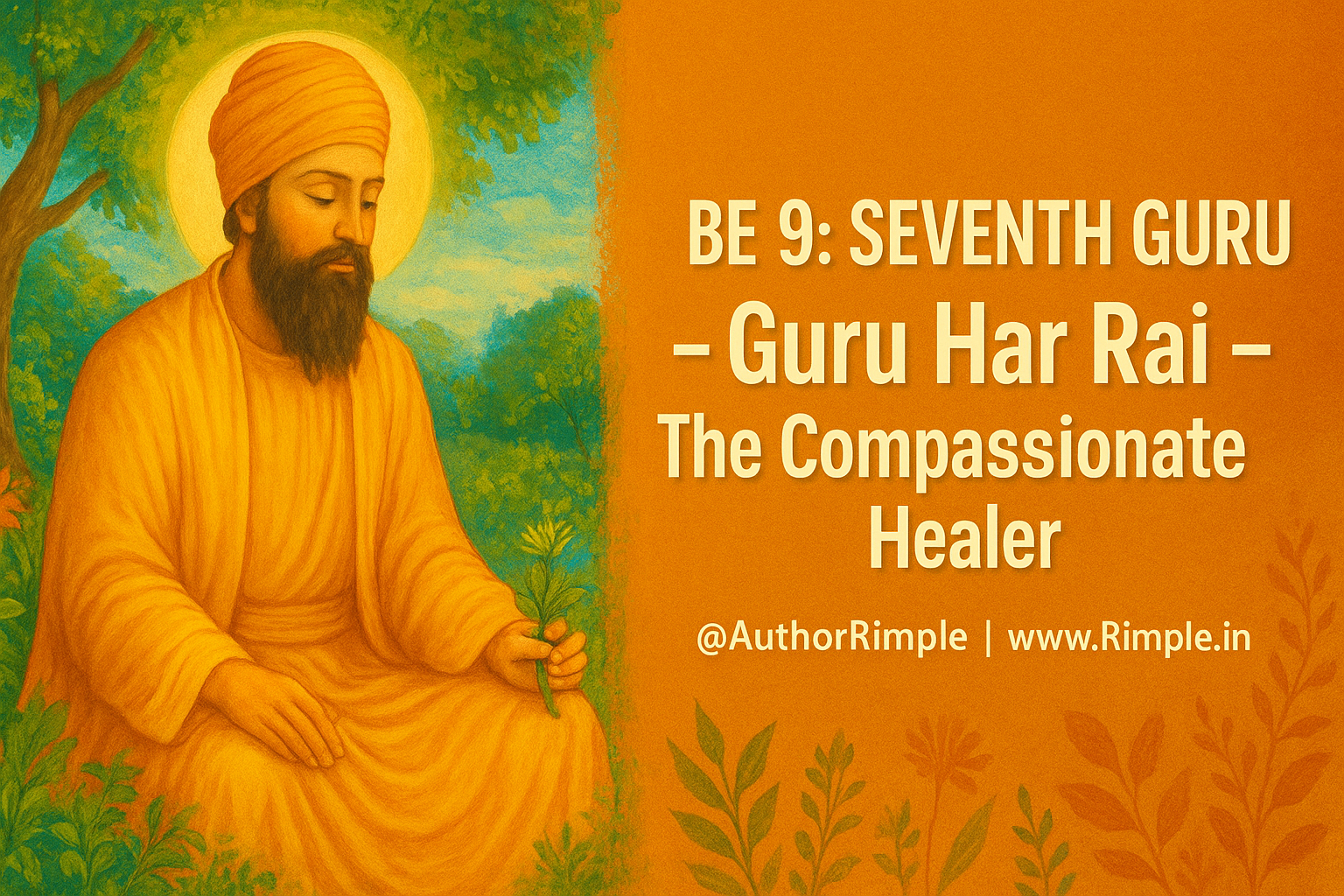
In the peaceful hills of Kiratpur Sahib in Punjab, a gentle soul full of kindness was born on January 16, 1630, to Baba Gurditta (the eldest son of Guru Hargobind, the sixth Guru) and Mata Nihal Kaur. This was Guru Har Rai Ji, the seventh Guru of Sikhism, the grandson of Guru Hargobind and Mata Damodari. His father, Baba Gurditta, was married to three women: Mata Nihal Kaur, Mata Ananti Kaur, and Mata Bishan Kaur, and had several children from them. Guru Har Rai had one elder brother, Dhir Mal (born in 1627 from Mata Ananti Kaur), who later stayed away from the main Guru family and kept some old scriptures. The family was large—Guru Har Rai also had half-siblings like Baba Atal Rai (a younger brother from Mata Nihal Kaur, born in 1619, who passed away young at age 9). From a young age, Har Rai learned from his grandfather Guru Hargobind about being both a saint and a soldier, but his heart leaned toward healing and nature, always caring for animals and plants while remembering Hari’s name. Punjab was under Mughal Emperor Shah Jahan’s rule then, who was strict, taxing Hindus heavily and destroying some temples, but the Guru family lived quietly in the hills away from big troubles.
Life was simple and close to nature for Har Rai. At age 14 in 1644, when his grandfather Guru Hargobind saw his deep compassion, he named him the next Guru, passing over the elder brother Dhir Mal because Har Rai’s heart was pure and kind. Har Rai married Mata Kishan Kaur (also called Mata Sulakhani) in 1640 when he was 10 (early marriages were common then), a loving woman from a good family. They had two children together: Ram Rai (the elder son, born in 1646, who later went to Delhi’s court) and Harkrishan (the younger son, born in 1656, who became Guru Harkrishan, the eighth Guru). The family focused on service, with Har Rai continuing his grandfather’s army but using it only for protection, not fights.
Guru Har Rai’s life was like a soft breeze healing the land. He kept an army of 2,200 horses for defense but never started wars, teaching peace first. He built a big herbal garden in Kiratpur with rare medicines, treating the sick for free—Sikhs, Hindus, Muslims all came, his doctors saving thousands from illnesses. He sent missionaries far to places like Assam and Bengal, spreading Gurbani and helping the poor with food and care. Once, Emperor Shah Jahan got sick, and Har Rai sent medicine that cured him, showing kindness even to rulers. He protected animals, scolding a follower for hurting flowers as a child, saying all life is Hari’s creation. His 3 hymns in the Guru Granth Sahib sing of humility and love.
Here’s a beautiful teaching from Guru Har Rai, like a healing touch:
Gurmukhi: ਹਰਿ ਕੀਰਤਨੁ ਸੁਣੈ ਸੁਣਾਵੈ ॥ ਨਾਨਕ ਤਿਸੁ ਜਨ ਕੀ ਸਰਨਿ ਆਵੈ ॥
Devanagari: हरि कीरतनु सुणै सुणावै ॥ नानक तिसु जन की सरनि आवै ॥
English: Listen and share Hari’s praise; Nanak says, take refuge in such a person.
This teaching is like a strong fort in a storm, safe and warm inside. It says singing and hearing Hari’s kirtan brings protection, like a wise friend guiding you home. In that refuge, fears melt away, the Divine’s song filling your heart with courage, wrapping you in peace that no enemy can touch, making every day a victory of light.
Another hymn flows like a gentle herb’s cure:
Gurmukhi: ਰੇ ਮਨ ਐਸੀ ਹਰਿ ਸਿਉ ਪ੍ਰੀਤਿ ਕਰਿ ॥ ਜੈਸੀ ਮਾਛੁ ਜਲ ਕੀ ਰੀਤਿ ॥
Devanagari: रे मन ऐसी हरि सिउ प्रीति करि ॥ जैसी माछु जल की रीति ॥
English: O mind, love Hari like a fish loves water.
This verse is like a fish joyfully swimming in a river, free and alive. It asks your heart to love Hari that deeply—without Him, life dries up like a fish on land. In that love, you find true freedom, the Divine’s flow carrying you through troubles, your soul refreshed and strong, blooming with endless joy.
But compassion faced tests under Shah Jahan and Aurangzeb. In 1658, elder son Ram Rai changed a Granth line to please Aurangzeb in Delhi, so Har Rai disowned him for truth’s sake. Mughal spies watched Kiratpur, taxing villages, forcing conversions—soldiers burned Hindu homes, killed cows to hurt faith, harmed women in raids called jihad. Har Rai sheltered refugees, healed the wounded with herbs, trained Sikhs in quiet strength without war. Fatwas called him threat, but his garden’s medicine saved lives, turning hate to respect.
Guru Har Rai’s gifts were healing and growth: expanded missionary work, free hospitals in Kiratpur, animal sanctuary where even wild beasts were safe. He upheld Akal Takht’s justice. On October 6, 1661, at age 31, he joined Hari in Kiratpur, naming younger son Harkrishan the eighth Guru at just 5 years old. Holy spots: Gurdwara Patalpuri in Kiratpur where he rested; Gurdwara Guru Ka Mahal his home. His life echoed Hindu ahimsa—like caring for all life in Vedas—against Mughal cruelty, a healer’s hand a vow: kindness cures hate’s wounds.
Also Read:
Sikhism Series https://rimple.in/category/blog-episode-series/sikhism/
Pandharpur Series https://rimple.in/category/blog-episode-series/pandharpur-series
Jagannath Series https://rimple.in/category/blog-episode-series/jagannath-puri-series
Gandhi as British Agent https://rimple.in/category/british-agent-gandhi/