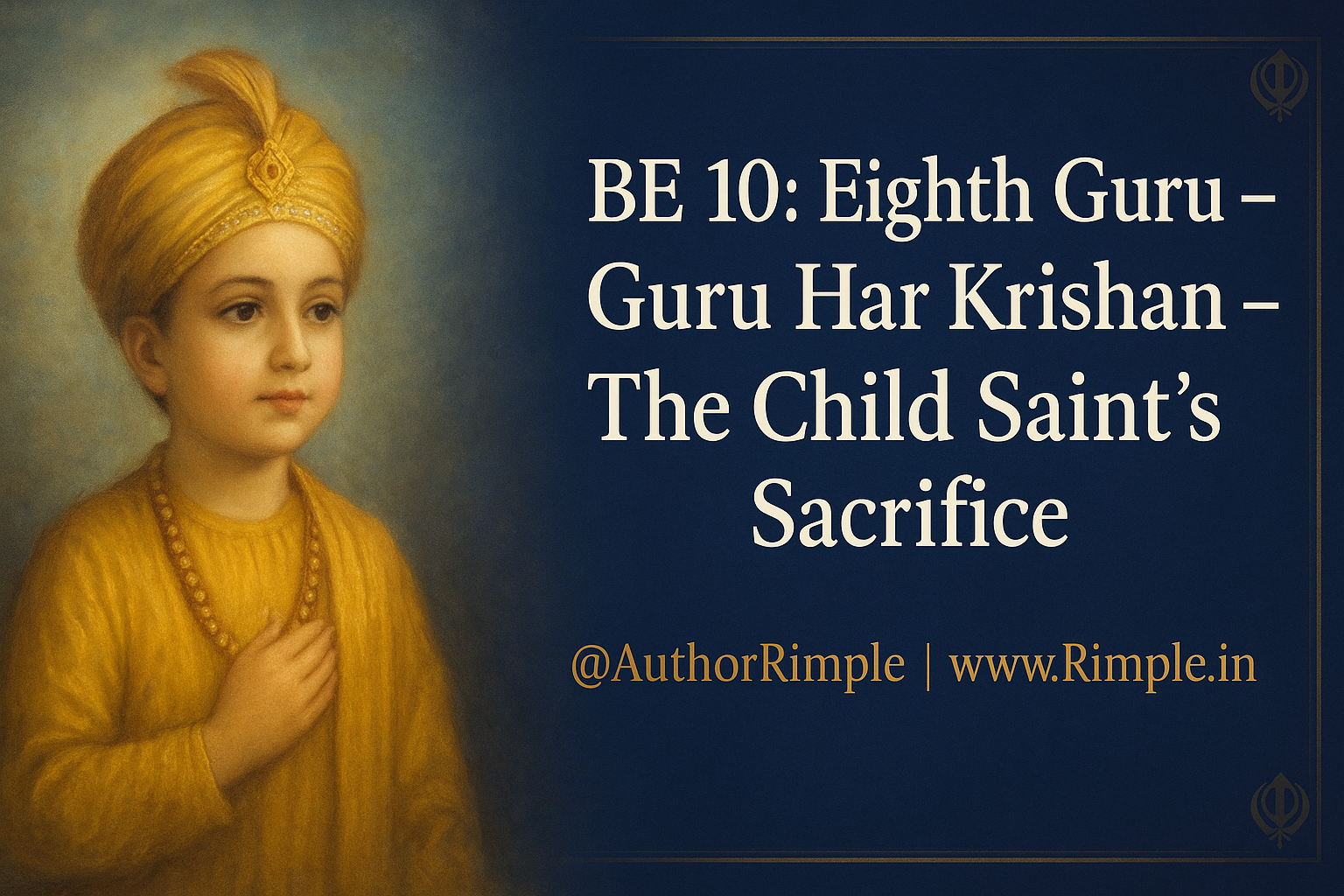
In the peaceful hills of Kiratpur Sahib, Punjab, a pure soul was born on July 7, 1656, under the gentle light of the moon. This was Guru Har Krishan Ji, the eighth Guru of Sikhism, the younger son of Guru Har Rai (the seventh Guru) and Mata Kishan Kaur (also called Mata Sulakhani). His father was a healer who loved nature, and his mother filled their home with kindness and prayers to Hari. Guru Har Krishan had one elder brother, Ram Rai, born in 1646, who later went to the Mughal court in Delhi and drifted away from the family. Har Krishan grew up in a loving home, surrounded by his grandfather Guru Hargobind’s teachings of courage and faith. From a young age, he memorized Gurbani hymns and spoke wise words, his child’s heart full of love for Hari, even as Punjab faced tough times under Mughal Emperor Aurangzeb’s growing power, who taxed Hindus heavily and began troubling non-Muslims more.
Guru Har Krishan’s life was short but bright, like a star that shines before dawn. He had no wife or children, as he was only a child himself. At just 5 years old, in October 1661, his father Guru Har Rai named him the next Guru, seeing his pure heart and wisdom beyond his years. Ram Rai, the elder brother, was not chosen because he changed a holy hymn to please Aurangzeb, showing he valued power over truth. Har Krishan became Guru at such a young age, guiding Sikhs with a child’s innocence and deep love for all.
His life was like a soft breeze bringing comfort to a troubled land. In 1664, when he was 7, Aurangzeb called him to Delhi to test his wisdom. Har Krishan traveled from Kiratpur with his mother and followers, staying at the home of a Sikh named Raja Jai Singh, now called Gurdwara Bangla Sahib. There, a smallpox outbreak was killing many in Delhi. The young Guru went out daily, giving medicine and water to the sick—Hindus, Muslims, rich, poor—treating all like family. His touch and prayers healed hundreds, his small hands carrying Hari’s love. But while helping others, he caught smallpox himself. Knowing his time was near, he stayed calm, singing Hari’s name. On March 30, 1664, at age 7, he lay in bed, said “Baba Bakale” (hinting his uncle Tegh Bahadur in Bakala village would be next), and merged with Hari, his sacrifice a light for all.
Here’s a beautiful teaching from Guru Har Krishan, like a gentle hug:
Gurmukhi: ਹਰਿ ਕੀਰਤਨੁ ਸੁਣੈ ਸੁਣਾਵੈ ॥ ਨਾਨਕ ਤਿਸੁ ਜਨ ਕੀ ਸਰਨਿ ਆਵੈ ॥
Devanagari: हरि कीरतनु सुणै सुणावै ॥ नानक तिसु जन की सरनि आवै ॥
English: Listen and share Hari’s praise; Nanak says, take refuge in such a person.
This teaching is like a strong fort in a storm, safe and warm inside. It says singing and hearing Hari’s kirtan brings protection, like a wise friend guiding you home. In that refuge, fears melt away, the Divine’s song filling your heart with courage, wrapping you in peace that no enemy can touch, making every day a victory of light.
Another hymn shines like a child’s pure smile:
Gurmukhi: ਰੇ ਮਨ ਐਸੀ ਹਰਿ ਸਿਉ ਪ੍ਰੀਤਿ ਕਰਿ ॥ ਜੈਸੀ ਮਾਛੁ ਜਲ ਕੀ ਰੀਤਿ ॥
Devanagari: रे मन ऐसी हरि सिउ प्रीति करि ॥ जैसी माछु जल की रीति ॥
English: O mind, love Hari like a fish loves water.
This verse is like a fish joyfully swimming in a river, free and alive. It asks your heart to love Hari that deeply—without Him, life dries up like a fish on land. In that love, you find true freedom, the Divine’s flow carrying you through troubles, your soul refreshed and strong, blooming with endless joy.
But his kindness faced Aurangzeb’s dark shadow. The emperor’s men pushed hard rules, forcing Hindus to pay jizya taxes and convert, burning homes, and hurting women in villages to scare them into Islam. They mocked Hindu faith by killing cows and threw dirt in wells to trouble Sikhs. Guru Har Krishan, though young, stood firm, helping the poor and sick, teaching his followers to stay brave in faith. Mullahs called him a danger, spreading lies, but his healing hands turned hate into hope, saving lives in Delhi’s plague. He died at the age of 7 because of high fever and an attack of smallpox while curing people.
Guru Har Krishan’s gifts were his love and sacrifice. He kept the Akal Takht’s spirit, sent preachers to far places, and showed Sikhs to serve all. His short life left holy spots: Gurdwara Bangla Sahib in Delhi, where he helped the sick; Gurdwara Bala Sahib where he rested; Gurdwara Patalpuri in Kiratpur, his home. His sacrifice echoed Hindu saints like young Prahlad, standing for truth against hate. In his small but mighty life, Sikhism grew stronger in Hindu bhakti roots, a child’s love a promise: compassion’s light will heal cruelty’s wounds.
Also Read: