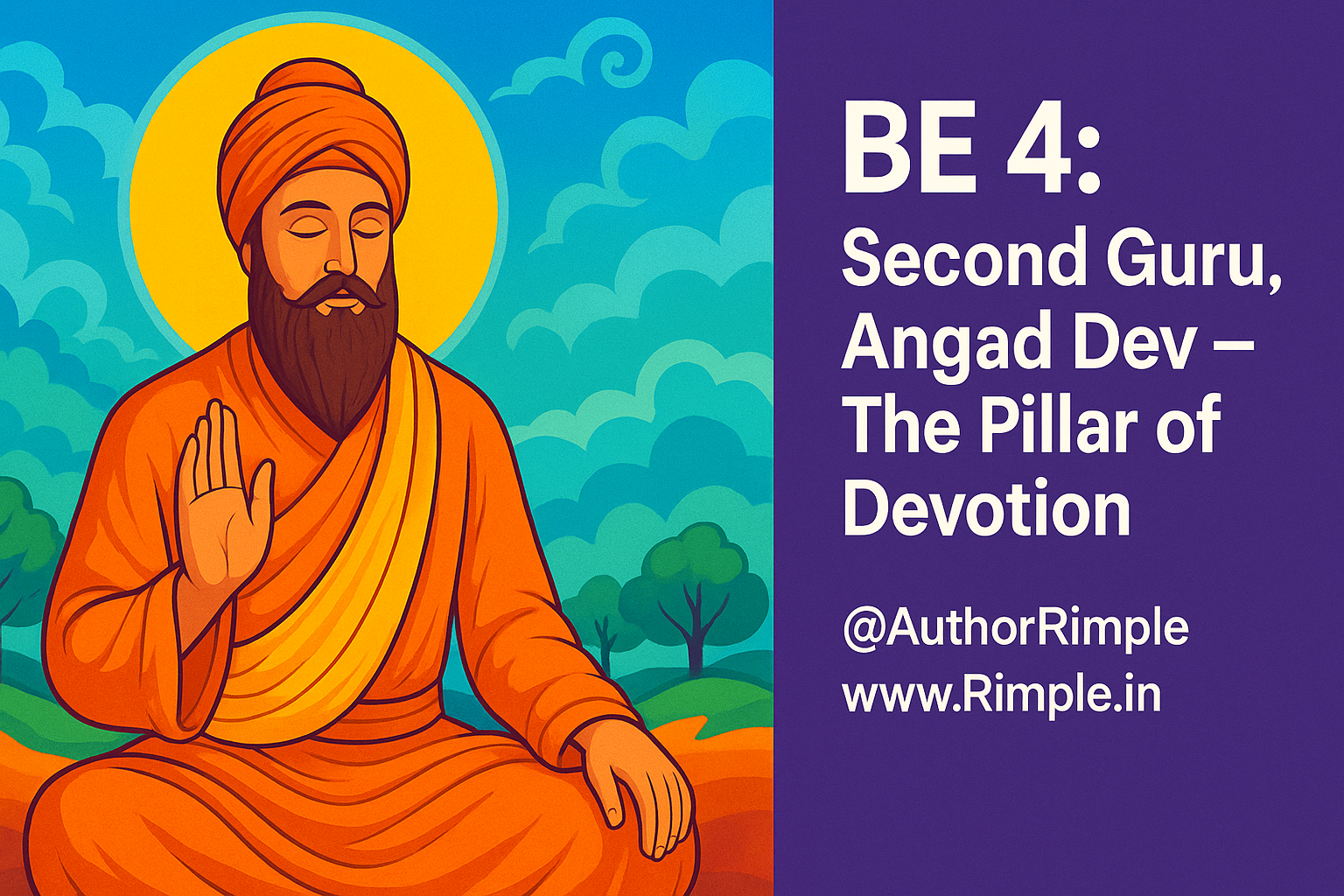
In the lush fields of Matte di Sarai village in Muktsar district, Punjab, on March 31, 1504—under the full moon of Baisakh in Samvat 1561—a gentle soul was born to a Hindu family steeped in Sanatan Dharma’s warm traditions. This was Guru Angad Dev Ji, originally named Lehna, the second light of Sikhism after Guru Nanak. His father, Pheru Mal Trehan, a prosperous trader from the Trehan Khatri clan, balanced scales with honesty, his life echoing the Vedic call to kirat—earning through truth and hard work. His mother, Mata Ramo—also called Mata Sabhrai or Daya Kaur—a devout woman whose prayers rose like incense to Hari, nurtured the home with love and simple rituals, her heart a quiet temple of faith. Young Lehna grew amid this harmony, helping in the shop and joining family pilgrimages to Hindu tirthas, where the Beas River’s flow and temple bells stirred his soul’s early quest for the Divine’s deeper melody. His grandfather, Baba Narayan Das Trehan, anchored the family’s roots in this soil, a lineage echoing the bhakti saints who sang of Hari’s boundless grace. From tender years, Lehna imbibed the Hindu reverence for the Divine Mother, joining his mother’s pilgrimages to the sacred Jawalamukhi Temple, where flames danced as eternal witnesses to Durga’s fierce protection.
At age 15, Lehna married Mata Khivi, a kind and strong woman from a good family, their union blessed with two sons, Dasu and Datu, and two daughters, Amro and Anokhi. Bibi Amro would later sing hymns that changed lives, carrying the family’s devotion forward. Lehna became a devoted follower of Goddess Durga, leading annual groups to Jawalamukhi temple, offering sweets and songs, his heart seeking truth amid rituals. Punjab was turbulent then, with Babur’s Mughal armies invading in 1521, sacking villages and forcing jizya taxes on Hindus, their swords foreshadowing Aurangzeb’s later cruelties—burning temples, slaughtering cows to mock faith, and dragging women to harems under jihad’s banner.
Lehna’s turning point came at 27 in 1531. Hearing Guru Nanak’s hymns from Bhai Bala, he felt a pull like a river to the sea. Leaving his pilgrimage midway, he rushed to Kartarpur, falling at Nanak’s feet in awe. For seven years, he served with pure love—carrying water, cleaning stables, his hands blistered but heart blooming. Guru Nanak tested him thrice: once in a stormy night, rebuilding fallen mud walls while others slept; again, eating a “poisoned” meal that was just sour; and finally, jumping into floodwaters to save sacred books. Lehna’s devotion shone, earning the name “Angad”—part of my own body. On September 7, 1539, Guru Nanak named him successor at Kartarpur, bypassing his sons, passing the light to one whose heart mirrored his own.
Guru Angad’s life was a steady flame of service and strength. He moved to Khadur Sahib in 1539, building it as a center of learning, where Mata Khivi’s langar kitchens fed thousands, her dal a symbol of equality, breaking caste walls like the Gita’s call to see all as one. He created the Gurmukhi script in 1540, giving Punjabi its voice to write Gurbani, preserving Nanak’s words from fading scripts. His 63 hymns in the Guru Granth Sahib sing of Hari’s name as the true guru, blending bhakti’s joy with discipline.
Here’s a beautiful teaching from Guru Angad, like a steady light in the dark:
Gurmukhi: ਹਰਿ ਕੇ ਗੁਣ ਹਰਿ ਭਾਵਦੇ ਸੇ ਗੁਰੂ ਤੇ ਪਾਏ ॥ ਨਾਨਕ ਨਾਮੁ ਨ ਵੀਸਰੈ ਜਿਸੁ ਮਸਤਕਿ ਕਰਮੁ ਲਿਖਾਏ ॥
Devanagari: हरि के गुण हरि भावदे से गुरू ते पाए ॥ नानक नामु न वीसरै जिसु मसतकि करमु लिखाए ॥
English: Hari’s qualities please Hari; they are found through the Guru. Nanak says, the Name is not forgotten for those with such karma written on their forehead.
This teaching is like a warm lamp glowing in a quiet room, guiding lost steps home. It says loving Hari’s goodness comes from the Guru’s grace, like a seed sprouting in good soil. For those blessed, His name stays in the heart forever, a sweet memory that lights every moment. It’s a gentle touch from the Divine, filling your days with peace, your soul dancing in Hari’s light, wrapped in endless joy and calm.
Another hymn flows like a clear stream:
Gurmukhi: ਗੁਰਮੁਖਿ ਨਾਮੁ ਜਪਹੁ ਮਨ ਮੇਰੇ ॥ ਸਭਿ ਸੁਖ ਪਾਵਹੁ ਸਹਜ ਸੇਤੀ ਘਰੇ ॥
Devanagari: गुरमुखि नामु जपहु मन मेरे ॥ सभि सुख पावहु सहज सेती घरे ॥
English: As a Guru-oriented soul, chant the Name, O my mind; find all peace in natural ease at home.
This verse is like a soft breeze on a hot day, cooling your worries away. It asks you to sing Hari’s name with the Guru’s way, bringing every happiness right where you are, like finding treasure in your own backyard. Peace comes easy and natural, a gift from the Divine that makes life feel light and full, your heart blooming with quiet beauty.
But light faced shadows under Babur’s rule, a storm brewing into Mughal tyranny. Babur’s men raided Khadur in 1540, demanding the Guru convert or pay heavy taxes, their eyes gleaming like wolves on Hindu faith. Cruel zamindars, Mughal puppets, torched Sikh homes to grab land, flames devouring crops while they raped women in the name of “holy war,” forcing kalima on trembling lips. They slaughtered cows in temple courtyards, blood staining sacred stones to break Hindu spirits, laughing as priests begged. Guru Angad armed his followers with words and wooden staffs, teaching self-defense as dharma’s duty, hiding families in forests from those beasts’ claws. Mullahs issued fatwas calling him kafir, spies poisoning wells and spreading lies in villages. Yet Angad’s calm was a rock in the river, his sewa a shield, turning fear into faith.
Guru Angad’s gifts strengthened Sikhism’s roots. He expanded langar, where Mata Khivi served simple meals to all—kings and outcastes side by side—echoing Hindu bhakti’s equality. He started mall akhara wrestling grounds in 1540, building strong bodies for Khalsa’s future, training youth to stand tall against invaders. His Gurmukhi script made Gurbani accessible, writing Nanak’s Japji in clear letters. In 1552, he named Guru Amar Das successor after tests of humility, passing the flame at 48.
On March 29, 1552, Guru Angad joined Hari at Khadur Sahib, his body cremated by the Beas. Holy spots honor him: Gurdwara Guru Angad Dev Ji in Khadur Sahib, where langar still feeds souls; Gurdwara Matte di Sarai in Muktsar, his birthplace; Gurdwara Damdama Sahib in Khadur, marking tests; and Gurdwara Guru Ka Bagh, echoing his sewa. These are havens of peace, the river singing his shabads.
Guru Angad’s life wove Sikhism tighter into Hindu bhakti, calling Hari the inner guru against outer storms. In his steady pillar, faith grew strong, a bridge over hate’s floods, its strength a vow: devotion’s light will outshine tyranny’s night.
Also Read: