From the vibrant festivals that fill Puri with the divine rhythm of Bhagwan Jagannath’s love, we step into the radiant legacy of Odia culture, where Jagannathji, Balabhadraji, and Subhadraji inspire art, literature, and bhakti that resonate through the ages. In the sacred courtyards of Shri Mandir, Pattachitra paintings glow with crimson and gold, Odia poets weave verses of devotion, and Odissi dancers sway to Shri Krishna’s flute. The air hums with the scent of ink on palm leaves, the rhythmic beat of mridangams, and the emotional surge of bhakti, as Chaitanya Mahaprabhu’s ecstatic kirtans echo by the Garudastamba. This cultural tapestry, vibrant with the colors of Hinduism—saffron, emerald, and golden hues—carries Jagannathji’s love across Odisha, uniting hearts in Kali Yuga’s divine embrace.
Pattachitra Paintings – A Canvas of Devotion
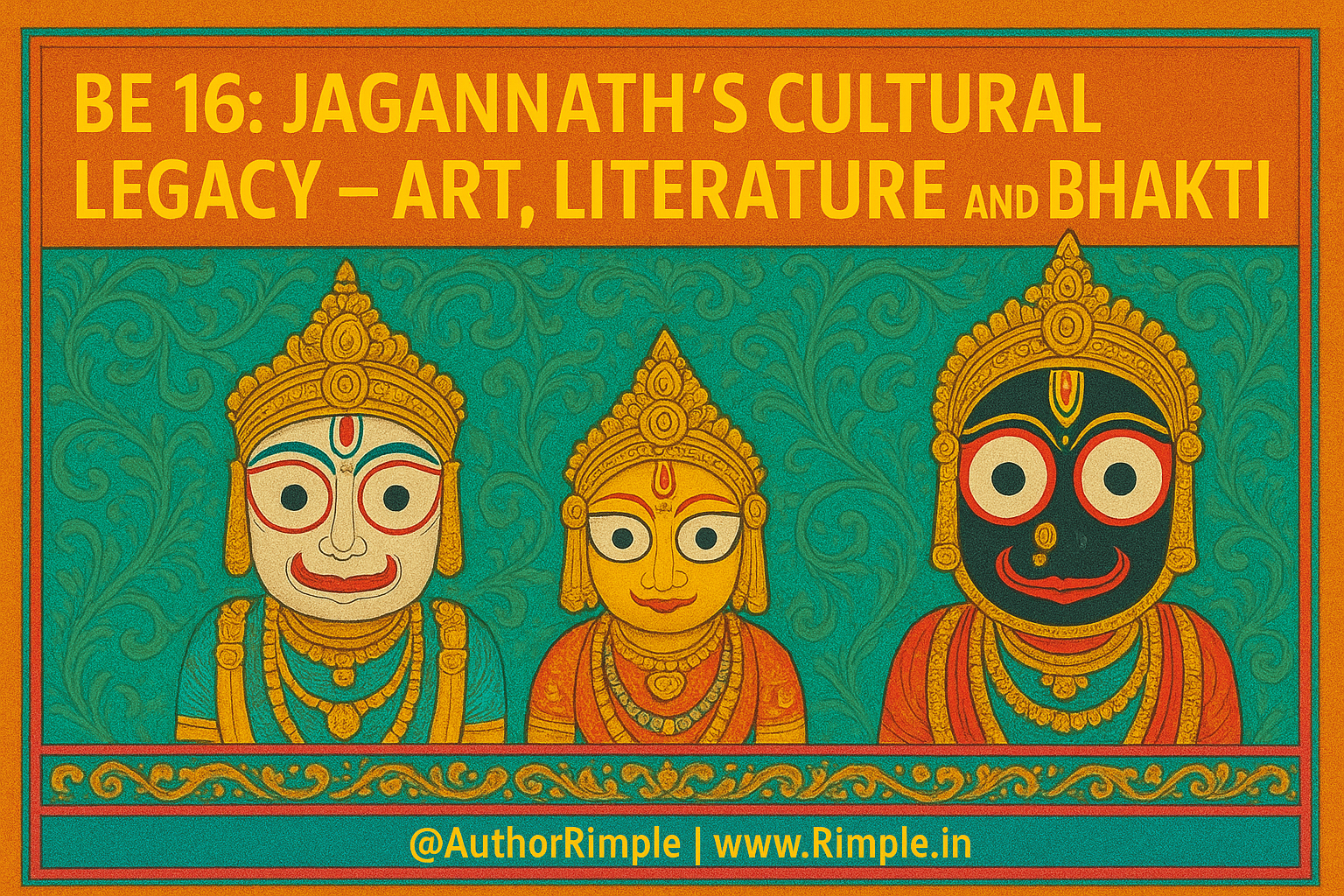
Pattachitra, the traditional cloth-based art of Odisha, captures the divine forms of Jagannathji, Balabhadraji, and Subhadraji with vibrant strokes of devotion. In the village of Raghurajpur, near Puri, chitrakaras (artists) sit under thatched roofs, their hands guiding bamboo brushes dipped in natural dyes—crimson for Jagannathji’s silks, white for Balabhadraji’s strength, and gold for Subhadraji’s serenity. The air carries the earthy scent of tamarind paste and palm leaf ink, as intricate paintings depict Jagannathji’s lotus-like eyes, the Ratha Yatra’s chariots, and Snana Yatra’s Hati Besha. Each canvas, framed with floral borders, glows under lamplight, a sacred offering to Shri Krishna. A Pauranic tale tells of a chitrakara who prayed to Jagannathji, his brush trembling, only to find his painting glow with divine light, the colors radiating bhakti, as if Jagannathji Himself blessed the art.
Odia Literature – Verses of Divine Love
Odia literature, steeped in Jagannathji’s bhakti, weaves a poetic tapestry that echoes in Shri Mandir’s sanctum. The 12th-century poet Jayadeva, in his masterpiece Gita Govinda, sings of Shri Krishna’s love for Shri Radha, verses that resound during Ratha Yatra and Jhulan Yatra. Bhakts in the temple’s Natamandapa chant these lines, the air thick with the scent of sandalwood and the rustle of palm leaf manuscripts. Poets like Balaram Das and Jagannath Das, part of the Panchasakha, penned works like Laxmi Purana and Bhagabata, their words capturing Jagannathji’s universal love, read aloud as oil lamps flicker. A story tells of Jayadeva, struggling with a verse, seeing Jagannathji in a dream, His lotus eyes guiding the poet’s quill, the ink’s fragrance filling the air, inspiring bhakti that lives on in Odisha’s heart.
Odissi Dance – A Divine Offering
In Shri Mandir’s Natamandapa, Odissi dancers offer their art to Jagannathji, their ghungroos tinkling like raindrops, echoing through the temple’s stone corridors. Draped in crimson and gold sarees, they sway to the rhythm of mridangams and flutes, their movements mimicking Shri Krishna’s leelas in Vrindavan. The air sparkles with jasmine garlands tossed by bhakts, as dancers depict Ratha Yatra’s chariots or Chandan Yatra’s boats, their eyes mirroring Jagannathji’s compassionate gaze. A Pauranic tale recounts a dancer whose performance moved Jagannathji, the temple lamps flickering as if in applause, her anklets’ chime blending with bhakts’ chants, creating a divine symphony of bhakti.
The Bhakti Movement and Chaitanya Mahaprabhu
The Bhakti movement, ignited by Jagannathji’s love, found its heart in Puri through Chaitanya Mahaprabhu, the 16th-century saint whose ecstatic kirtans transformed Odisha’s spiritual landscape. Standing by Shri Mandir’s Garudastamba, Chaitanya’s tears of bhakti soaked the stone floor as he sang Gita Govinda, his voice rising with mridangam beats, the air alive with sandalwood incense. His devotion to Jagannathji as Shri Krishna inspired the Gaudiya Vaishnava tradition, uniting bhakts in ecstatic chants of “Hari Bol!” A story tells of Chaitanya dancing before Jagannathji’s chariot during Ratha Yatra, his saffron robe swirling, the crowd’s cheers blending with conch shells’ hum, as Jagannathji’s lotus eyes blessed him, filling Puri with bhakti’s vibrant surge.
The Spiritual Heart of Jagannath’s Legacy
Jagannathji’s cultural legacy weaves a vibrant tapestry of art, literature, and bhakti, uniting Vaishnavas, tribal devotees, and all under Shri Mandir’s golden Neelachakra. The crimson and gold of Pattachitra, the rhythmic chants of Odia verses, and the graceful sway of Odissi dancers reflect Hinduism’s unity, their beauty a bridge to Shri Krishna’s love. In Kali Yuga, this legacy reminds bhakts that Jagannathji’s presence is eternal, each painting, verse, and dance a call to His divine embrace. The air sparkles with ink, sandalwood, and ghungroos’ chime, guiding hearts to His mercy.
To capture this cultural splendor, let us turn to an Odia verse from traditional Jagannath bhakti poetry, sung in Puri’s sacred halls:
Odia Verse (Devanagari):
संस्कृति प्रेम संनादति, जगन्नाथ भक्ति हृदये जागे।
कला काव्यं रङ्गे भासति, श्रीमन्दिरे दीपं प्रकाशति॥
English Translation:
Culture’s love does softly sing, Jagannath’s bhakti wakes the heart,
Art and verse in hues do glow, in Shri Mandir’s radiant art.
Meaning of the Verse:
This verse celebrates Jagannathji’s cultural legacy as a radiant song of love, awakening bhakti through art and poetry. It bathes Odisha in vibrant light, making Shri Mandir a beacon in Kali Yuga, guiding bhakts to Shri Krishna’s eternal embrace.
As Puri’s cultural legacy shines under starry skies, with the scent of ink and the rhythm of mridangams, bhakts carry Jagannathji’s love in their hearts. But how does this divine legacy reach beyond Odisha? The answer lies in the global embrace of Ratha Yatra, waiting to unfold in its universal splendor.
Also Read: