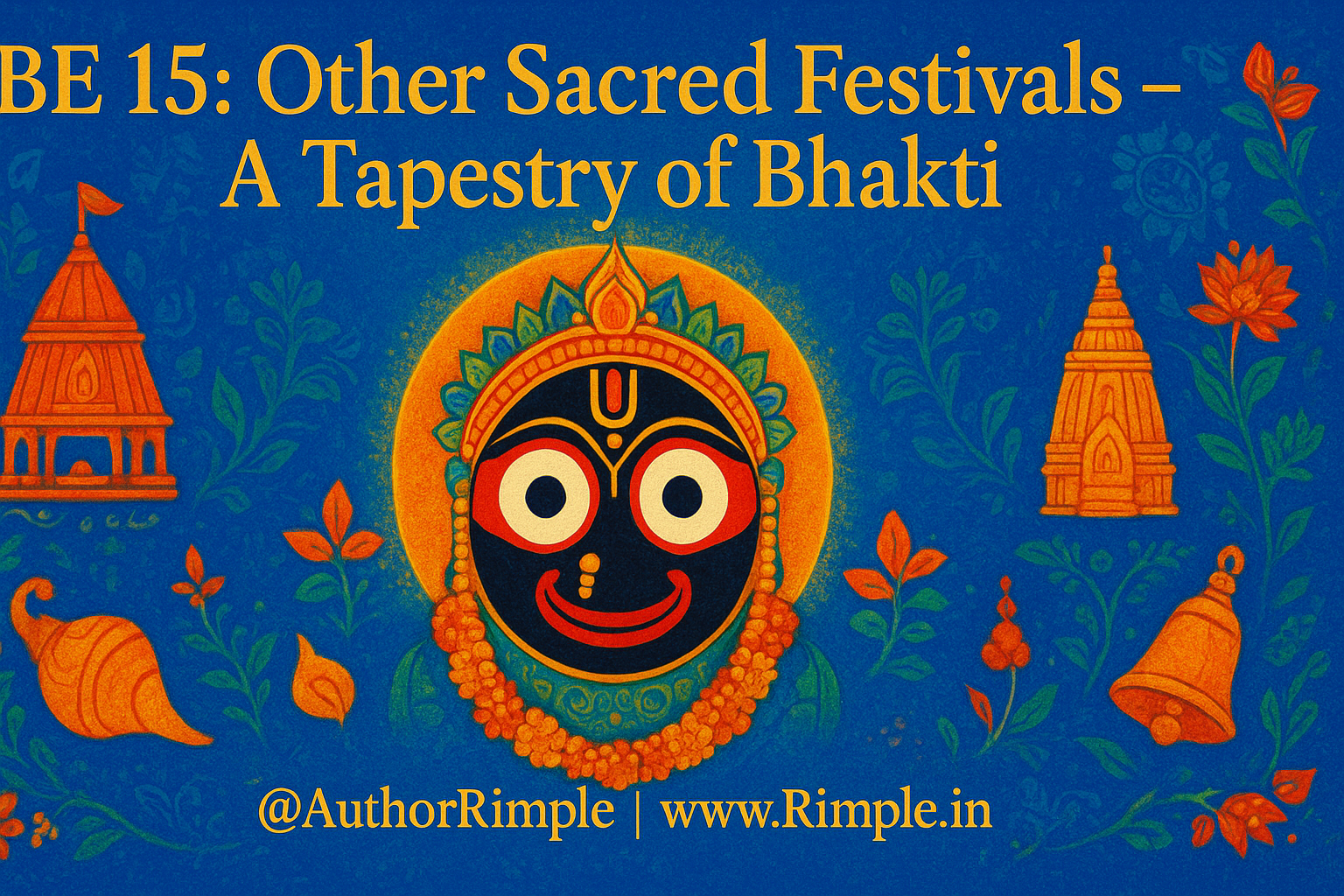
From the serene embrace of Gundicha Temple, where Bhagwan Jagannath, Balabhadraji, and Subhadraji rest in divine intimacy, we step into the vibrant rhythm of Puri’s sacred festivals that weave bhakti throughout the year. Beyond the grandeur of Ratha Yatra, Shri Mandir pulses with celebrations like Chandan Yatra, Jhulan Yatra, Pana Sankranti, and Chitalagi Amavasya, each a radiant thread in the tapestry of devotion. The air sparkles with the scent of sandalwood, jaggery, and lotus blooms, the rhythmic chants of bhakts blending with the sea’s gentle roar, and the vibrant colors of Hinduism—crimson silks, emerald garlands, golden lamps—lighting up Puri’s sacred streets. These festivals, steeped in Shri Krishna’s love, sustain Jagannathji’s divine presence in Kali Yuga, drawing bhakts into His eternal embrace.
A Vibrant Cycle of Festivals
Puri’s sacred calendar unfolds with festivals that fill Shri Mandir with divine joy, each ritual a celebration of Jagannathji’s boundless mercy.
Chandan Yatra (April–May 2025): This 42-day festival, beginning on Akshaya Tritiya (April 30, 2025), is Puri’s longest celebration, split into Bahara Chandan (21 days) and Bhitara Chandan (21 days). During Bahara Chandan, representative idols of Jagannathji, Balabhadraji, Subhadraji, and five Shivalingas sail on ornate boats across Narendra Tank’s shimmering waters, their forms anointed with sandalwood paste, the air heavy with its cool fragrance. Bhakts line the tank’s banks, their voices rising in kirtans, as lotus blossoms float on the water, reflecting crimson and yellow torchlight. In Bhitara Chandan, the deities in Shri Mandir are adorned with sandalwood, their lotus eyes glowing under emerald garlands, the temple alive with the soft clink of brass lamps and Vedic chants. This festival, evoking Shri Krishna’s water leelas in Vrindavan, fills Puri with divine playfulness.
Jhulan Yatra (August 2025): Celebrated during Shravan, Jhulan Yatra sees Jagannathji, Balabhadraji, and Subhadraji placed on ornate swings (jhulas) in the temple’s Natamandapa, adorned with jasmine and marigold garlands. Bhakts gently rock the deities, the air tingling with the scent of flowers and the rhythmic jingle of anklets from Odissi dancers performing before the swings. The starry sky above Puri glows, as kirtans echo with mridangam beats, evoking Shri Krishna’s playful swings with Shri Radha in Vrindavan. The vibrant colors—golden silks, green leaves, crimson cloth—create a divine scene, as bhakts’ hearts sway with bhakti, lost in Jagannathji’s love.
Pana Sankranti (April 14, 2025): Marking the Odia New Year, Pana Sankranti fills Shri Mandir with offerings of pana, a sweet drink of jaggery, milk, and spices, its earthy aroma mingling with incense. Bhakts throng the Ananda Bazaar, sharing clay pots of pana and Mahaprasad, their laughter blending with the clatter of utensils. The deities, adorned in saffron silks, are offered special sweets, their lotus eyes sparkling as priests chant mantras. This festival, symbolizing renewal, unites bhakts in gratitude for Jagannathji’s blessings, the air warm with the glow of oil lamps and the promise of a bountiful year.
Chitalagi Amavasya (August 2025): On this sacred day, the deities’ golden Chitas (forehead ornaments) are reapplied, their faces glowing anew with divine radiance. In a torchlit sanctum, priests anoint Jagannathji, Balabhadraji, and Subhadraji with sandalwood and gold leaf, the air thick with camphor and the soft hum of Vedic hymns. Bhakts gather, their eyes fixed on the deities’ sparkling Chitas, as marigold petals scatter like blessings. This ritual, symbolizing spiritual renewal, fills Shri Mandir with a quiet reverence, the golden ornaments shining like stars, guiding bhakts to Shri Krishna’s eternal light.
Pauranic Significance and Stories
These festivals are steeped in Puri’s Pauranic history, each a divine expression of Jagannathji’s love:
Chandan Yatra’s Leela: The Skanda Purana links Chandan Yatra to Shri Krishna’s water pastimes in Vrindavan, where He played with the gopis. A tale tells of a bhakt who saw Jagannathji’s boat glow on Narendra Tank, its sandalwood scent filling the air, as if Shri Krishna Himself sailed, blessing all with His playful gaze.
Jhulan Yatra’s Romance: A Pauranic story recounts how Jagannathji, as Shri Krishna, swings with Shri Radha, their love mirrored in the jhulas of Puri. Bhakts feel this divine romance, the air alive with jasmine and kirtans, as the deities’ swings sway under starlit skies.
Pana Sankranti’s Renewal: Tradition holds that Jagannathji blesses the Odia New Year with abundance, a story telling of a farmer whose crops flourished after offering pana, the sweet drink’s aroma pleasing Jagannathji, teaching bhakts gratitude.
Chitalagi’s Radiance: A tale narrates a priest who dreamt of Jagannathji guiding his hand to craft the Chitas, their golden glow illuminating the sanctum, a sign of Shri Krishna’s eternal renewal in Kali Yuga.
The Spiritual Heart of the Festivals
These festivals weave a vibrant tapestry of bhakti, uniting Vaishnavas, tribal bhakts, and all devotees under Shri Mandir’s golden Neelachakra. The scent of sandalwood, jaggery, and jasmine, the glow of crimson silks and emerald garlands, and the rhythmic chants of kirtans create a divine symphony. In Kali Yuga, these celebrations remind bhakts that Jagannathji’s love is ever-present, each festival a call to Shri Krishna’s embrace, cleansing souls with His mercy. The vibrant colors—saffron robes, green foliage, golden Chitas—shine like beacons, guiding all to His divine heart.
To capture this sacred cycle, let us turn to an Odia verse from traditional Jagannath bhakti poetry, sung in Puri’s vibrant courtyards:
Odia Verse (Devanagari):
उत्सव प्रेम संनादति, जगन्नाथ भक्ति हृदये जागे।
विश्वं सर्वं रङ्गे भासति, श्रीमन्दिरे दीपं प्रकाशति॥
English Translation:
Festivals’ love does softly sing, Jagannath’s bhakti wakes the heart,
The world in vibrant hues does glow, in Shri Mandir’s radiant art.
Meaning of the Verse:
This verse celebrates Puri’s festivals as a radiant song of love, awakening bhakti in every heart. They bathe the world in vibrant light, making Shri Mandir a beacon in Kali Yuga, guiding bhakts to Shri Krishna’s eternal embrace.
As these festivals fill Puri with divine joy, under starry skies, bhakts revel in Jagannathji’s love, the air alive with sandalwood and chants. But how does this bhakti ripple beyond the temple? The answer lies in Jagannathji’s cultural legacy, waiting to unfold in its vibrant artistry and devotion.
Also Read: