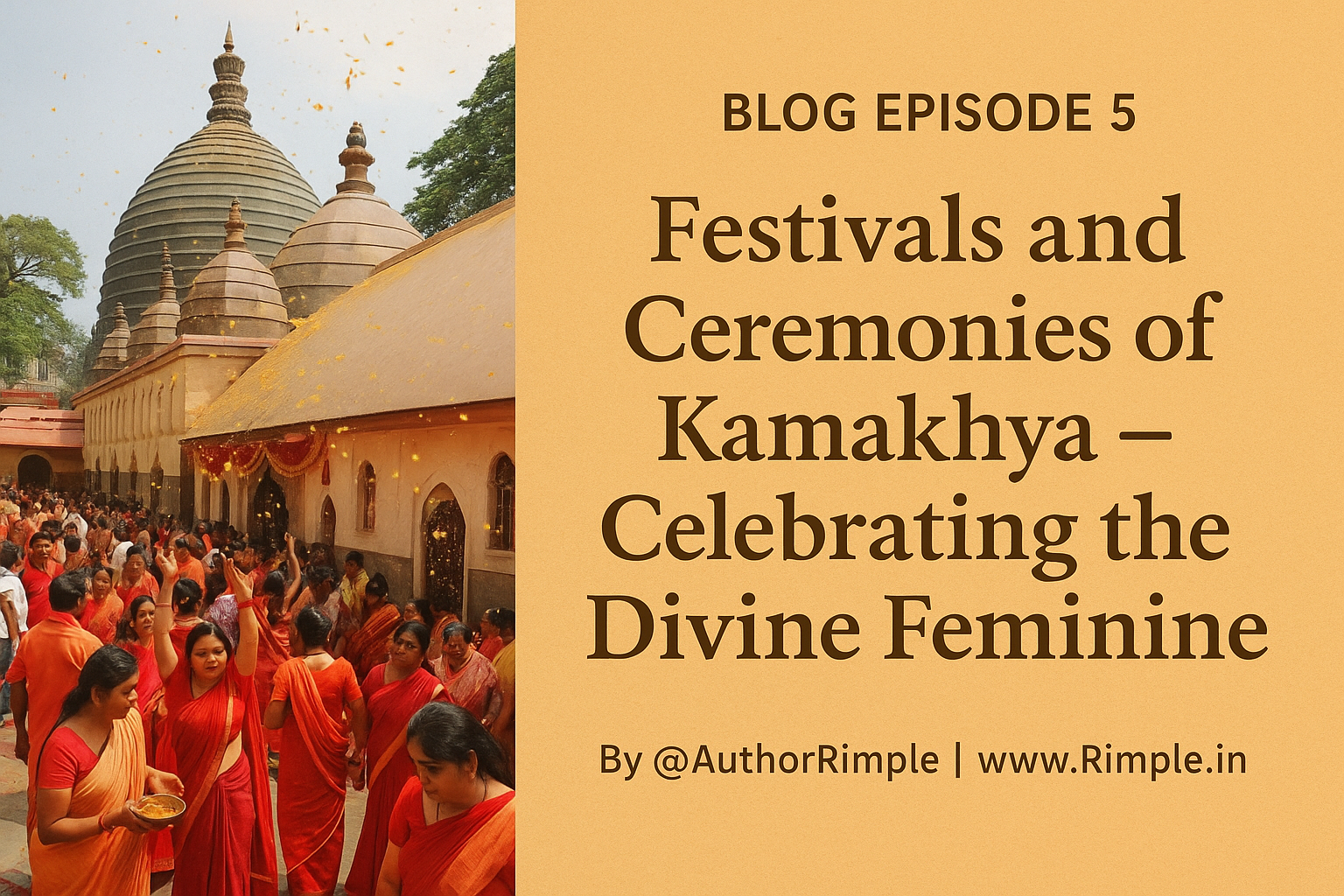
Picture Nilachal Hill bursting with life, its slopes draped in colors as bright as a monsoon rainbow. The air throbs with drumbeats, the scent of marigolds, and the joyous chants of bhakts. The Kamakhya Temple, home to Devi Kamakhya’s sacred yoni (womb), becomes a stage for festivals that sing of her shakti, the divine feminine that births the world. As the Brahmaputra River sparkles below, reflecting the moon’s silver glow, these ceremonies weave a tapestry of bhakti, celebrating womanhood as sacred. Step into this vibrant dance, feel the hill’s pulse underfoot, and let’s immerse in Kamakhya’s festivals, where every ritual honors the power of Devi and every woman.
Ambubachi Mela: The Sacred Menstruation
In June, when monsoon clouds embrace Nilachal Hill, the Ambubachi Mela unfolds, a festival unlike any other. For three days, Devi Kamakhya is believed to menstruate, her yoni (womb) radiating the sacred cycle of creation. The temple’s doors close, draped in red cloth, symbolizing her rest. Imagine the hill quiet yet alive, the air heavy with rain and reverence, the scent of wet earth mingling with burning dhoop. On the fourth day, the doors open, and bhakts flood the temple, their voices rising in song. Priests distribute angodak (spring water) and angabastra (red cloth) as prasad, blessed by Devi’s shakti. See women bhakts, their sarees vibrant, holding the red cloth close, feeling their own cycles honored as divine. The Brahmaputra, some say, turns red—a mystery of minerals or Devi’s grace—its waters flowing like life itself.
Manasa Puja: Dance of the Serpent Goddess
In August, under the monsoon’s fading veil, Kamakhya celebrates Devi Manasa, the serpent goddess who guards against venom and fear. The Manasa Puja is a spectacle of bhakti, where Debadhannis—men touched by divine spirits—perform ritual dances. Picture them swaying on the temple courtyard, their bodies adorned with turmeric and red, dancing on sword blades or piercing their skin, untouched by pain. Hear the rhythmic beat of dhols, the clatter of cymbals, and the crowd’s gasps of awe. Smell the camphor lamps burning bright, their smoke curling toward the sky. Women bhakts watch, their hearts stirring, seeing Devi Manasa’s shakti as a mirror of their own resilience. This festival weaves the feminine divine into nature’s wild embrace, celebrating womanhood’s strength.
Durga Puja and Navratri: Nine Nights of Shakti
When autumn paints the skies gold, Kamakhya’s Durga Puja and Navratri ignite Nilachal Hill with bhakti. Unlike other temples with towering idols, here Devi Kamakhya’s yoni is adorned as Devi Durga, draped in silks and jewels, her nine forms worshipped over nine nights. Imagine the garbhagriha aglow, the yoni stone shimmering under lamp light, its spring trickling like a sacred song. Priests chant mantras, their voices blending with the jingle of ankle bells as bhakts dance in the courtyard. Smell the jasmine garlands and sweet prasad, feel the cool stone underfoot as you join the throng. Women, young and old, feel Devi’s shakti within, their own power celebrated as they honor the divine feminine in her warrior and nurturing forms.
Kumaripuja: Honoring the Living Goddess
During Navratri, Kamakhya’s Kumaripuja shines as a tender celebration of womanhood. Young girls, pure and radiant, are worshipped as living embodiments of Devi. Picture a girl of seven, draped in a red saree, her forehead marked with sindoor, seated on a flower-decked throne. Bhakts offer her fruits and sweets, their eyes soft with bhakti, seeing Devi’s shakti in her gentle smile. Hear the soft chants of priests, the rustle of silk as the girl is adorned. Smell the rose petals scattered at her feet, their fragrance filling the air. Mothers watching feel their hearts swell, knowing every girl, every woman, is a spark of Devi. This ritual affirms Hinduism’s reverence for the feminine, from childhood to maturity, as divine.
A Sanskrit Shloka: Devi’s Eternal Celebration
Let’s pause to chant a verse from the Devi Mahatmya, adapted to sing of Kamakhya’s festive glory:
सर्वं मंगलं मंगल्यं सर्वं पापं प्रणाशति ।
कामाख्या योनिरूपेण विश्वं संनादति सदा ॥
Poetic Translation:
All auspicious, all that’s pure and bright,
All sins dissolve in her radiant light,
Kamakhya’s yoni, world’s eternal song,
Forever echoes, vast and strong.
Meaning: This shloka celebrates Devi Kamakhya’s yoni (womb) form as the source of all auspiciousness, dispelling negativity and resonating with the universe’s eternal rhythm. It captures the festive spirit of her worship, where her shakti fills the world with joy and harmony.
Womanhood’s Divine Festival
Kamakhya’s festivals are a vibrant ode to womanhood, breaking taboos and honoring the feminine as sacred. Ambubachi Mela celebrates menstruation, a woman’s cycle mirrored in Devi’s divine rhythm, empowering women bhakts to embrace their bodies without shame. Kumaripuja sees girls as living goddesses, affirming that every woman carries Devi’s shakti. Imagine a woman standing amidst the Ambubachi crowd, her heart full, feeling her own creative power echo Devi’s yoni. These ceremonies weave bhakti with empowerment, showing Hinduism’s deep reverence for women as creators, nurturers, and warriors. Bhakts leave the hill with hearts alight, carrying Devi’s blessings into their lives.
As twilight falls, Nilachal Hill glows with lamps, the Brahmaputra hums below, and the air dances with song. Devi Kamakhya’s shakti pulses through every festival, every chant, every flower offered. In our next article, we’ll delve into the temple’s unique worship of the yoni, the heart of its celebration of womanhood, inviting all to feel the divine feminine within.
Also Read: